The Helicopter on the Roof: Romania's Dictator Flees
On December 22, 1989, Romania's dictator Nicolae Ceausescu fled Bucharest by helicopter as protesters stormed Communist Party headquarters, ending 24 years of brutal rule.
On the morning of December 22, 1989, an overloaded helicopter clawed its way off the roof of the Communist Party headquarters in Bucharest, struggling to clear the gray skyline. Aboard were Nicolae and Elena Ceausescu - the couple who had ruled Romania for twenty-four years. They would never come back.
The day before, Ceausescu had tried to show he was still in charge. He stepped onto the balcony of that same building to address a staged rally, broadcast live on state television to millions of Romanians. Instead, the crowd began to boo - an almost unthinkable act after years of enforced applause. The broadcast cut to a red screen. The mask had slipped.
The uprising had started a week earlier in Timisoara, where protests over the eviction of a dissident pastor were met with gunfire from security forces. News of the dead traveled fast, and within days protests had reached the capital.
On the morning of the 22nd, the army - ordered to stay in its barracks - stopped backing the regime. Protesters flooded Palace Square and stormed the Central Committee building itself. Inside, the acting defense minister, Victor Stanculescu, told the dictator the only way out was up. At midday the helicopter lifted off the roof. Below, nearly a hundred thousand people filled the square, singing.
The escape was short. Recognized near the town of Targoviste, the Ceausescus were captured, tried by a hasty military tribunal, and on Christmas Day 1989 executed by firing squad. They were the last people ever condemned to death in Romania.
Tried on charges including genocide and damage to the national economy, the couple were convicted on all counts. Ceausescu had ruled Romania since 1965 and had resisted every liberalizing trend of the late 1980s; by the end, his country was the most repressive and economically backward in Europe.
The days that followed were bloody. Convinced the other side was the dreaded Securitate secret police, civilians and soldiers fired on each other in the streets of Bucharest. But the revolution held. Of all the anti-communist uprisings that swept Eastern Europe in 1989, Romania's was the bloodiest - and the only one that ended with the dictator put to death.
Why it matters: 1989 was the year the Iron Curtain came down, and the helicopter on the roof remains one of its most enduring images. Romania had one of the largest secret police forces in the Eastern Bloc, and fear had kept its people obedient for decades. The lesson of December 22 is that power built entirely on fear lasts exactly as long as the fear does.
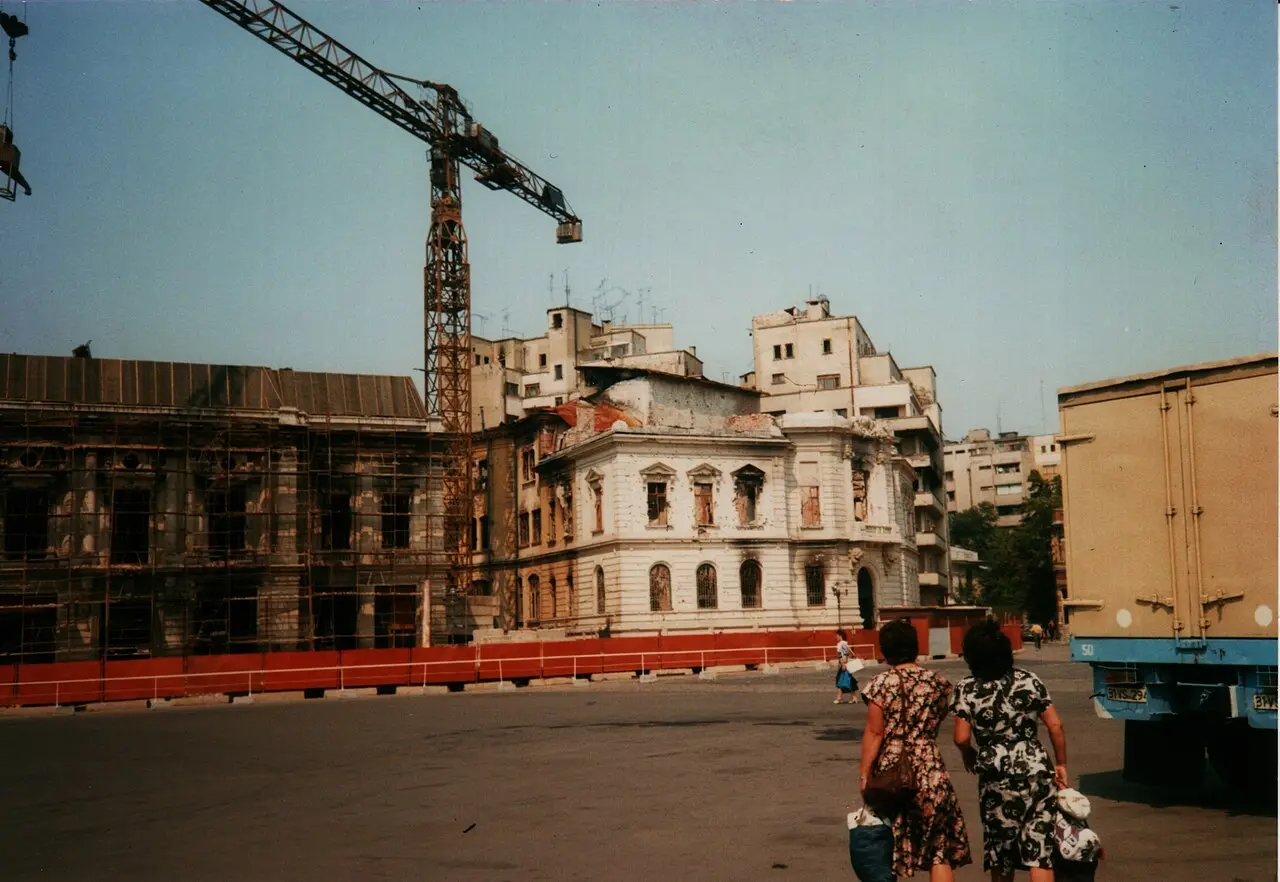
Photo: Lklundin, CC BY-SA 4.0 (via Wikimedia Commons).