
The Handshake That Changed the World
On February 21, 1972, Richard Nixon landed in Beijing and shook Zhou Enlai's hand, ending more than two decades of silence between the United States and China.
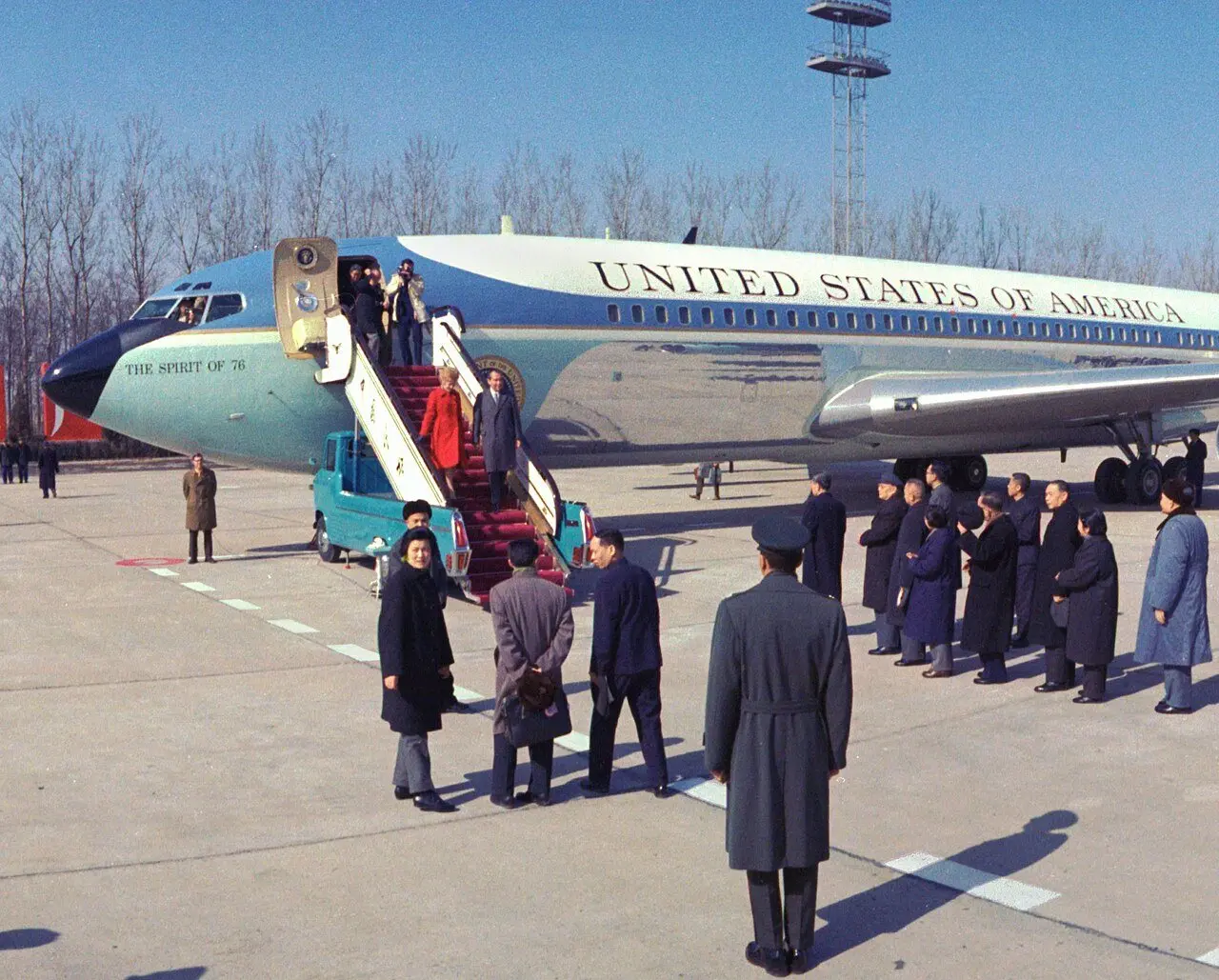
The most important handshake of the twentieth century happened on an airport tarmac in Beijing, in a freezing February wind, between two men whose countries had not really spoken in more than twenty years.
On February 21, 1972, Air Force One touched down in the Chinese capital carrying President Richard Nixon, the first sitting American president ever to visit the People's Republic of China. Waiting on the tarmac was Premier Zhou Enlai. As Nixon came down the stairs, he thrust out his hand first — a deliberate gesture. Eighteen years earlier, at a conference in Geneva, Secretary of State John Foster Dulles had refused Zhou's outstretched hand, a snub the Chinese had never forgotten. Nixon was determined not to repeat it.
The silence between the two countries had lasted since the Communist victory in China's civil war in 1949. There were no diplomatic relations, no trade, no travel. Americans could not visit China; the two nations had fought each other in Korea and were on opposite sides in Vietnam. To most Americans, China was a sealed mystery — one-fifth of humanity, walled off.
The groundwork for the visit had been laid in secret. In April 1971, the American table tennis team received a surprise invitation to play exhibition matches in China — "ping-pong diplomacy," the press called it, and it cracked the door open. Three months later, National Security Advisor Henry Kissinger faked a stomach illness during an official trip to Pakistan, slipped away on a Pakistani jet, and spent two days in Beijing arranging the presidential visit. When the trip was announced, it stunned the world.
Hours after landing, Nixon was summoned to meet Chairman Mao Zedong himself. Mao was ailing — his doctors were not sure he was up to it — but he received Nixon in his book-lined study, a signal no one could miss that the visit had the Chairman's personal blessing. Over the next seven days, Nixon toured Beijing, Hangzhou, and Shanghai while negotiators hammered out the Shanghai Communiqué, issued on February 28. It was a masterpiece of diplomatic ambiguity: both sides pledged to work toward normalizing relations while agreeing to disagree, for the moment, about Taiwan.
At his farewell banquet, Nixon raised his glass and declared, "This was the week that changed the world." He was right. The visit broke China's isolation, drove a wedge between Beijing and Moscow, and set in motion the slow path to full diplomatic relations, established on January 1, 1979. It rearranged the Cold War chessboard in a single week.
Why it matters: the trip is proof that even the deepest divides can be bridged when leaders decide to talk instead of shout. A handshake on a cold tarmac opened a door that had been bolted for a generation — and the world walked through it.
Photo: Ollie Atkins, White House photographer, public domain (via Wikimedia Commons).