The Farmer Rebellion That Forged the U.S. Constitution
On January 25, 1787, debt-crushed Massachusetts farmers led by Daniel Shays attacked the federal arsenal at Springfield — and their defeat helped give America its Constitution.
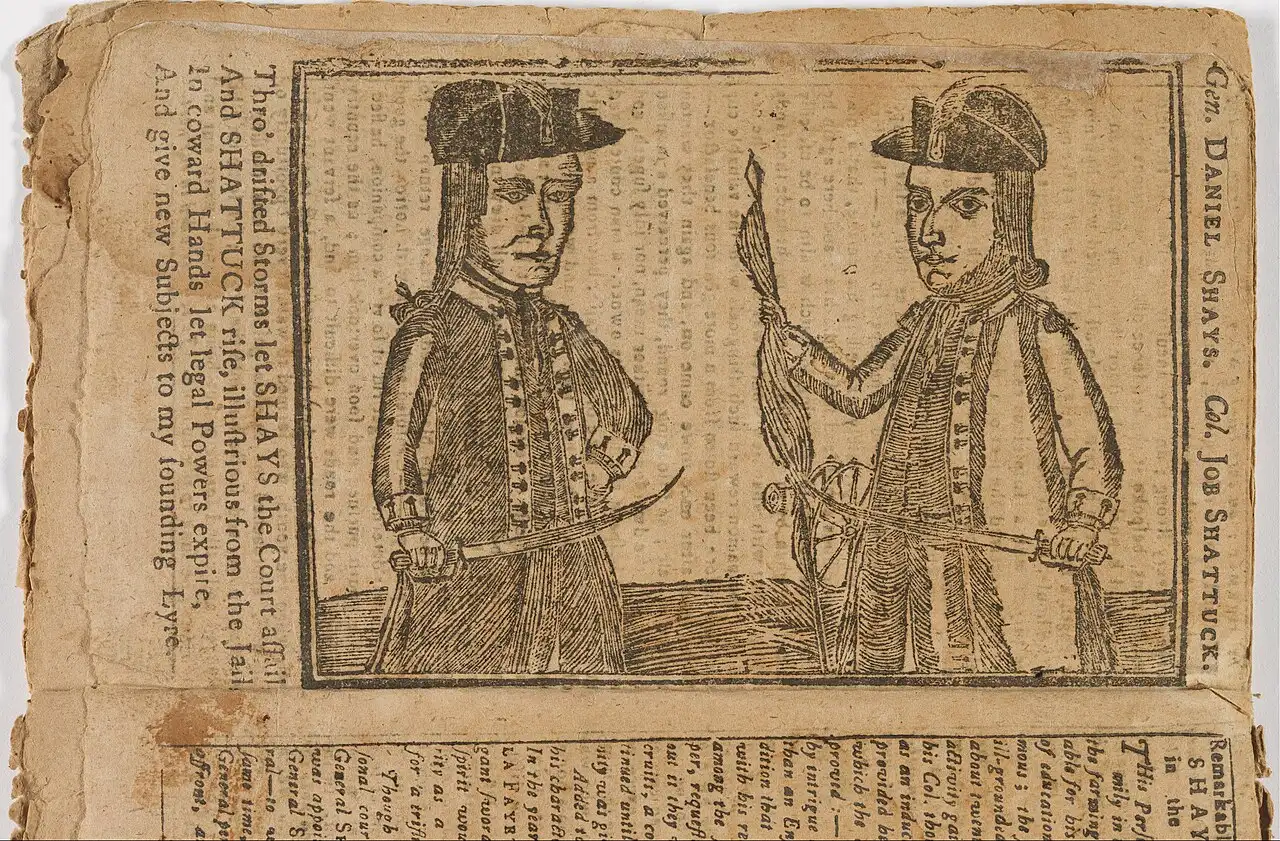
On a snowy morning in January 1787, some 1,500 armed men marched through the snow toward Springfield, Massachusetts, with a desperate plan: seize the federal arsenal, take its cannons, and use them against the government that was taking their farms.
They were farmers, most of them veterans of the Revolutionary War. Daniel Shays, their leader, had been a captain in the Continental Army who fought at Bunker Hill and Saratoga. But the war had left them drowning. To pay off the state's war debts, the Massachusetts legislature had piled on taxes payable only in hard currency — money the farmers did not have. Courts ordered foreclosures and threw debtors into prison. In the summer of 1786, the farmers began shutting the courthouses down by force.
Their grievances were real, but so was the government's alarm. When Shays's men moved on the arsenal at Springfield on January 25, 1787, they expected the guards — fellow veterans — to stand aside. Instead, Major General William Shepard was waiting with about 1,200 state militiamen and artillery.
Shepard fired warning shots over the advancing column. When the farmers kept coming, he ordered his cannons loaded with grapeshot. Four rebels were killed and twenty wounded. The farmers, many armed with little more than clubs and pitchforks, broke and fled in disarray, crying "murder."
The rebellion's end came days later. General Benjamin Lincoln led some 4,400 troops — raised with money from Boston merchants, because Congress under the Articles of Confederation could not fund an army of its own — on a brutal night march through a snowstorm to surprise the rebels' camp at Petersham. The farmers scattered into the woods. Shays fled to Vermont. Most of the captured men were eventually pardoned by the newly elected governor, John Hancock, and Shays himself was pardoned in 1788.
The uprising failed, but its shockwaves remade a nation. It exposed a terrifying truth: the United States, governed by the weak Articles of Confederation, could not reliably put down an armed insurrection — or even raise troops to try. Leaders like George Washington watched in alarm, warning that the young republic might collapse into anarchy.
Within weeks of the rebellion's collapse, Congress endorsed the call for a convention in Philadelphia to repair the Articles. The delegates who gathered that summer went further: they wrote an entirely new Constitution, creating the stronger federal government the crisis had shown was necessary.
Shays's Rebellion remains one of history's great ironies: a failed revolt against the government became the reason the government was rebuilt. The farmers lost their battle — but their desperation forced America to build a republic strong enough to survive its own people.
Image: a satirical broadsheet print from 1787 depicting rebellion leaders Daniel Shays and Job Shattuck (artist unidentified), public domain (via Wikimedia Commons).