
Around the World in 72 Days: Nellie Bly's Impossible Race
On January 25, 1890, reporter Nellie Bly completed a record-breaking 72-day solo journey around the world, beating Jules Verne's fictional eighty days.
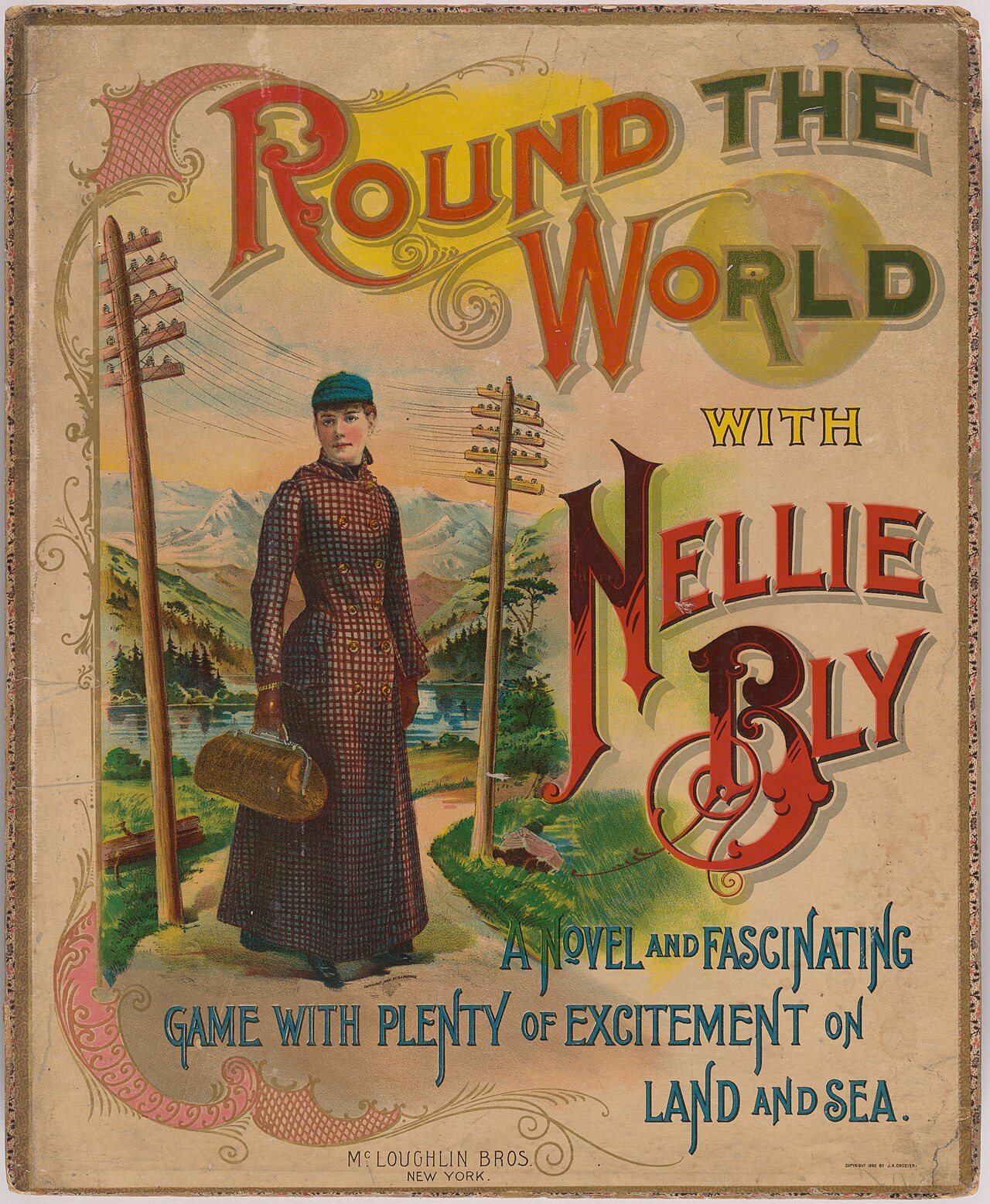
At 3:51 on the afternoon of January 25, 1890, a crowd roared in Jersey City as a young woman stepped off a train and into history. Nellie Bly had just traveled around the entire world, alone, in 72 days, 6 hours, and 11 minutes.
Born Elizabeth Jane Cochran in Pennsylvania, Bly had already made her name with one of the boldest stunts in journalism. In 1887, she feigned insanity to get committed to the asylum on New York's Blackwell's Island, then exposed its horrors in her reporting. Two years later she walked into the office of the New York World with an even wilder idea: turn Jules Verne's novel Around the World in Eighty Days into fact, and beat the fictional record.
Her editor thought a woman could never do it. Bly disagreed. On November 14, 1889, at 9:40 in the morning, she boarded the steamer Augusta Victoria at Hoboken, New Jersey, carrying one small grip bag and wearing the checked travel coat that would become her trademark.
Her route read like an adventure novel: England, France, where she stopped in Amiens to meet Jules Verne himself, then Brindisi, through the Suez Canal, to Colombo in Ceylon, Penang and Singapore, Hong Kong, and Japan. She visited a leper colony in China and bought a monkey in Singapore. She had secret competition, too: Cosmopolitan magazine had sent writer Elizabeth Bisland racing the other way around the globe the very same day.
Rough weather on the Pacific crossing put Bly two days behind schedule when she reached San Francisco on January 21. But newspaper owner Joseph Pulitzer would not let his star reporter lose to the calendar. He chartered a private train, the Miss Nellie Bly Special, which tore across the country from San Francisco to Chicago in a record 69 hours, averaging 37 miles an hour, with Bly handing bottles of champagne to each division superintendent along the way.
She arrived in New Jersey on January 25, completing a 24,898-mile journey that readers had followed breathlessly for months, many of them entered in the World's "Nellie Bly Guessing Match," trying to predict her arrival time to the second. Bisland finished a few days later. Bly's record stood for only a few months before it was broken, but that was never the point.
Why does it matter? Nellie Bly proved, on the world's biggest stage, that a woman could do anything a man could do, with nothing but nerve, a notebook, and one small bag. She helped invent investigative journalism and showed millions of readers that the world was smaller, stranger, and more wonderful than they had imagined.
Illustration: McLoughlin Bros., 1890, public domain (via Wikimedia Commons).