The Escape Artist's Last Trick: Houdini Dies on Halloween
On October 31, 1926, the world's most famous escape artist lost his final battle — not to chains or a water tank, but to a ruptured appendix.
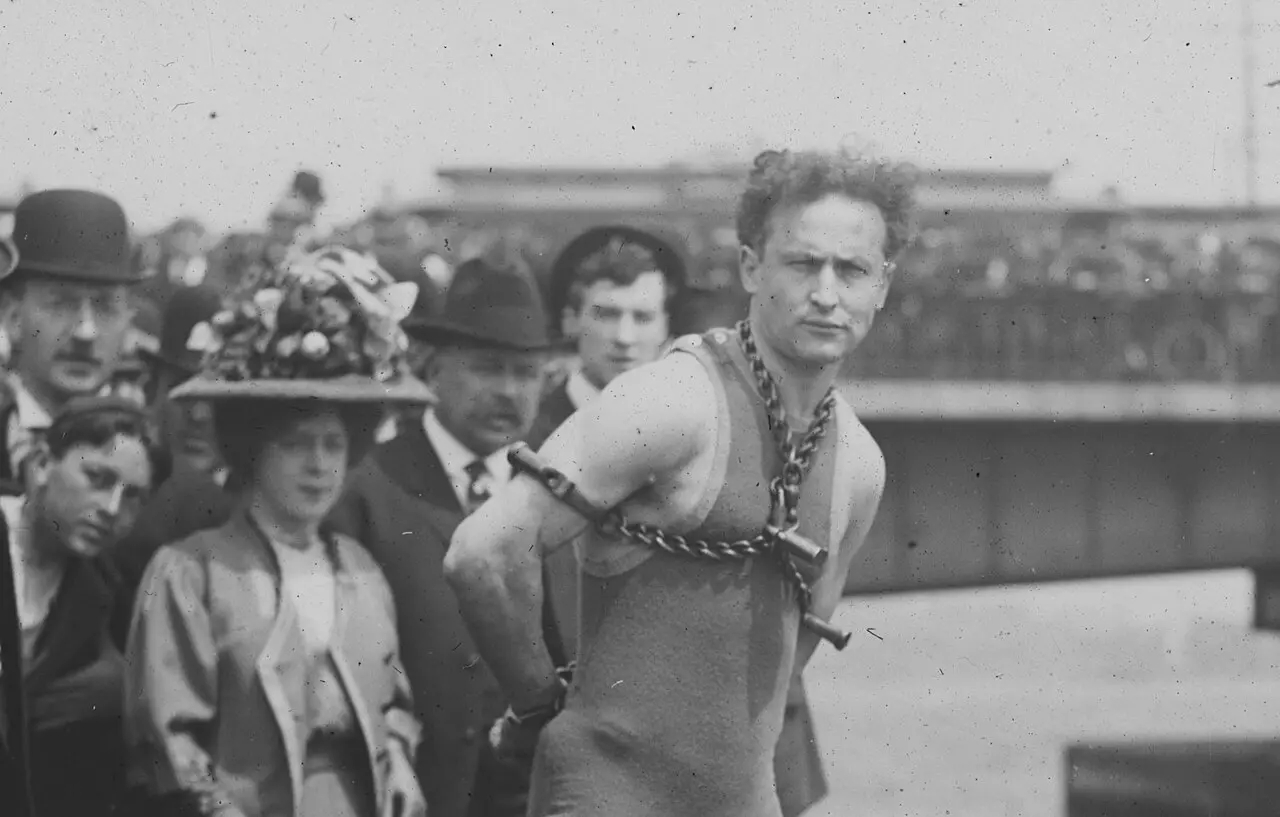
On Halloween afternoon in 1926, the man who had escaped from handcuffs, straitjackets, and locked water tanks faced the one thing he could not escape. Harry Houdini — the most famous magician in the world — died at Detroit's Grace Hospital, aged 52, of peritonitis caused by a ruptured appendix.
The end began, fittingly, with a punch. Days earlier, in his dressing room at Montreal's Princess Theatre, a McGill University student named J. Gordon Whitehead had asked Houdini whether it was true that blows to the stomach did not hurt him. Houdini, who was reclining on a couch recovering from a broken ankle, agreed to demonstrate. Caught unprepared, he took several hammer-like blows to the abdomen.
What role the blows played is still unknown. Houdini may already have been suffering from appendicitis — his reluctance to seek treatment may even have been because the pain masked the warning signs. What is certain is what came next: a fever, days of pain he refused to have examined, and finally a doctor's diagnosis of acute appendicitis and an order for immediate surgery. Houdini ignored the advice. He had a show to do.
On October 24, he arrived at Detroit's Garrick Theatre with a fever of 104°F and took the stage anyway — passing out at one point, revived, and finishing the performance. It was his last. After the show he was taken to Grace Hospital, where surgeons found his appendix had ruptured days earlier — a usually fatal condition in the days before antibiotics. He reportedly told his wife he was "tired of fighting." By Halloween afternoon, he was gone. His insurance company, after investigating, concluded the death stemmed from the Montreal dressing-room incident and paid double indemnity.
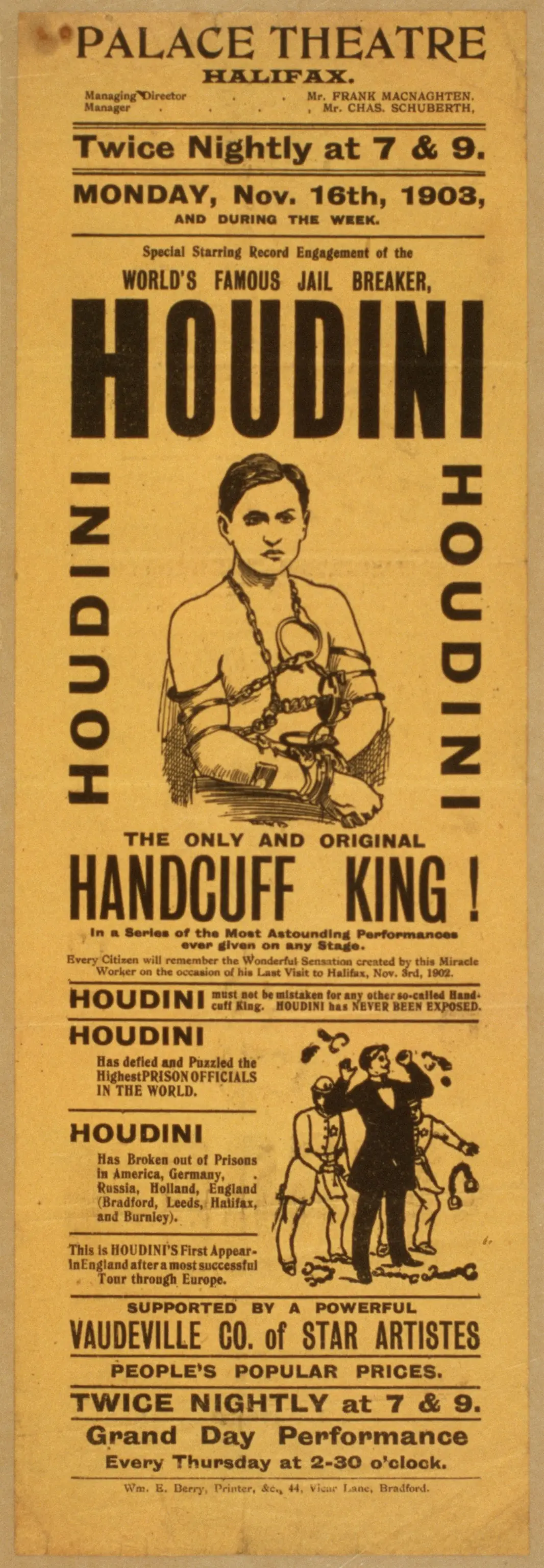
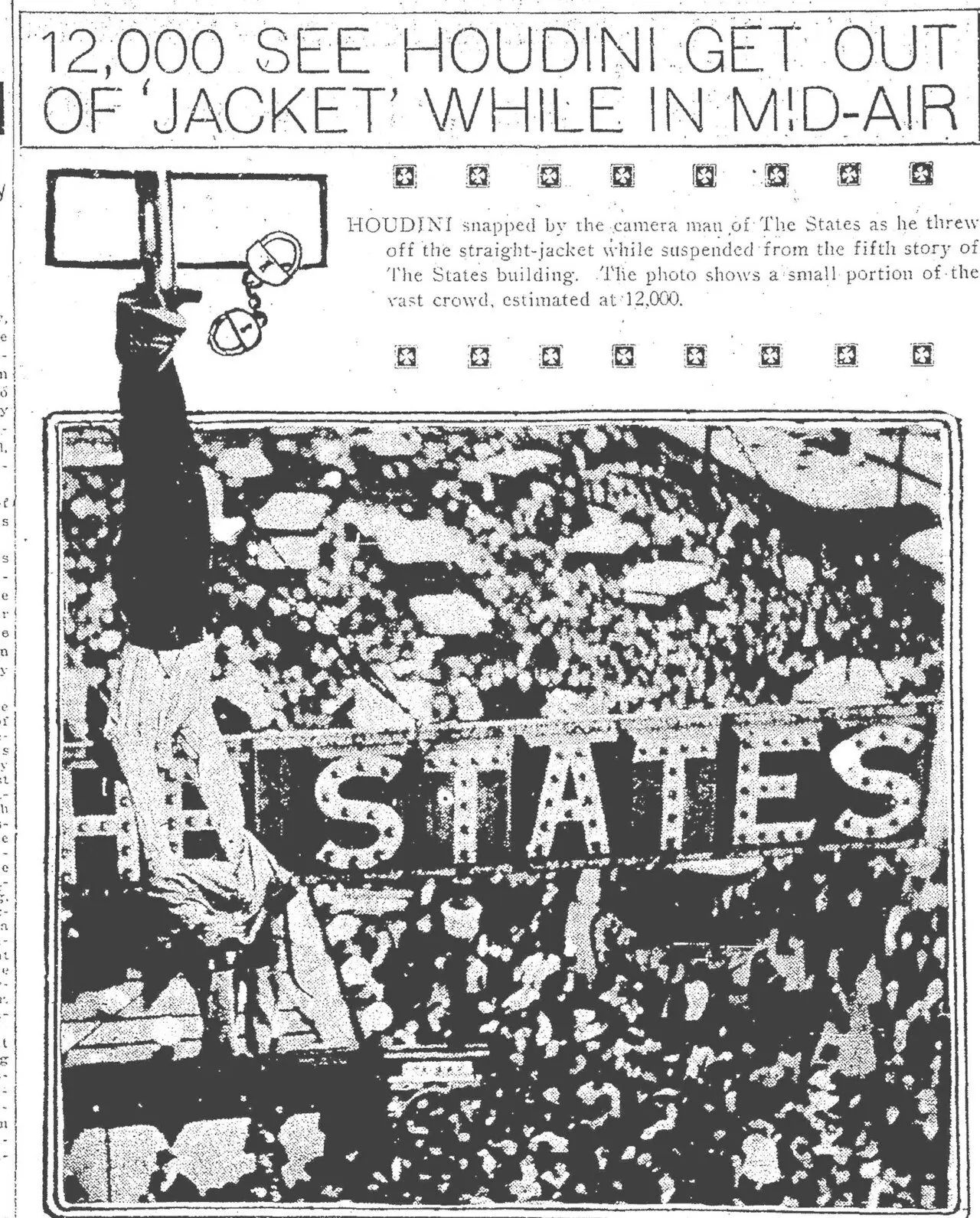
Houdini had spent thirty years turning danger into theater. In 1907, suspended upside down from the fifth story of the New Orleans States newspaper building, he threw off a straitjacket before a crowd the paper billed at 12,000. He had been buried alive, thrown chained into rivers, and locked in a water-filled torture cell — and always come back up for the bow.
He died, of all days, on Halloween — the one night of the year when the world thinks about ghosts. It sealed his legend forever: the man who could escape anything became the man who, some say, promised to escape death itself. A century later, his name is still the word we reach for when the impossible turns out to be possible.
Photo: New Orleans States, 1907, public domain (via Wikimedia Commons).
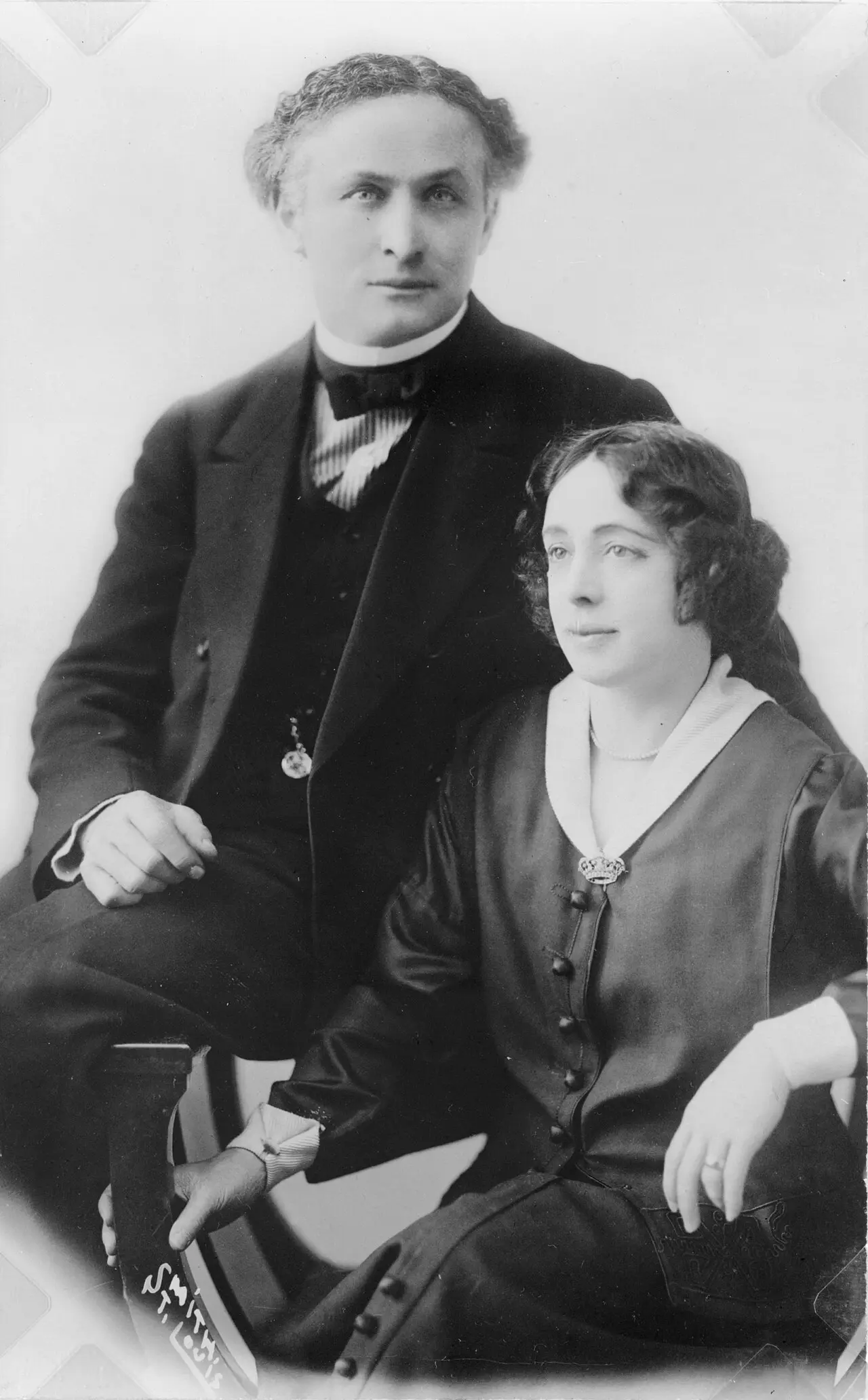
More images (via Wikimedia Commons, public domain): Houdini jumping from the Harvard Bridge in Boston (John H. Thurston); a Houdini "Handcuff King" poster; Houdini and his wife Bess.