
'The Eagle Has Landed': One Giant Leap
On July 20, 1969, the lunar module Eagle touched down in the Sea of Tranquility, and that night Neil Armstrong stepped onto the lunar surface — the first human on another world.
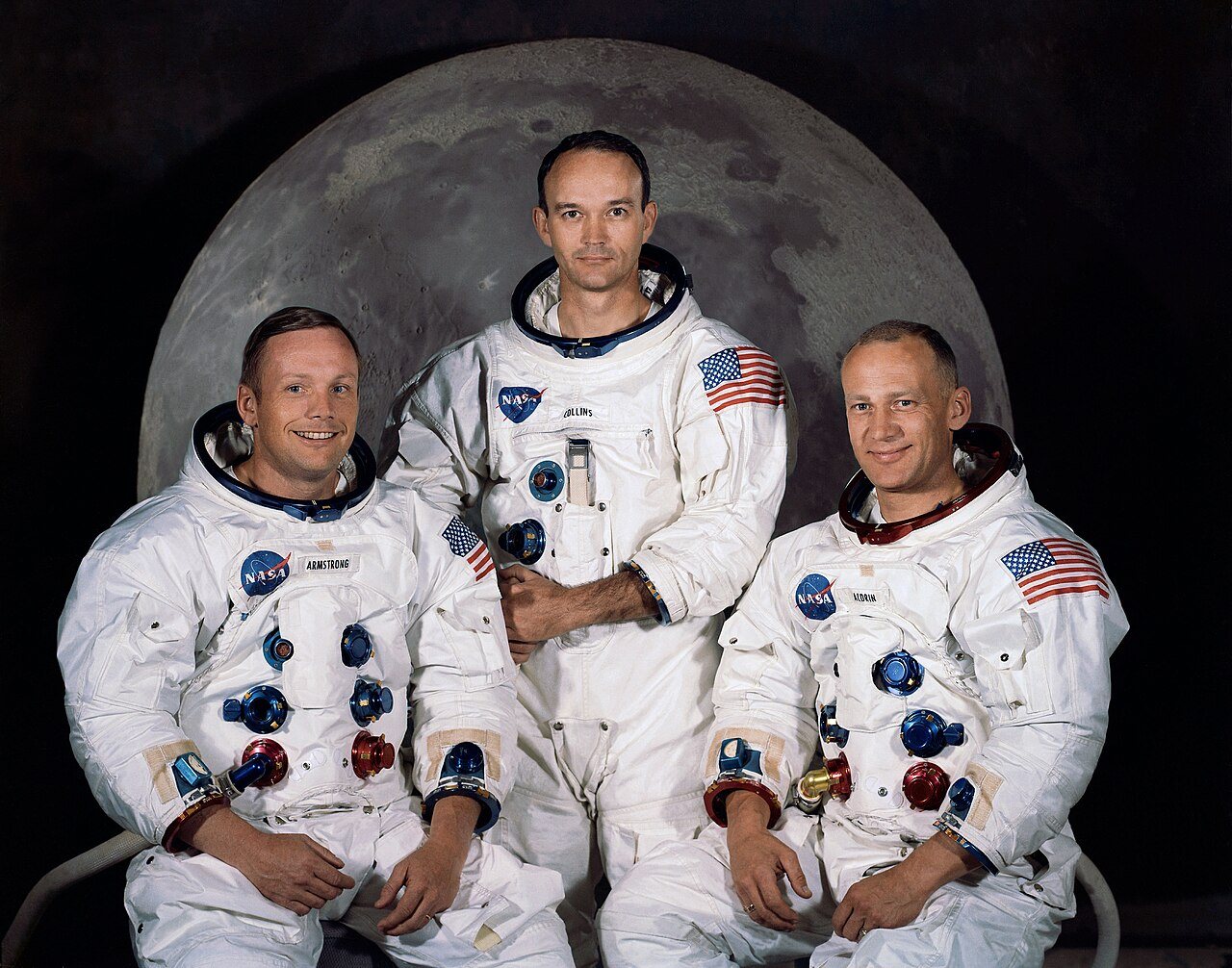
Four days after leaving Florida, two men were falling toward the Moon. On the afternoon of Sunday, July 20, 1969, Neil Armstrong and Buzz Aldrin had separated from the command module Columbia — where Michael Collins remained alone in lunar orbit — and were descending in the lunar module Eagle toward the Sea of Tranquility. With the landing site rushing up and fuel running low, Armstrong took manual control and steered past a field of boulders to a smoother patch of ground. At 4:17 p.m. Eastern time, Eagle touched down with less than 40 seconds of fuel to spare. Armstrong's voice, calm as stone, reached Mission Control in Houston: "Houston, Tranquility Base here. The Eagle has landed."
The flight plan called for the crew to sleep before venturing outside. There would be no sleeping. Armstrong asked Houston to move the moonwalk up by several hours, and permission was granted. Configuring the suits and depressurizing the cabin took longer than expected, but at 10:39 p.m., Armstrong opened Eagle's hatch and began backing down the ladder, pausing to switch on the television camera that would carry his image to Earth.
At 10:56 p.m., he sank his left boot into the powdery gray soil and spoke the sentence he had been turning over in his mind: "That's one small step for a man, one giant leap for mankind." (The "a" was swallowed in the live transmission — a small imperfection in the most famous sentence of the century.) Nineteen minutes later, Aldrin joined him, looked around at the stark, beautiful desolation, and said simply: "Magnificent desolation."
Together they spent about two and a half hours on the surface: planting the American flag, reading the plaque fixed to Eagle's leg — "Here men from the planet Earth first set foot upon the Moon, July 1969 A.D. We came in peace for all mankind" — taking a telephone call from President Richard Nixon in the White House, deploying scientific instruments, and gathering 21.5 kilograms of Moon rock and soil. Then they climbed back into Eagle, lifted off, and rejoined Collins in Columbia. On July 24, all three splashed down in the Pacific Ocean.
Hundreds of millions of people watched or listened around the world. It was the fulfillment of Kennedy's 1961 pledge, delivered with months to spare before the decade ended — and it remains the farthest humans have ever traveled, and the only time we have set foot on another world. Decades later, with new missions aiming back at the Moon, July 20, 1969, is still the high-water mark of human exploration: the night we stopped looking up at the Moon and started standing on it.
Photo: NASA, public domain (via Wikimedia Commons).