The Day the Elevator Became Safe: March 23, 1857
On March 23, 1857, the world's first safe passenger elevator opened in a New York department store — the invention that made skyscrapers possible.
Before 1857, riding an elevator meant trusting your life to a single rope. If it snapped, you fell. On March 23, 1857, in a five-story department store on Broadway in New York, the first passenger elevator with a safety brake opened for business — and the modern skyscraper became possible.
The man behind it, Elisha Graves Otis, was a Vermont-born mechanic who had bounced from job to job — wagon driver, gristmill builder, master mechanic in a bedstead factory. In 1852, while installing machinery at a bed factory in Yonkers, New York, he faced a practical problem: the factory needed a hoist to lift heavy equipment to the upper floor, but everyone knew hoisting ropes broke. Otis's answer was a simple, brilliant mechanism: a spring-loaded brake that would snap outward and grip the guide rails the instant the cable went slack.
He founded his own elevator company in 1853, but sales were slow — just three elevators in the first year. Who would trust their life to a rope? So in 1854, at the Exhibition of the Industry of All Nations in New York's Crystal Palace, Otis staged the most dramatic product demonstration of the century. Hoisted high above a crowd on an open platform, he had an assistant sever the suspension rope. The platform dropped a few inches — and stopped dead. Otis tipped his hat to the gasping onlookers and announced, as the story goes, "All safe, gentlemen, all safe." Orders poured in.
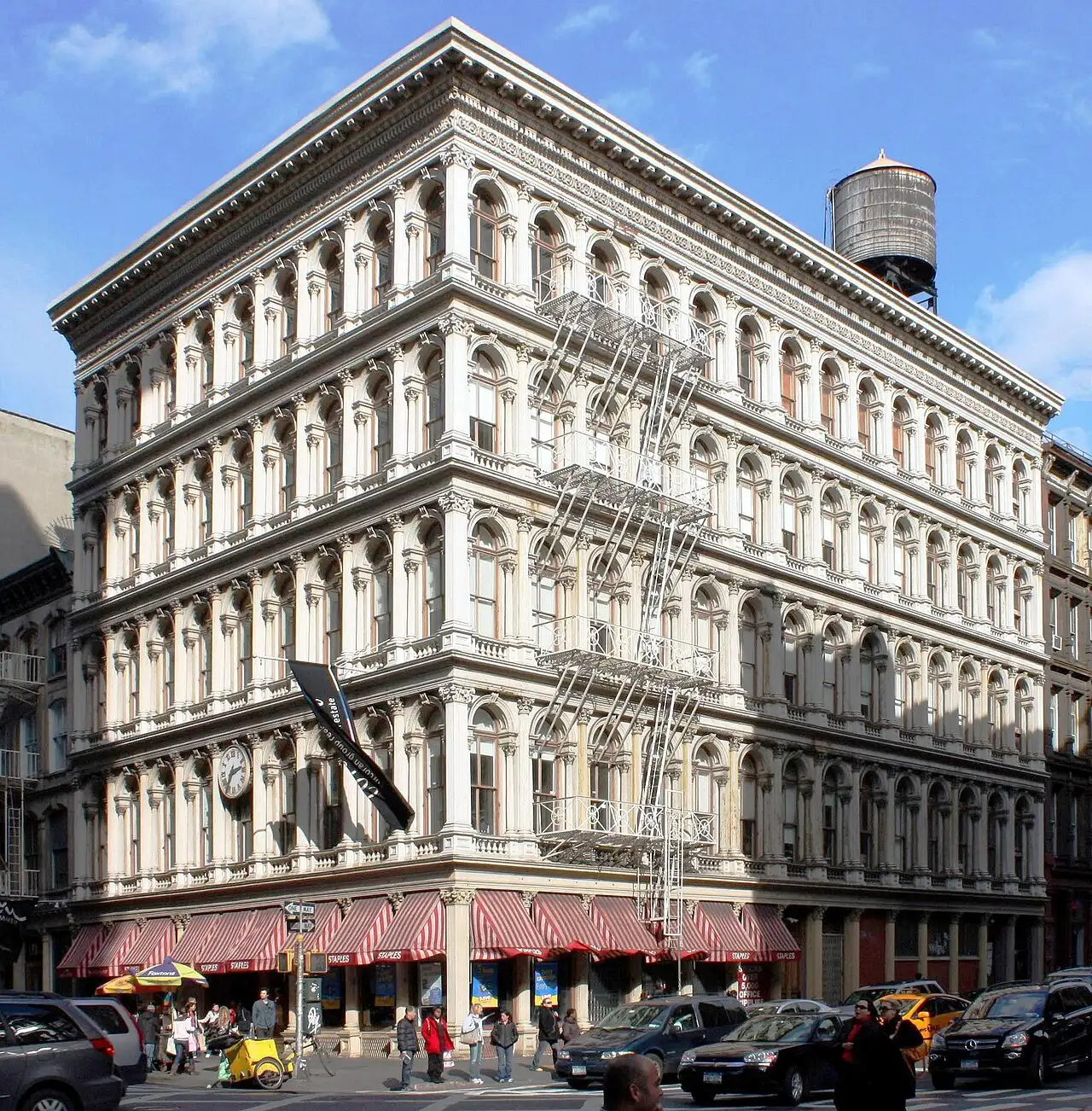
The ultimate prize came three years later. Eder Haughwout's fashionable emporium at 488 Broadway — a five-story cast-iron palace selling china, crystal, and silver to New York's elite (Mary Todd Lincoln had her White House china painted there) — needed a way to lure shoppers to its upper floors. On March 23, 1857, Otis installed the world's first commercial passenger elevator in the store: steam-powered, gliding at 40 feet per minute. March 23 is still celebrated by the Otis company as World Elevator Day.
Otis himself didn't live to see what he'd unleashed — he died of diphtheria in 1861 at just 49, and his sons Charles and Norton built the company into a global giant. But consider what his brake made possible: without a safe way to move people vertically, buildings had no reason to grow taller than a walk-up's worth of stairs. The skyscraper — and with it the modern downtown — is, in a real sense, an Otis invention.
Every time you ride an elevator, you're trusting a descendant of that 1852 brake: multiple steel cables, electromagnetic brakes, governors that lock the car to its rails. It has made the elevator one of the safest forms of travel ever built. Cities grew upward because one mechanic refused to accept that a snapped rope had to mean a fall.
Photo: Samuel.north, CC BY 3.0, via Wikimedia Commons.