23 Years Old and Unafraid: The Execution of Bhagat Singh
On March 23, 1931, Britain hanged 23-year-old Bhagat Singh in Lahore — and accidentally created modern India's most beloved martyr.
On the evening of March 23, 1931, three young men walked to the gallows in Lahore's central jail. The eldest was 23. By morning, Bhagat Singh, Shivaram Rajguru, and Sukhdev Thapar were martyrs — and the British Empire had made one of the worst mistakes of its Indian century.
Bhagat Singh was born in 1907 in Banga, Punjab, into a family steeped in the freedom struggle. As a teenager he watched the nonviolent movement and concluded it wasn't enough; he joined the Hindustan Socialist Republican Association, a revolutionary group committed to complete independence. In December 1928, he and Rajguru shot dead a British police officer, John Saunders, in Lahore — they had meant to kill the police chief James Scott, whose baton charge had killed the revered nationalist leader Lala Lajpat Rai weeks earlier. It was, by their own cold logic, revenge.
Then came the act that made him famous. On April 8, 1929, Singh and Batukeshwar Dutt walked into the Central Legislative Assembly in Delhi and threw two low-grade bombs onto the empty floor — deliberately avoiding casualties — then showered the chamber with leaflets and waited calmly to be arrested. They wanted a trial, a stage, a megaphone. They got one: from the dock, Singh argued for revolution, socialism, and a free India, and newspapers carried his words across the country.
The British obliged with the Lahore Conspiracy Case — a special tribunal, convened under emergency ordinance, where the accused were tried in their absence and sentenced to death with no real chance to defend themselves. India's Supreme Court would later call the proceedings contrary to the fundamental doctrines of criminal jurisprudence. Pleas for mercy poured in from across India. They were refused. The execution, set for March 24, was moved up by eleven hours — to 7:30 on the evening of March 23 — and carried out in secrecy; the bodies were cremated under cover of darkness outside the city, the ashes consigned to the Sutlej River.
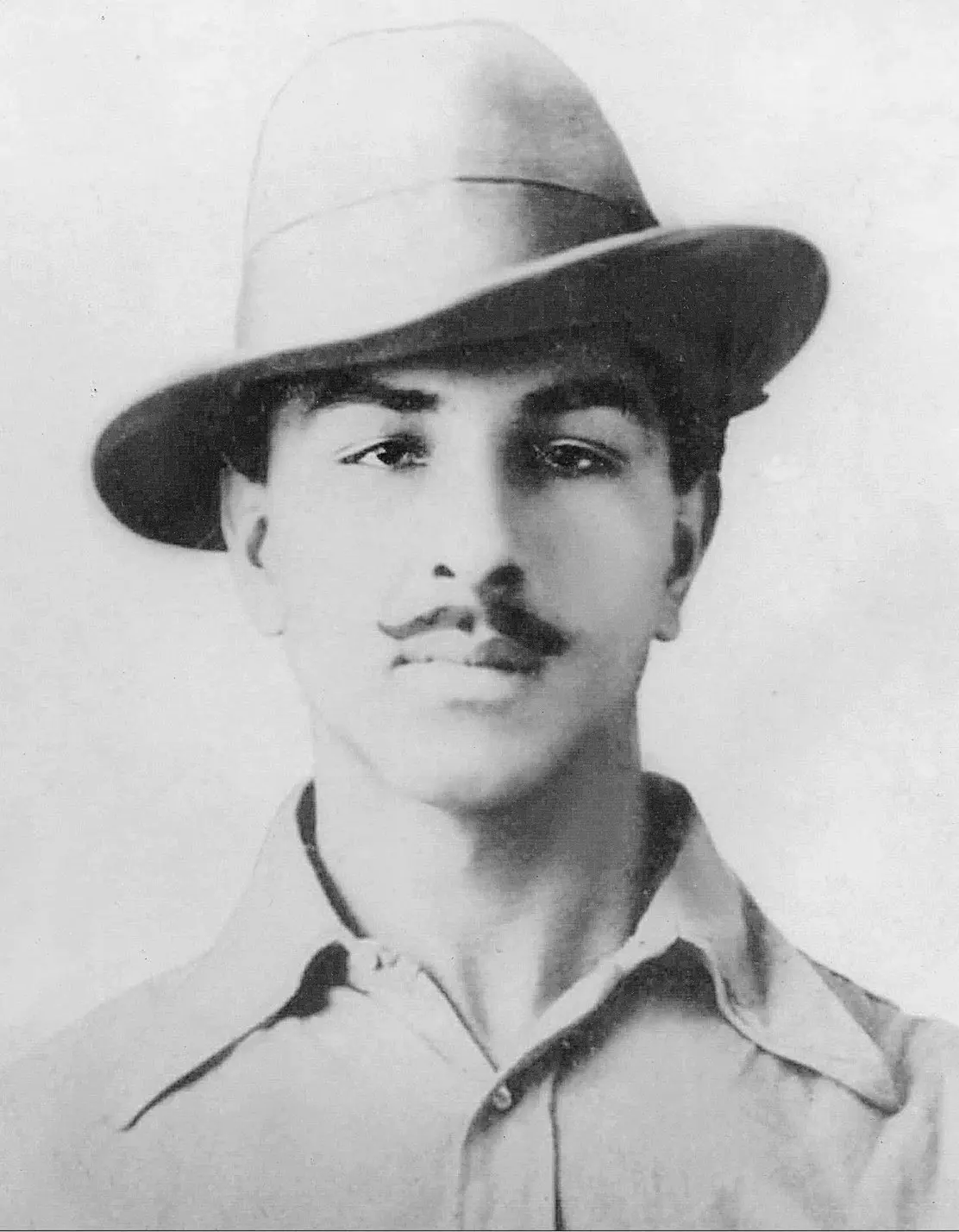
The backlash was immediate and enormous. The hangings took place on the eve of the Congress party's annual session in Karachi, and even Gandhi was met with black-flag demonstrations by furious young nationalists. Across India, March 23 became Shaheed Diwas — Martyrs' Day — and Bhagat Singh, the smiling 23-year-old in the famous hat, became the enduring face of youthful sacrifice for freedom.
Empires fall when they turn their opponents into legends. The British meant the gallows to be a warning; instead they minted an icon whose writings on courage, reason, and justice are still read in Indian schools today. Bhagat Singh's story asks an uncomfortable question of every generation: what would you risk for the freedom of people you will never meet?
Photo: Ramnath Photographers, Delhi (April 1929 portrait), public domain in India, via Wikimedia Commons.