The City Built From Nothing: Brasília Is Born
On April 21, 1960, President Juscelino Kubitschek inaugurated Brasília — a futuristic capital built from scratch in 41 months on Brazil's empty central plateau.
In 1956 it was empty savanna. Less than four years later, it was the capital of one of the largest countries on Earth.
On April 21, 1960, Brazilian President Juscelino Kubitschek stood in a brand-new city that had not existed when he took office and declared it the capital of Brazil, replacing Rio de Janeiro. The idea was older than the republic itself: as far back as 1822, José Bonifácio had proposed moving the capital to the country's interior, and the 1891 constitution had set aside land on the central plateau for the purpose. For more than a century, nothing happened — until Kubitschek made it a campaign promise and then, astonishingly, kept it.
Building Brasília was the centerpiece of his "Fifty Years in Five" program, a furious drive to industrialize and modernize Brazil. In late 1956, crews began clearing the red earth of the Goiás plateau. Tens of thousands of workers poured in from across the country, laboring in three shifts around the clock. Urban planner Lúcio Costa won the design competition with his famous "Pilot Plan" — a city laid out in the shape of an airplane, or a bird, with government buildings along the fuselage and residential life in the wings.
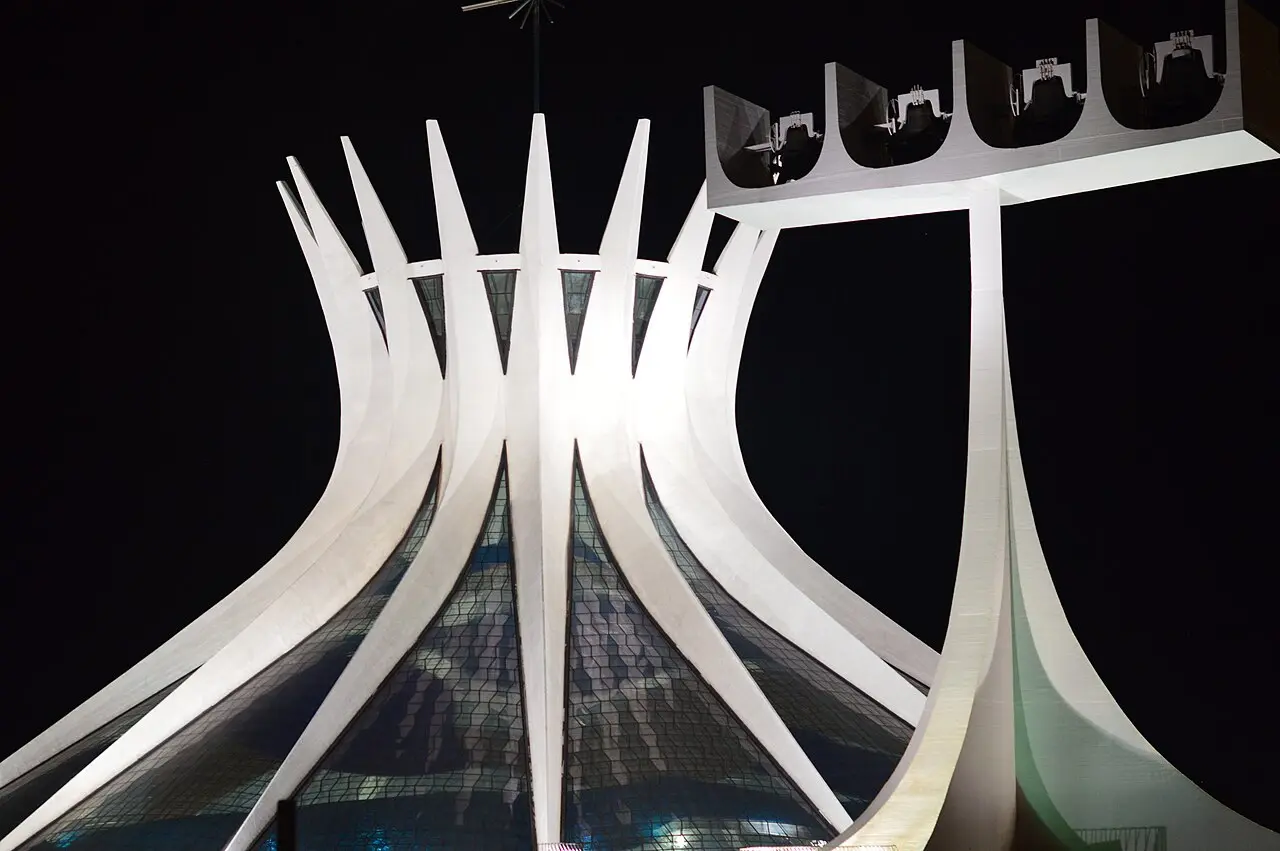
Then Oscar Niemeyer gave the city its soul. Brazil's greatest architect designed the buildings that made Brasília famous: the National Congress, with its twin office towers flanked by a concave and a convex dome; the Cathedral of Brasília, sixteen concrete columns rising and curving together like hands lifted to heaven; and the Alvorada Palace, the president's residence. Landscape architect Roberto Burle Marx wove green space through it all. The whole city — government ministries, cathedral, airport, road networks — rose in just 41 months.
On inauguration day, Kubitschek personally closed the doors of the presidential palace in Rio and moved the entire federal government — executive, legislative, and judicial branches — a thousand kilometers inland. It remains one of the boldest acts of urban ambition in history.
Brasília was not without critics: its car-centered design and monumental scale could feel inhuman, and its planned utopia sat uneasily beside the poverty of the workers who built it. But in 1987 UNESCO named it a World Heritage Site, recognizing its modernist architecture and uniquely artistic urban planning. Today it is home to nearly three million people. Whatever its flaws, Brasília proved something extraordinary: that a nation can quite literally build its future on purpose — drawing a capital city out of empty grassland in under four years.
Photo: Eliane Brasil, CC BY-SA 4.0 (via Wikimedia Commons).