The Book That Told Parents to Trust Themselves
On July 14, 1946, pediatrician Benjamin Spock published a baby-care manual whose first line — "Trust yourself" — changed how a generation raised its children.
"Trust yourself. You know more than you think you do."
That was the opening line of the most influential parenting book ever written, published on July 14, 1946. Its author, Dr. Benjamin Spock, had an unusual résumé for a baby doctor: before he ever wrote a word about child care, he had won an Olympic gold medal in rowing at the 1924 Paris Games, earned a medical degree from Columbia University, and spent six years studying psychology at the New York Psychoanalytic Institute.
Postwar America was in the middle of a baby boom, and new parents were hungry for guidance. What they had been getting was stern. The reigning experts warned mothers not to rock their babies unnecessarily, to let infants "cry it out" for exercise, and — in the words of behaviorist John B. Watson — to "never, never hug or kiss" their children.
Spock threw all of that out. The Common Sense Book of Baby and Child Care, published by Duell, Sloan and Pearce, told parents to feed a hungry, wailing baby instead of obeying a rigid schedule. It told fathers to play an active role. It treated a mother's "blue feeling" after birth — what we now call postpartum depression — as natural. Its tone was warm, funny, and reassuring, as if a kind doctor were sitting in your kitchen. The first edition ran 527 pages, and every one of them sounded like permission.
Parents responded in droves: 500,000 copies sold in the first six months, and more than 50 million by the time of Spock's death in 1998. Translated into 39 languages, it became, at one point, the best-selling nonfiction book in history after the Bible.
What made it all land was the book's trademark humor and wit, which softened advice that was radical at the time — Spock insisted that parenting itself could be enjoyable. To critics who blamed him for an epidemic of overindulged young people, he once said, "I didn't want to encourage permissiveness, but rather to relax rigidity." Whether you agreed with him or not, the baby boomers were raised, in large part, by his book.
Why it matters: Before Spock, parenting manuals treated children like machines to be scheduled. After him, they treated parents like people to be trusted — and that shift is still with us in every pediatrician's office.
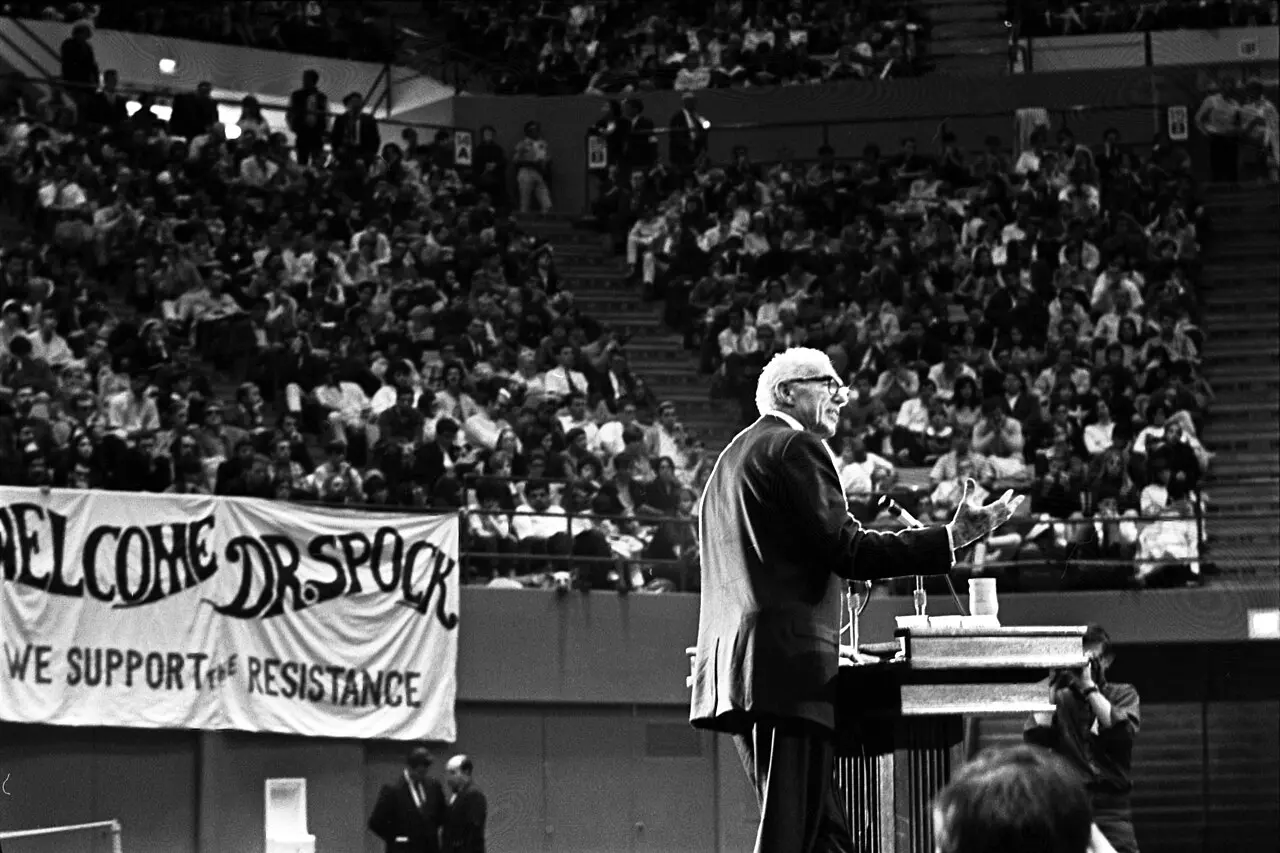
Photo: John Malmin / Los Angeles Times via Wikimedia Commons, CC BY 4.0. The photo shows Dr. Benjamin Spock speaking at an anti-war rally in 1968.