The Boeing 747 Lifts Off on Its First Flight
On February 9, 1969, the Boeing 747 took its first flight from Paine Field, launching the jumbo-jet era of air travel.
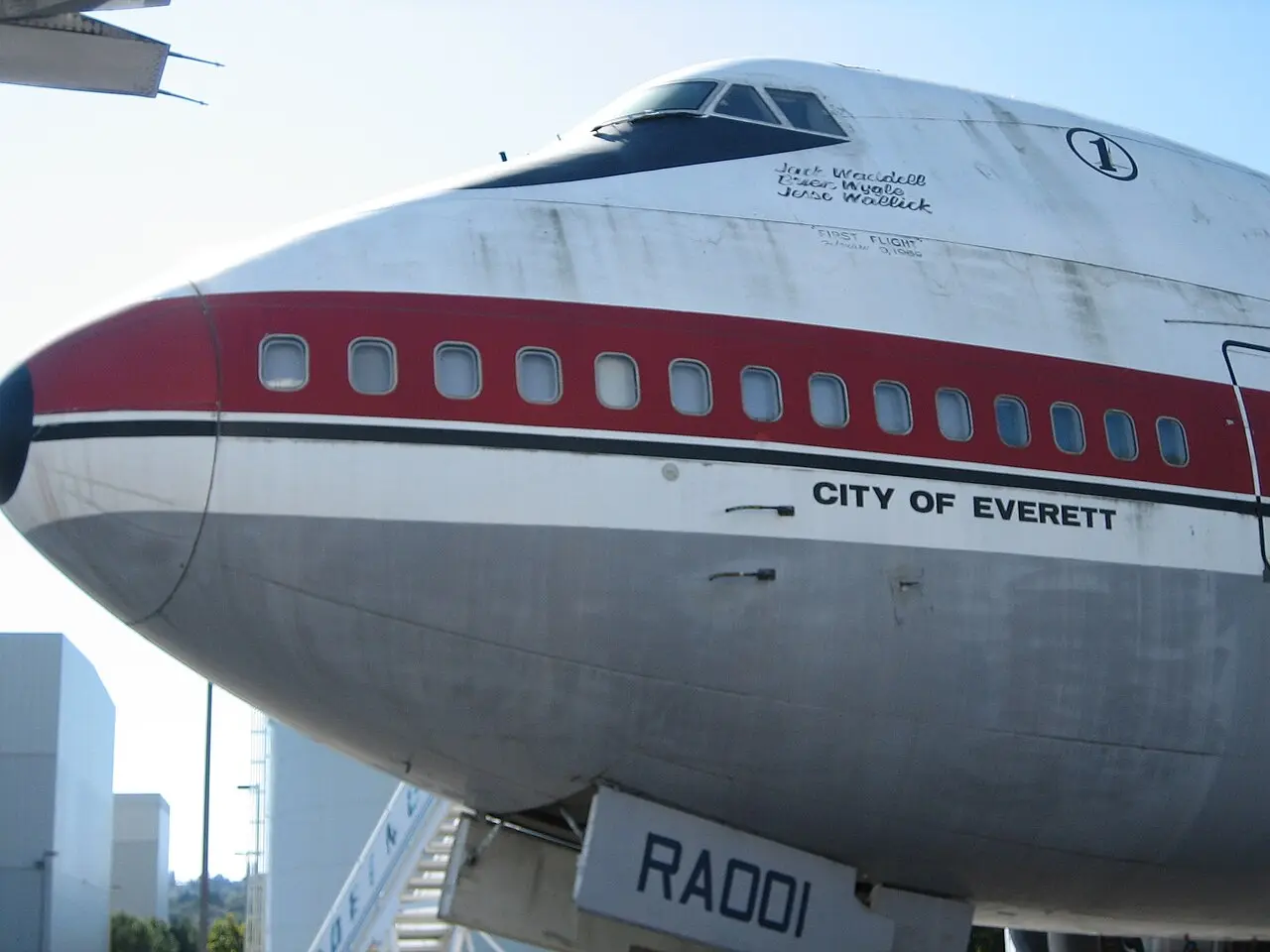
It was the largest airplane anyone had ever built — so big that Boeing had to construct the largest building on Earth just to assemble it. On the morning of February 9, 1969, crowds of people gathered at Paine Field in Everett, Washington, to find out whether the giant could actually fly.
The airplane was the prototype Boeing 747, registered N7470 and christened the City of Everett after the town that built it. The morning was gray and cloudy, but around eleven the clouds began to thin. At 11:34 a.m., Boeing chief test pilot Jack Waddell eased the throttles forward, with co-pilot Brien Wygle and flight engineer Jesse Wallick beside him. The superjet accelerated down the runway and lifted off at 164 miles per hour, a chase plane following to observe.
For the next seventy-five minutes the crew put the giant through its paces: climbing to 15,500 feet, banking into sideslips, even simulating a loss of hydraulic power. Everything worked. At 12:50 p.m. the 747 touched down in what observers called a perfect landing, at 150 miles per hour. Waddell climbed out and pronounced the enormous machine "a pilot's dream" — a "two-finger" airplane, he said, so responsive it could be flown with a forefinger and thumb on the controls.
The prototype was a sight in itself. It was the first new Boeing transport not painted in the company's traditional brownish-copper and yellow prototype colors, and its tail stood as tall as a six-story building, with wings stretching nearly 196 feet from tip to tip — wider than the Wright brothers' entire first flight was long.
The 747 had been a breathtaking gamble. In 1966, Pan American World Airways ordered twenty-five of the unbuilt jets for $550 million, and Boeing — led by engineer Malcolm Stamper and a workforce of more than 50,000 — designed and built it in under three years, assembling 4.5 million parts inside a new Everett factory that was, by volume, the biggest building in the world.
The gamble paid off beyond anyone's imagining. The 747 was the first wide-body airliner and the first jumbo jet, carrying 366 to 452 passengers in its unmistakable twin-aisle cabin beneath the upstairs hump. Certified by the FAA on December 30, 1969, it made long-distance flying affordable for ordinary people and shrank the planet for a generation. Over fifty-three years of production, Boeing built 1,574 of them. The very first one — the City of Everett — survives today at Seattle's Museum of Flight.
Photo: Fawcett5, public domain (via Wikimedia Commons)