Allied Victory: The Guadalcanal Campaign Ends
On February 9, 1943, the Guadalcanal campaign ended in Allied victory, marking the turning point of the Pacific war.
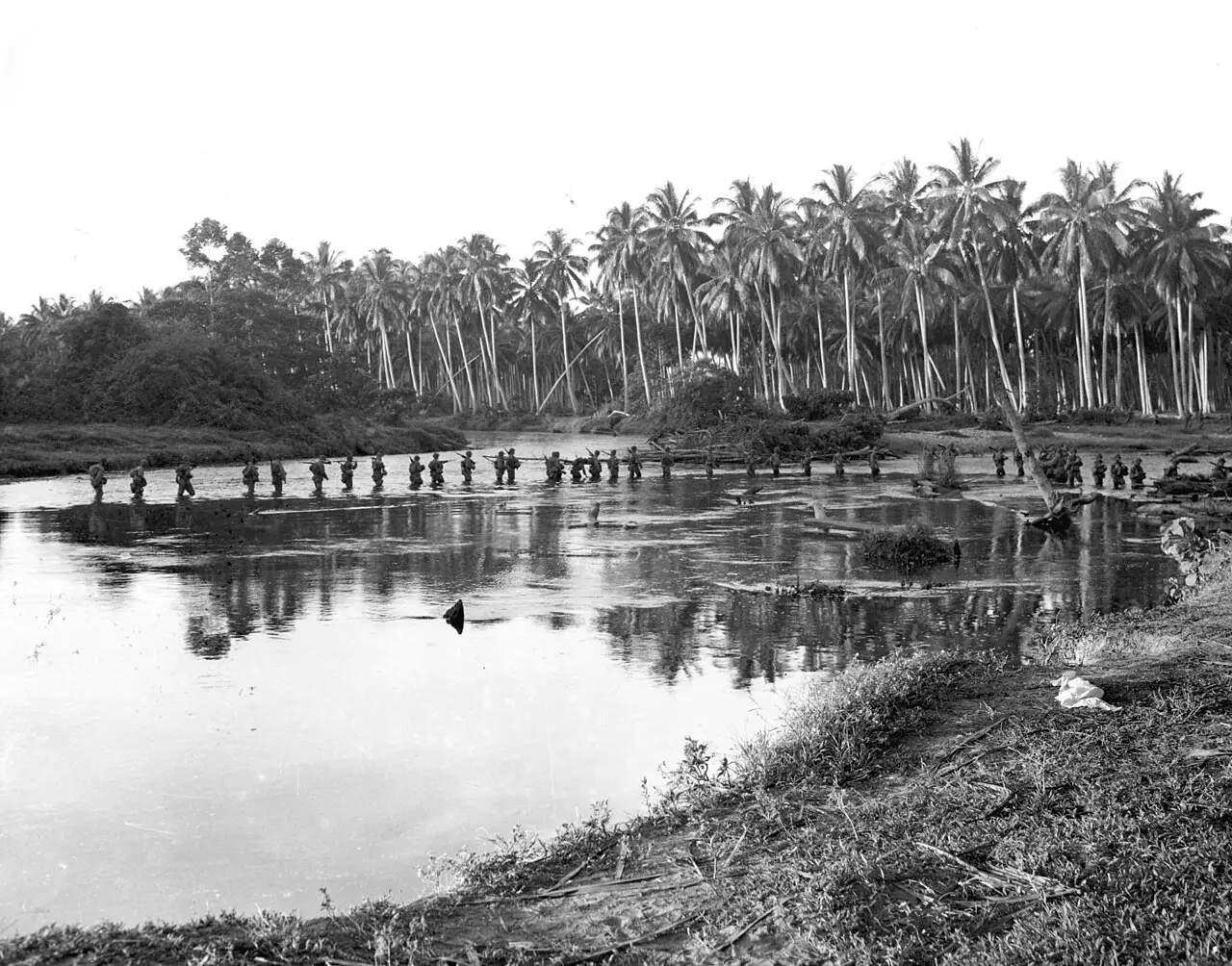
For six months the island had devoured men, ships, and airplanes. Then, on the morning of February 9, 1943, Major General Alexander Patch looked around at the empty jungle of Guadalcanal and understood: the Japanese were gone. He declared the island secure — and the Pacific war turned.
It had begun on August 7, 1942, when U.S. Marines stormed ashore in Operation Watchtower, America's first major land offensive of World War II. Their prize was a half-finished Japanese airstrip, which the Americans completed and named Henderson Field. Whoever held that airfield held the Solomon Islands — and the sea lanes to Australia.
Japan would not let it go. Through the fall of 1942 both sides poured everything they had into the island: savage night battles for the airfield perimeter, and at sea a string of brutal naval clashes — Savo Island, the Eastern Solomons, Santa Cruz — culminating in the decisive Naval Battle of Guadalcanal in mid-November. On land, American Marines and soldiers, sick with malaria and half-starved, held their perimeter against repeated assaults, while Japanese troops, cut off from supply by the American blockade, starved in the jungle.
By December the exhausted 1st Marine Division was relieved by U.S. Army troops under Major General Alexander Patch, who shifted the Americans onto the offensive — pressing the starving Japanese steadily toward the island's western tip as the evacuation destroyers made their runs.
Meanwhile, Japan's leaders had faced the truth. On December 31, with the Emperor's approval, Imperial General Headquarters ordered the island abandoned. What followed was one of the war's most remarkable operations: on the nights of February 1, 4, and 7, destroyers under Rear Admiral Shintaro Hashimoto slipped through American patrols and evacuated 10,652 Japanese soldiers — 4,935 the first night, 3,921 the second, 1,796 the last. The Americans, expecting another attack, barely interfered.
On February 9, Patch realized the evacuation was complete and declared Guadalcanal secure. The cost had been terrible on both sides — thousands dead, and many more broken by disease and hunger. But the strategic result was clear: Japan had suffered its first major land defeat of the war, and the Allies would hold the initiative in the Pacific from that day forward. As Japanese navy captain Toshikazu Ohmae later admitted, after the earlier carrier battles he had still hoped for victory — "but after Guadalcanal I felt we could not win."
Photo: U.S. Marine Corps, public domain (via Wikimedia Commons)