
The $850 Sale That Kept Ford Motor Company Alive
On July 23, 1903, Chicago dentist Ernest Pfennig paid $850 for a two-cylinder Ford Model A — the first car the Ford Motor Company ever sold, with just $223.65 left in its bank account.
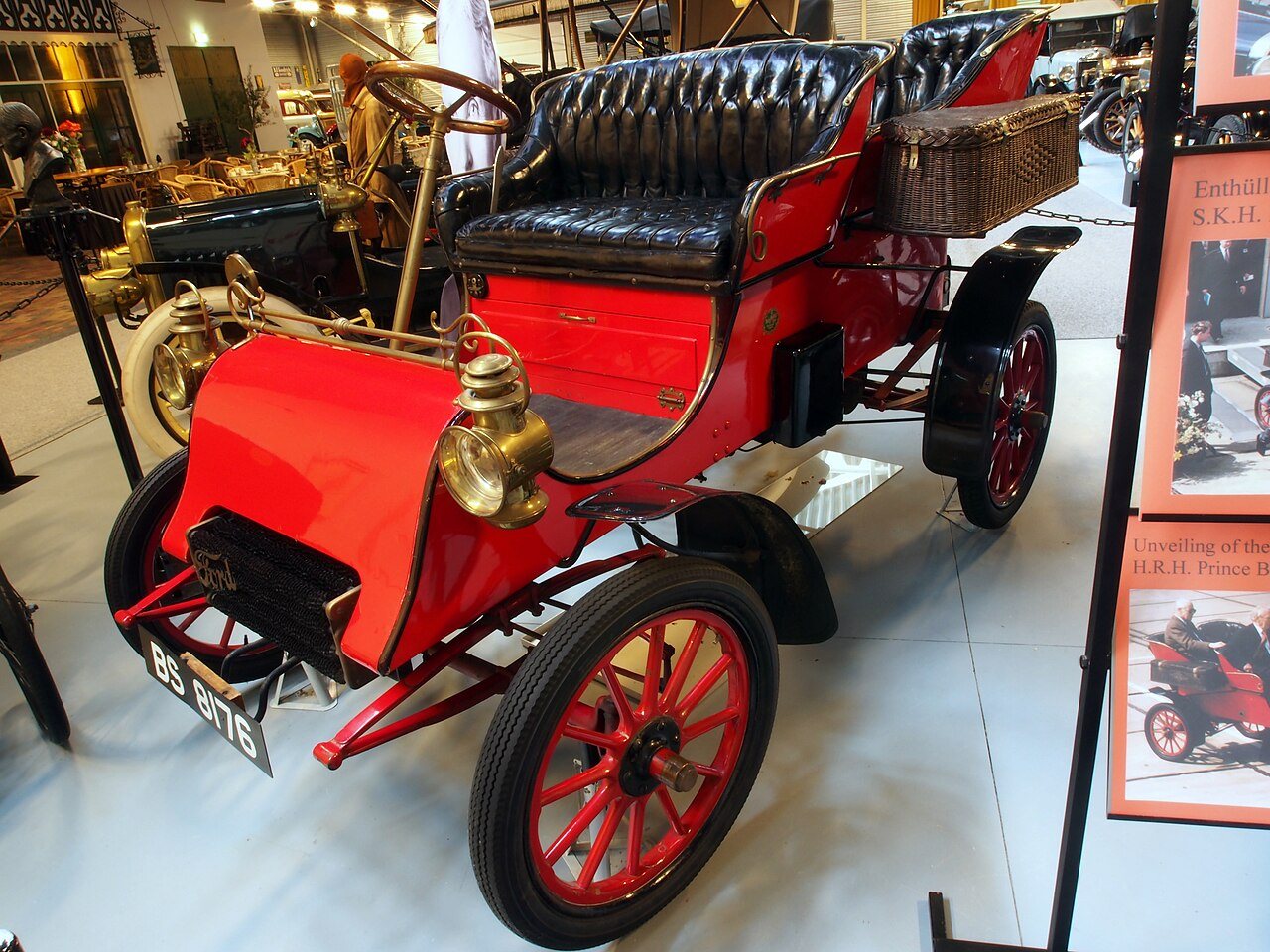
Henry Ford's new company was almost out of money when a Chicago dentist walked through the door. On July 23, 1903 — just five weeks after the Ford Motor Company was organized — Ernest Pfennig took delivery of a two-cylinder Model A with a tonneau, for which he paid $850. It was the first car the company had ever sold. When his check cleared, the company had $223.65 left in its bank account, against the $28,000 its twelve investors had put up.
It was a fragile beginning. The company operated out of a modest rented wood-frame building on Mack Avenue in Detroit — Ford's first real facility. Its investors, led by coal dealer Alexander Malcomson and banker John S. Gray, had made Gray president rather than Ford himself, reportedly so they would have someone other than Ford to hold accountable if he walked out on them again.
The Model A itself was modest too: a two-cylinder engine mounted amidships, producing 8 horsepower, with a top speed of 28 miles per hour and a weight of 1,240 pounds. The base price was $750 — $150 more than its closest competitor, the Oldsmobile Curved Dash — and Ford advertised it as "the most reliable machine in the world," a bold claim for a car prone to overheating and slipping transmission bands, like most vehicles of the era. Only 1,750 were built in 1903 and 1904, and they came from the factory only in red.
But the car sold, and the profits made Ford Motor Company Henry Ford's first successful business — after several earlier ventures had failed. The Model A was soon replaced by the Model C, and then, in October 1908, by a car called the Model T.
From there, everything accelerated: the moving assembly line arrived in 1913, the $5 workday in 1914, and within a decade Ford was putting America on wheels.
Why it matters: One $850 sale kept a nearly broke startup alive. Without that dentist's check, there is no Ford Motor Company as we know it — no Model T, no assembly-line revolution, and quite possibly a very different American century. The Model A didn't put the world on wheels, but it kept Ford in business long enough to do it.
Photo: A surviving red 1903 Ford Model A in a museum, photographed by Alf van Beem, CC0 (via Wikimedia Commons). The picture shows what a 1903 Model A looked like — not Pfennig's car itself.