Remember, Remember: The Night Parliament Almost Exploded
In the early hours of November 5, 1605, guards found Guy Fawkes with 36 barrels of gunpowder beneath Parliament — and England has lit bonfires every year since.
Just after midnight on November 5, 1605, Sir Thomas Knyvet led a search party down into a rented cellar beneath England's House of Lords. In the dark among the firewood and coal, they found a tall stranger in a cloak, hat, boots and spurs — and, stacked behind him, thirty-six barrels of gunpowder.
The stranger gave his name as John Johnson. His real name was Guy Fawkes, and his job that night was to light the fuse.
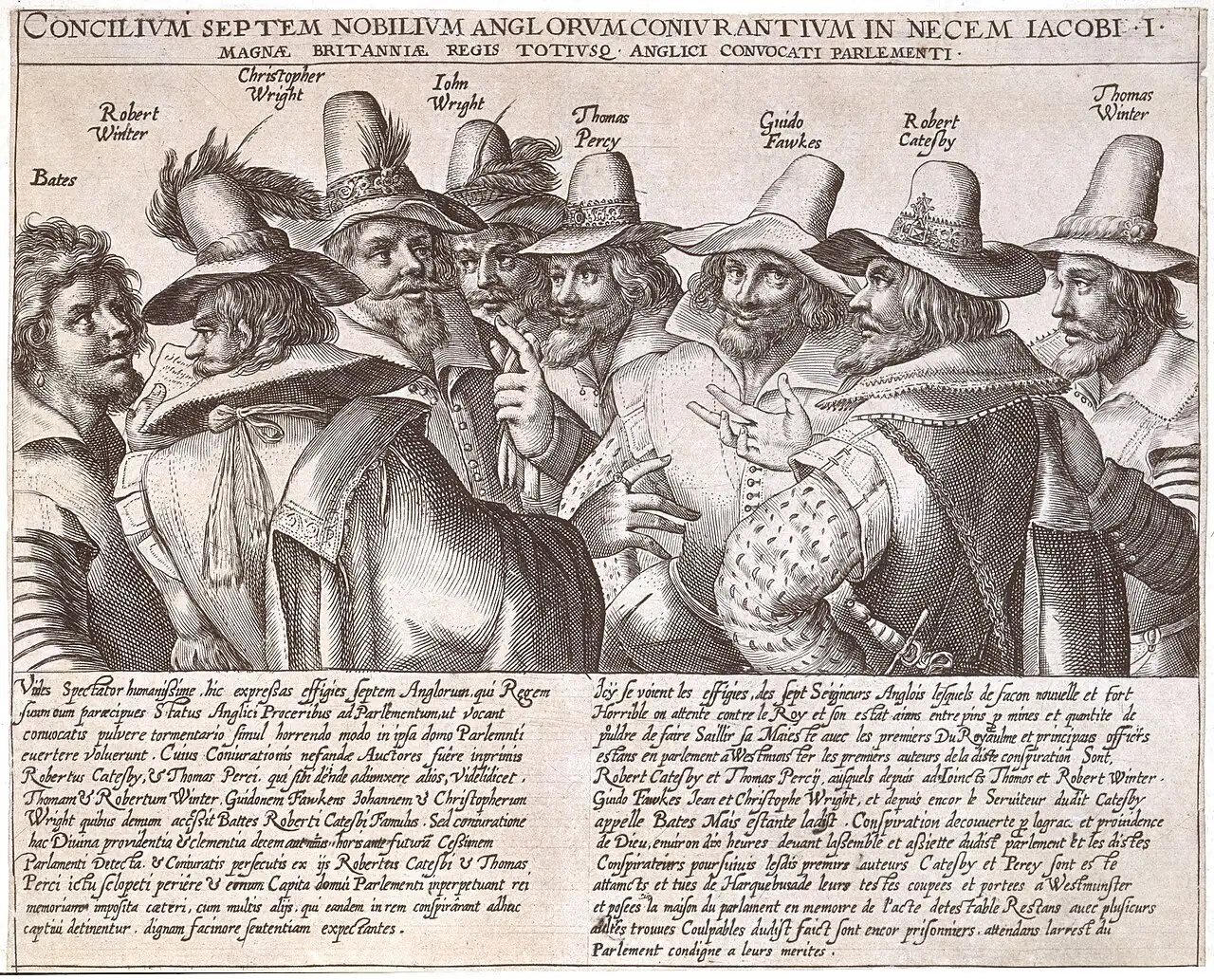
The plot had been a year in the making. England's Catholics had suffered fines, imprisonment, and worse under Queen Elizabeth I, and many had hoped her successor, James I, would ease the persecution. He didn't. So a small band of Catholic gentlemen, led by the charismatic Robert Catesby, hatched a staggering plan: blow up the King, his family, his ministers, the lords, the bishops, and the members of Parliament all at once, when they gathered for the state opening of Parliament on November 5.
Fawkes was the operation's explosives expert — a Catholic convert who had spent a decade fighting for Catholic Spain in the Netherlands. The plotters rented an undercroft directly beneath the House of Lords and, barrel by barrel, filled it with gunpowder: thirty-six barrels, hidden under firewood and coal. One spark would have leveled the building and everyone in it.
The conspiracy unraveled with a letter. On October 26, Lord Monteagle received an anonymous warning to stay away from Parliament, because “they shall receive a terrible blow.” The letter reached King James, who reportedly ordered the cellars searched. On the afternoon of November 4, searchers found the cellar and its supposed servant, who coolly claimed the firewood belonged to his master, Thomas Percy. But Percy's name was already known to the authorities as a Catholic agitator, and the King demanded a second, more thorough search. After midnight, Knyvet's men returned — and this time Fawkes didn't talk his way out. In his pockets: a lantern (it survives today in Oxford's Ashmolean Museum), a pocket watch, slow-burning matches, and touchwood for catching a spark.
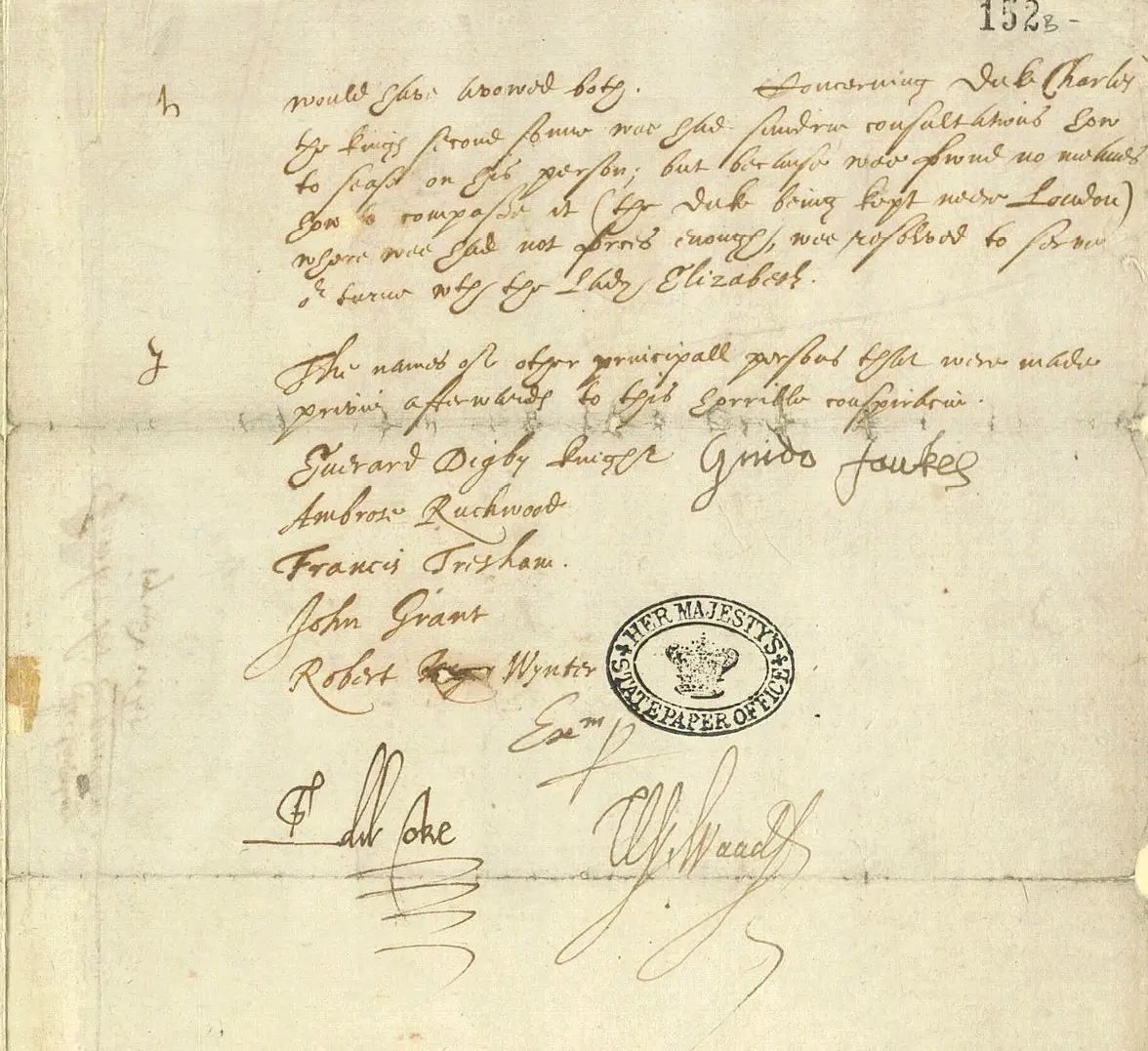
Under torture on the rack, Fawkes named his fellow conspirators. Catesby, refusing to surrender, was shot dead in a standoff in the Midlands on November 8. The survivors were tried for high treason and, in January 1606, executed in the full medieval horror of hanging, drawing, and quartering.
Parliament was not subtle about its gratitude. A 1606 act ordered that every November 5 be kept as a day of thanksgiving for the King's deliverance — and Londoners had already started the tradition that very night, lighting celebratory bonfires. More than four hundred years later, the bonfires are still lit. Every November 5, across Britain, fireworks crackle over burning effigies of “the Guy,” children once begged “a penny for the guy,” and the old rhyme is still recited: “Remember, remember the Fifth of November, the Gunpowder Treason and Plot.”
The Gunpowder Plot failed utterly — not a single barrel exploded. But it gave England its most enduring folk festival, a night when a nation celebrates a disaster that never happened. And Guy Fawkes, the man caught with the matches, became something his executioners never intended: an immortal symbol of defiance, his stylized face grinning from protest masks four centuries later.
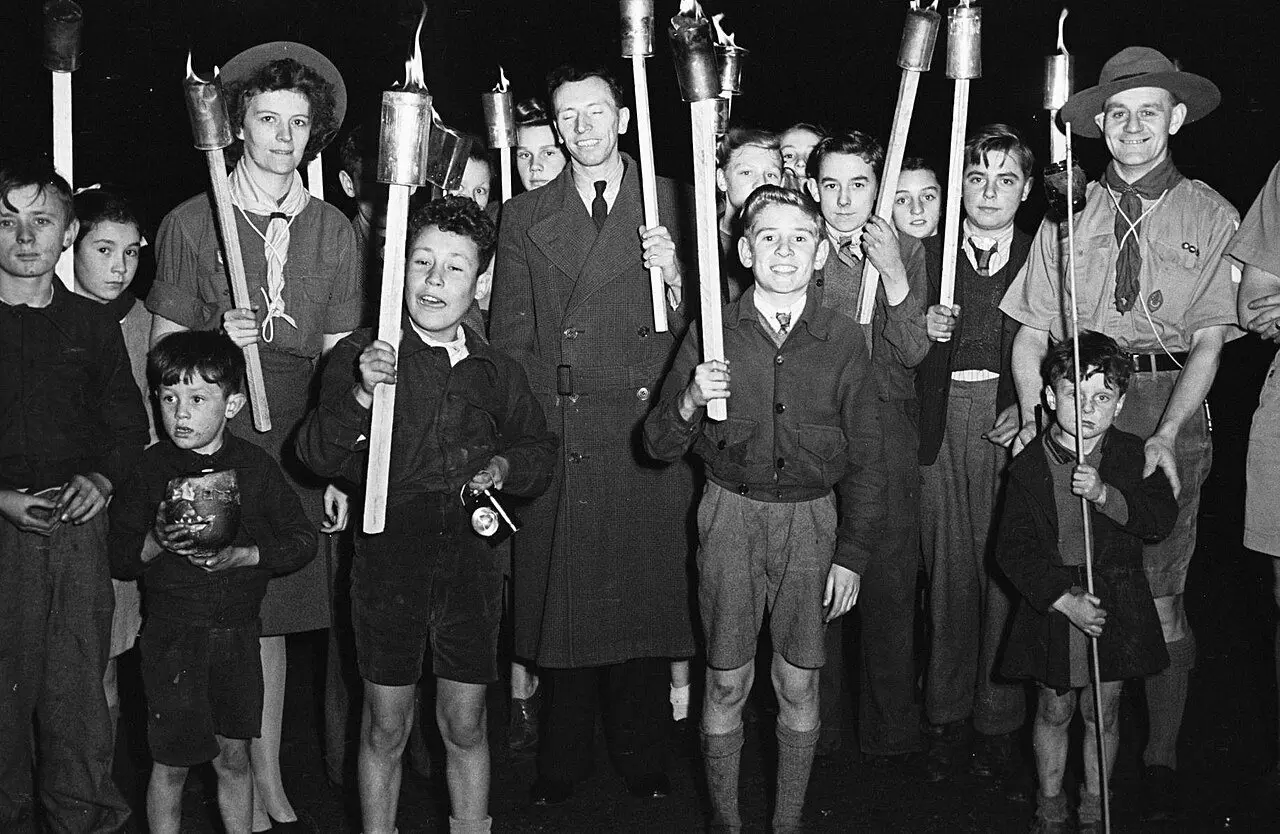
Photo: Geoff Charles, CC BY-SA 4.0 (via Wikimedia Commons).
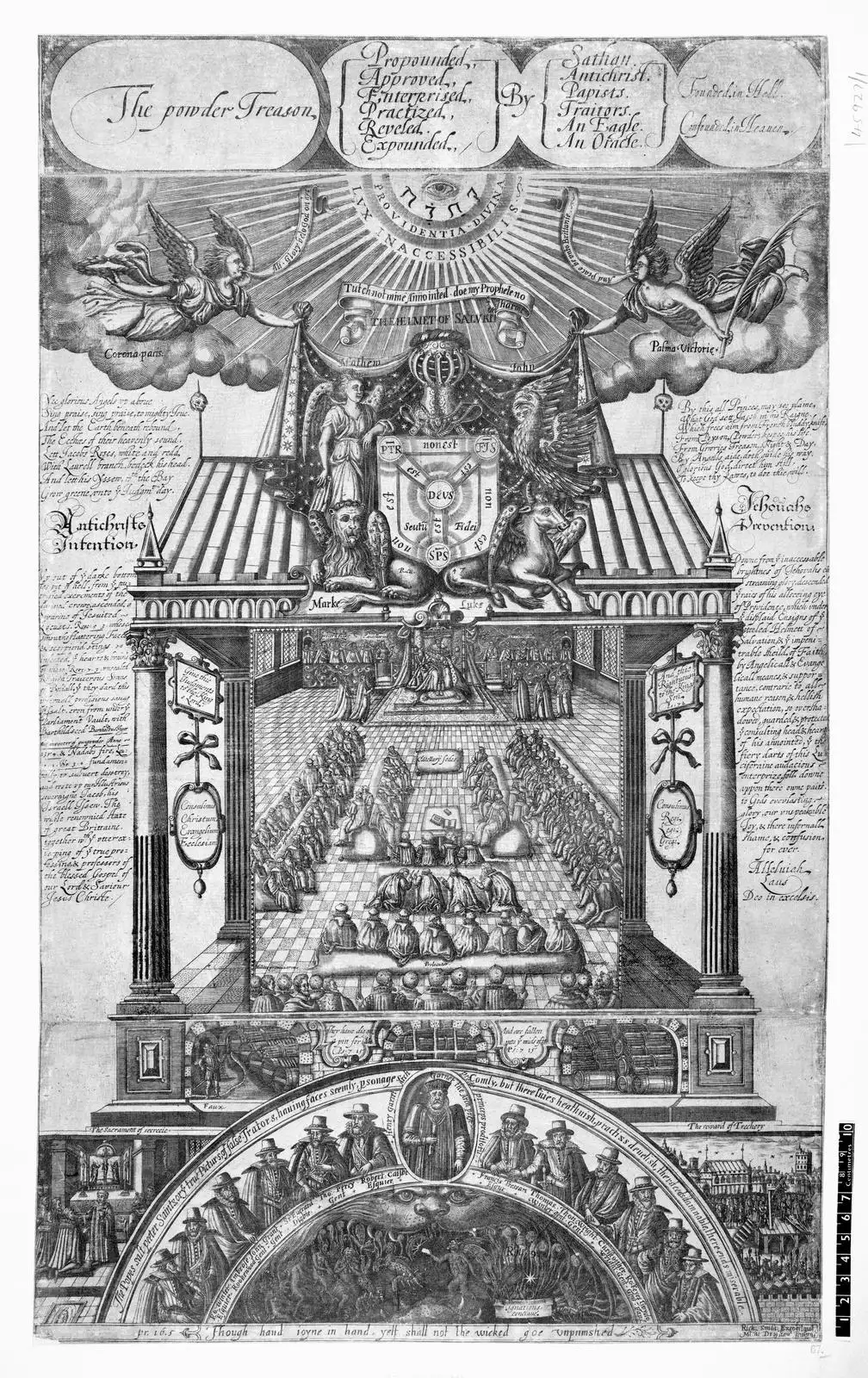
More images (via Wikimedia Commons, public domain): the Gunpowder Plot conspirators, engraving by Crispijn van de Passe, 1605; the signed confession of Guy Fawkes; a 17th-century print, "The powder treason".