
Pedestrian Day: The Golden Gate Bridge Opens to the World
On May 27, 1937, some 200,000 people walked, skated, and danced across the Golden Gate Bridge on its first day — before a single car was allowed.
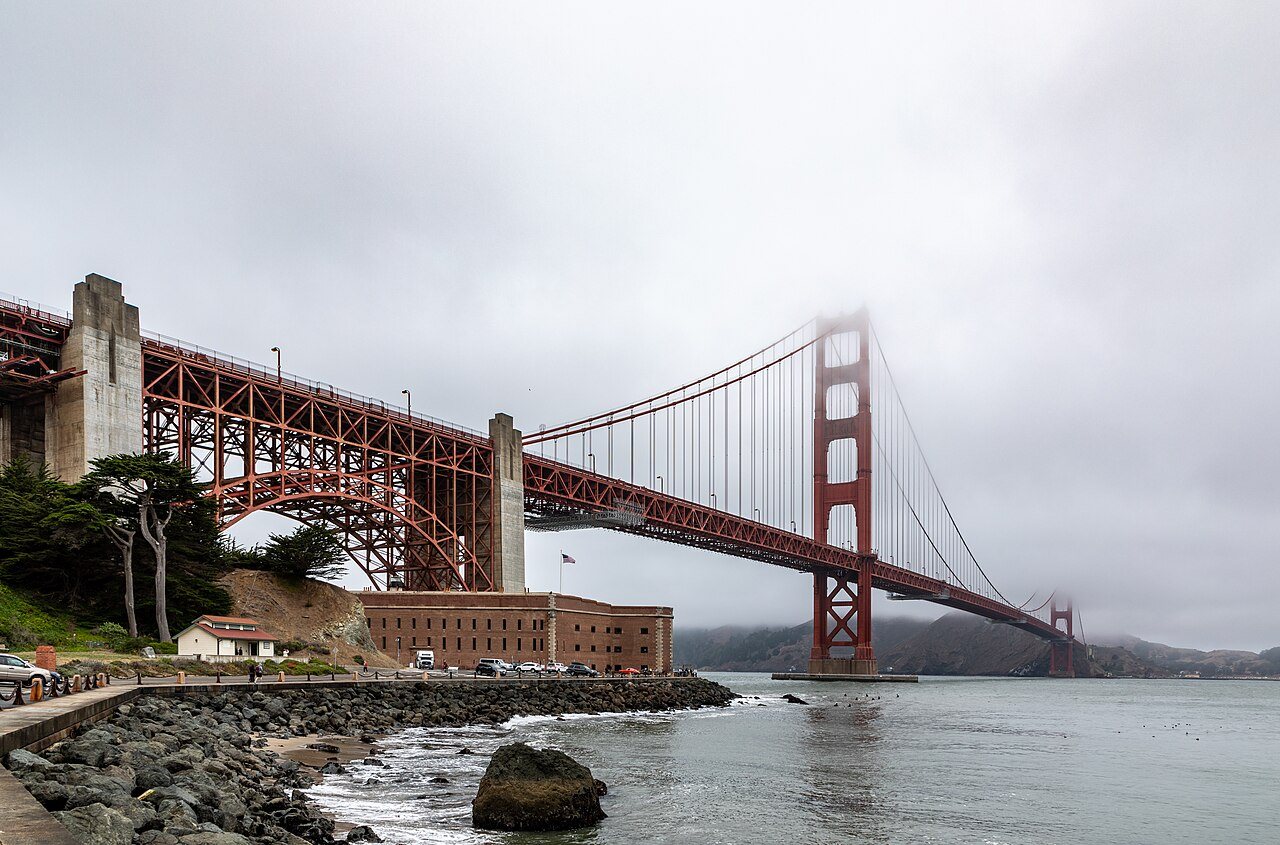
On the morning of May 27, 1937, San Francisco threw its biggest party of the Great Depression. An estimated 200,000 people showed up to do something no one had ever done before: walk across the Golden Gate Strait. They strolled, they roller-skated, and — legend has it — some of them danced their way across the brand-new Golden Gate Bridge on a day the city called Pedestrian Day.
The bridge had been a wild dream for decades. The mile-wide strait between San Francisco and Marin County was battered by fog, wind, and powerful currents, and many engineers insisted it couldn't be spanned. But chief engineer Joseph Strauss and his team began construction on January 5, 1933, in the depths of the Depression, putting thousands of men to work. A revolutionary safety net strung beneath the roadway caught 19 workers who fell — men who called themselves the "Halfway to Hell Club." Eleven others were lost, a reminder that the achievement came at a real human cost.
When the last rivet was driven home in April 1937, the bridge was the longest and tallest suspension bridge on Earth, with a main span of 4,200 feet. Its burnt-orange color — officially "international orange," chosen so ships could see it through the fog — and its graceful Art Deco lines made it beautiful as well as bold. And it was finished ahead of schedule and under budget, at a cost of $35 million.
The celebrations lasted a full week: parades, concerts, air shows, and a flotilla of ships. Fire sirens wailed, church bells rang, and ships' whistles echoed across the bay, while schools and businesses closed so the whole city could join the festival. The very next day, President Franklin D. Roosevelt pressed a telegraph key in Washington, D.C., and the bridge opened to automobile traffic.
Fifty years later, the bridge proved its strength again when some 300,000 people crowded onto it for its 50th birthday, and the deck sagged seven feet under the weight — exactly as designed, the engineers calmly explained.
Why it matters: the Golden Gate Bridge was more than a shortcut to Marin County. Built when the country had little to celebrate, it was proof that daring, skill, and collective effort could still build something magnificent. It remains one of the most photographed — and most loved — structures in the world.
Photo: Dietmar Rabich, CC BY-SA 4.0 (via Wikimedia Commons).