Marian Anderson Sings at the Lincoln Memorial, 1939
On Easter Sunday, April 9, 1939, contralto Marian Anderson sang before 75,000 people at the Lincoln Memorial after the DAR barred her from Constitution Hall because she was Black.
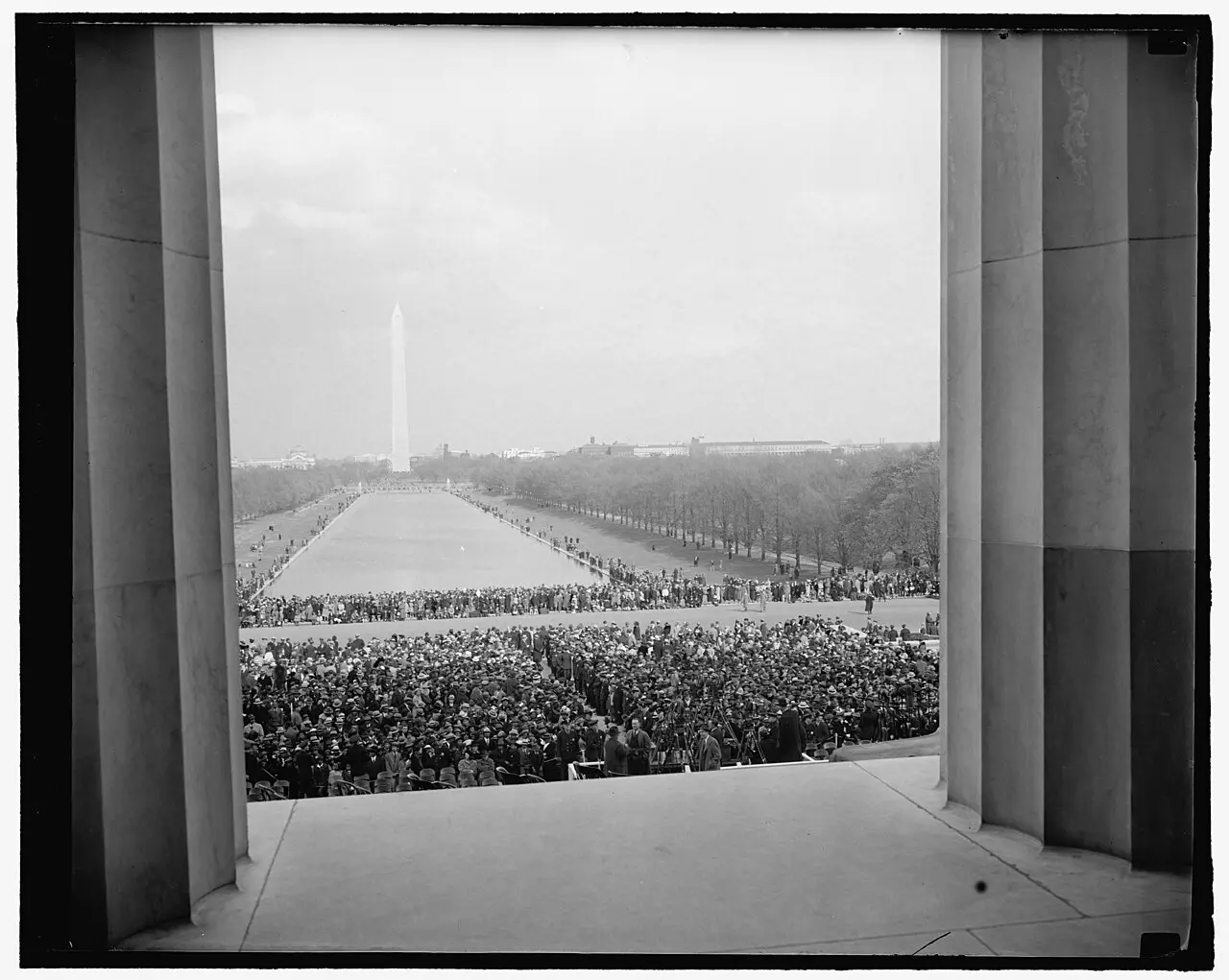
She was barred from the concert hall, so she sang to 75,000 people from the steps of the Lincoln Memorial instead — and changed America.
It was Easter Sunday, April 9, 1939. The crowd that massed on the National Mall before the Lincoln Memorial was one of the largest Washington had ever seen: an estimated 75,000 people, Black and white together, stretching from the memorial's steps toward the Washington Monument. Millions more listened on national radio. At the microphone stood Marian Anderson, the 42-year-old contralto many called the greatest voice of her generation.
The concert had been born from an insult. When impresario Sol Hurok tried to book Anderson into Constitution Hall for a Howard University engagement, the Daughters of the American Revolution refused — the DAR had a policy barring Black performers from its hall. The snub might have passed quietly, as others had. This time, First Lady Eleanor Roosevelt publicly resigned her DAR membership, writing, "You had the opportunity to lead in an enlightened way and it seems to me that your organization has failed." Her resignation made the Anderson case national news.
Then Walter White of the NAACP and Interior Secretary Harold Ickes found a stage no one could refuse: the steps of the Lincoln Memorial, federal ground, beneath the statue of the Great Emancipator. President Franklin Roosevelt approved the plan.
Ickes introduced her with words that became the day's motto: "genius knows no color line." Anderson opened, daringly, with "My Country, 'Tis of Thee" — a Black woman, barred from a concert hall, singing "sweet land of liberty" before the nation. She followed with classical arias and spirituals, and closed with the encore "Nobody Knows the Trouble I've Seen." Overwhelmed at the end, she told the crowd: "I am overwhelmed. I just can't talk. I can't tell you what you have done for me today. I thank you from the bottom of my heart again and again."
Born in Philadelphia in 1897, Anderson had already conquered the concert halls of Europe; in segregated America she still could not be sure of a hotel room. The Lincoln Memorial concert made her exclusion visible to the whole country, and it became one of the defining moments of the early civil rights movement — a direct ancestor of the March on Washington at the same spot 24 years later. The 90-second newsreel of the concert was chosen in 2001 for the National Film Registry.
Why it matters: a denied booking became a triumph no hall could have contained. Marian Anderson's voice, lifted on the steps of Lincoln's memorial, turned one woman's humiliation into a nation's reckoning — and proved that the grandest stage is sometimes the one you are forced to build yourself.
Photo: Harris & Ewing, public domain, via the Library of Congress (via Wikimedia Commons).