Lincoln's Promise: Freedom, One Hundred Days Away
On September 22, 1862, Abraham Lincoln issued the Preliminary Emancipation Proclamation: enslaved people in rebellious states would be "then, thenceforward, and forever free" on January 1, 1863.
On September 22, 1862 — just five days after the bloodiest single day in American history — Abraham Lincoln called his cabinet into the White House and read them a document he had been carrying in his pocket for weeks. The Battle of Antietam had ended with General Robert E. Lee's Confederate army retreating from Maryland, handing the Union the victory it needed. Lincoln had been waiting for exactly this moment.
For more than a year, the Civil War had been fought for one stated purpose: preserving the Union. Ending slavery was not among the North's war aims, and Lincoln had said so plainly. But by the summer of 1862, enslaved people were escaping to Union lines by the thousands, and Lincoln had come to believe the war itself was destroying slavery — and that he could strike it down as a military necessity. That July he showed his cabinet a draft proclamation. His secretary of state, William Seward, urged patience: announce it now, and it would look like the desperate last act of a losing government. Wait for a victory, he said.
Antietam was that victory. The Preliminary Emancipation Proclamation that Lincoln issued that September day was both a thunderclap and a countdown. It declared that on January 1, 1863 — one hundred days later — all enslaved people in states still in rebellion against the United States would be "then, thenceforward, and forever free." The rebellious states had one hundred days to return to the Union and keep slavery legal. The proclamation left slavery untouched in the loyal border states that had not seceded.
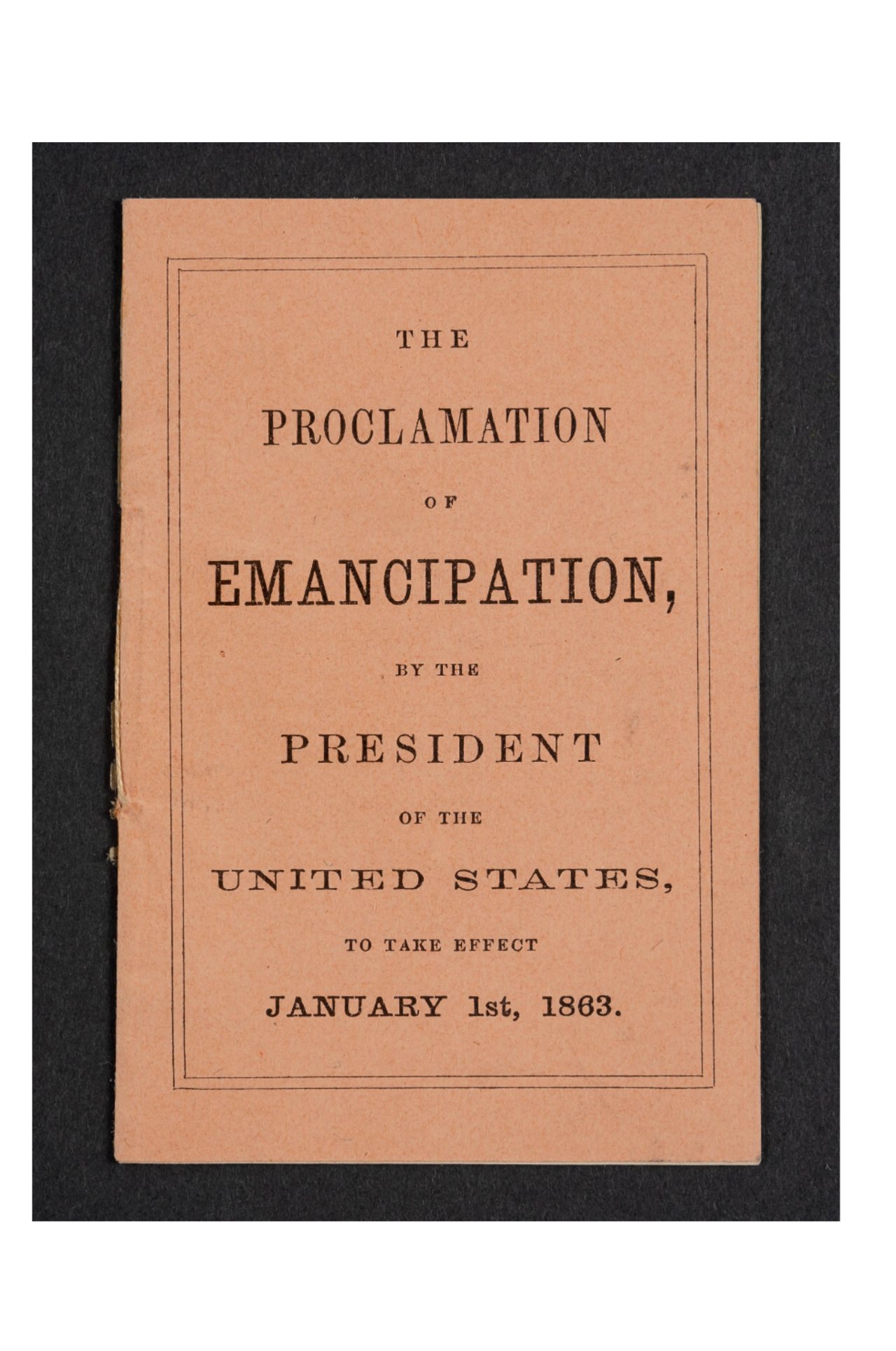
The news traveled fast. Pamphlets carrying the proclamation's text were printed and distributed to Union soldiers, so the men in the ranks could read the new meaning of their fight. Abolitionists who had pressed Lincoln for years celebrated. And abroad, the effect was decisive: with the Union cause now openly tied to ending slavery, anti-slavery nations like Britain and France — which had been flirting with recognizing the Confederacy — could no longer lend the South their support without endorsing slavery itself.
When January 1 arrived and no rebellious state had returned, Lincoln signed the final Emancipation Proclamation, and the promise became policy. The document also opened the Union Army and Navy to Black men, and nearly 200,000 Black soldiers and sailors went on to fight for the Union — and for their own freedom. The original signed copy rests today in the National Archives in Washington.
The proclamation did not end slavery by itself — that took the 13th Amendment in 1865 — and it left millions in bondage in the border states. But it transformed the Civil War from a struggle to preserve the Union into a struggle for human freedom, and every mile the Union armies advanced from that day forward became a mile of newly freed ground. A hundred-day warning, issued on a September afternoon, redrew the moral map of America.
Photo: Abraham Lincoln, public domain (via Wikimedia Commons).