
Godspeed, John Glenn
On February 20, 1962, John Glenn became the first American to orbit the Earth, circling the globe three times aboard the Mercury capsule Friendship 7.
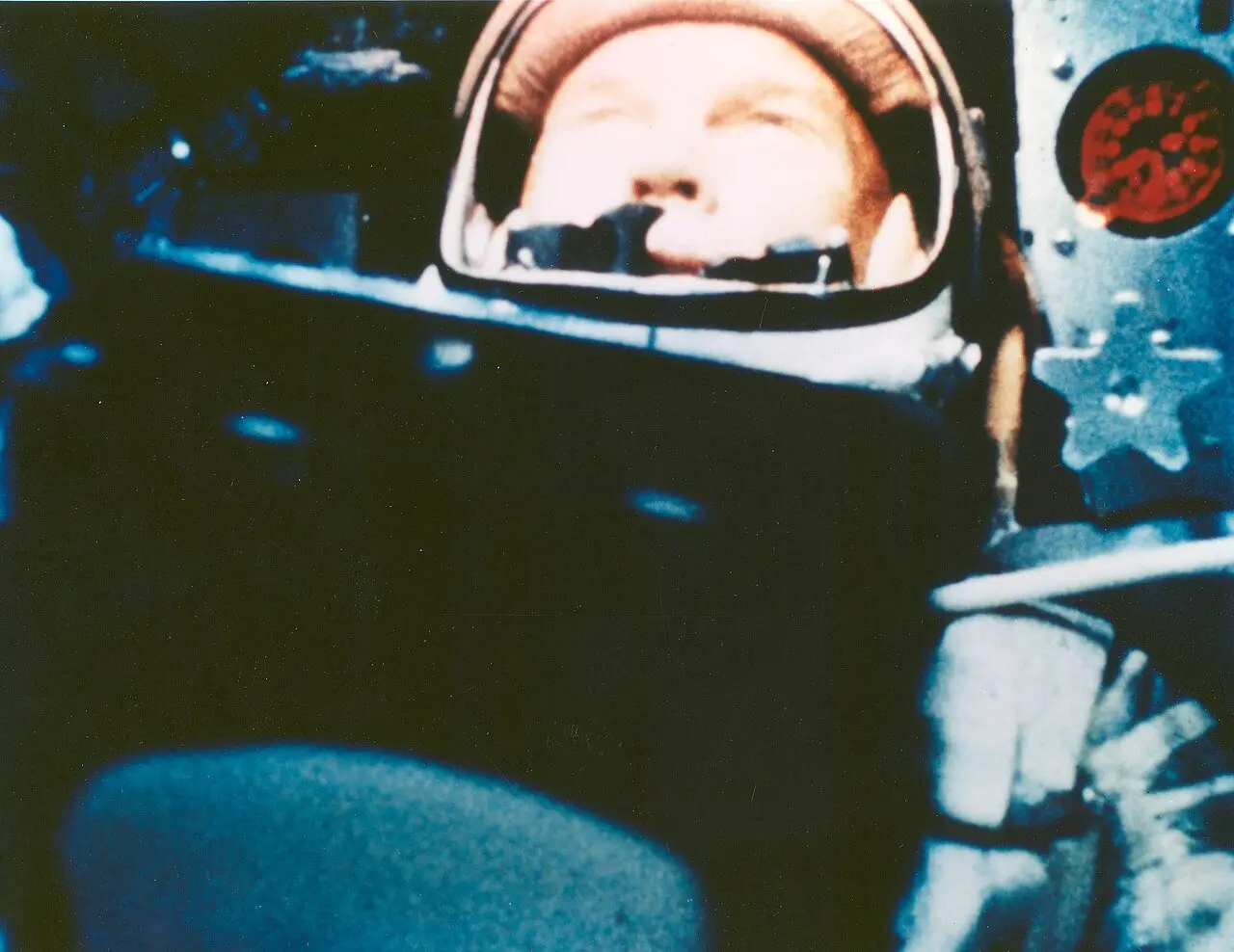
He was 40 years old, a Marine pilot with a buzz cut, strapped into a capsule barely big enough to hold him. Below him, the whole country was holding its breath. On February 20, 1962, John Glenn did what no American had ever done: he went around the Earth.
The Space Race was not going America's way. The Soviet Union had launched the first satellite in 1957, and in April 1961, cosmonaut Yuri Gagarin had become the first human in space — and the first to orbit the planet. The United States had managed two suborbital hops, brief up-and-down flights by Alan Shepard and Gus Grissom that lasted minutes. Glenn, who had served as backup on those flights, was chosen for the big one: a full orbital mission in a Mercury capsule he named Friendship 7.
Getting there was not easy. The launch was scrubbed again and again by weather and technical trouble, until finally, at 9:47 on a February morning, an Atlas rocket roared off the pad at Cape Canaveral, Florida. Glenn climbed toward orbit at nearly 17,500 miles an hour — about fourteen times faster than the fastest fighter jets he had once test-flown.
What followed was four hours, 55 minutes, and 23 seconds of some of the most watched flying in history. Glenn circled the globe three times, traveling more than 75,000 miles and reaching a peak altitude of about 162 miles. Out the window he saw sunrises and sunsets arriving every 45 minutes, and a swirl of glowing particles he called "fireflies" drifting past the capsule. When the automatic flight controls faltered, Glenn took the stick himself and flew Friendship 7 by hand — calm, methodical, exactly as he had been trained.
Reentry was the hardest part: fire outside the windows, bone-shaking vibration, then silence as the parachutes opened over the Atlantic. Friendship 7 splashed down safely near Grand Turk Island. When the hatch opened, Glenn climbed out grinning, and the nation erupted. Parades, ticker tape, a meeting with President Kennedy — overnight he became the hero America had been waiting for, proof that the United States could hold its own in space.
The story did not end there. Glenn went on to serve 24 years in the U.S. Senate, and in 1998, at age 77, he climbed back aboard the space shuttle Discovery and orbited the Earth again — the oldest person ever to fly in space. From the first orbital flight to the most senior one, his career spanned the entire arc of American spaceflight.
On that February morning in 1962, a pilot named Glenn turned a five-hour loop around the planet into one of the defining moments of the 20th century. Every orbit since has had a little bit of Friendship 7 in it.
Photo: NASA, public domain (via Wikimedia Commons).