England Expects: Nelson’s Triumph and Death at Trafalgar
On October 21, 1805, Admiral Nelson destroyed the French and Spanish fleets off Spain — at the cost of his own life.
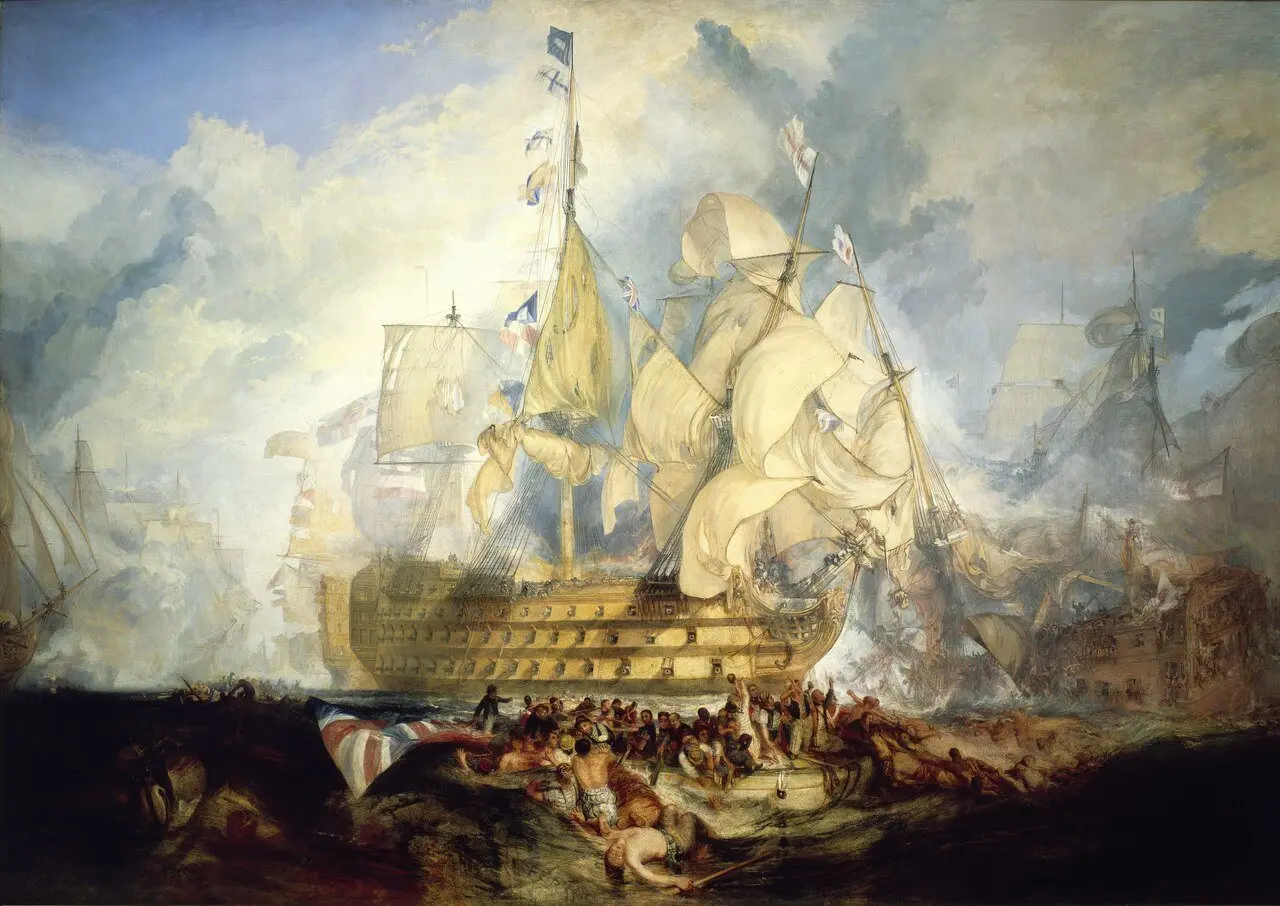
Just before noon, the flags ran up the rigging of HMS Victory carrying a message Admiral Horatio Nelson knew might be his last order ever: "England expects that every man will do his duty." Off the Spanish coast, a combined French and Spanish fleet of 33 warships waited. Nelson had 27 — and a plan so daring it broke every rule of naval warfare.
The stakes were an invasion. Napoleon had massed an army across the English Channel and needed control of the sea to bring it to England. His admirals were ordered to clear the way — but the French-Spanish fleet, under Admiral Villeneuve, had been bottled up in the Spanish port of Cádiz. When Villeneuve slipped out on October 19 and 20, Nelson was waiting off Cape Trafalgar.
In 1805, fleets fought in long parallel lines, sailing past each other and blasting away — the longer the line, the greater the firepower, and the longer line usually won. Nelson threw the rulebook overboard. He split his fleet into two columns and sailed them straight at the enemy line, intending to smash through it in two places and cut the Franco-Spanish fleet into pieces. He led one column himself aboard Victory; his deputy, Admiral Collingwood, led the other in Royal Sovereign.
For five brutal hours the fleets hammered each other at close range. Nelson's gamble worked almost perfectly: the allied line was split, ships were isolated, and one by one they were captured or destroyed. By late afternoon some 19 allied ships had been taken or sunk, and the British had not lost a single vessel. But the fighting raged fiercest around Victory herself, locked alongside the French ship Redoutable. There, a French marksman in the rigging fired down at the unmistakable figure on the quarterdeck — and Nelson fell, struck in the shoulder and chest.
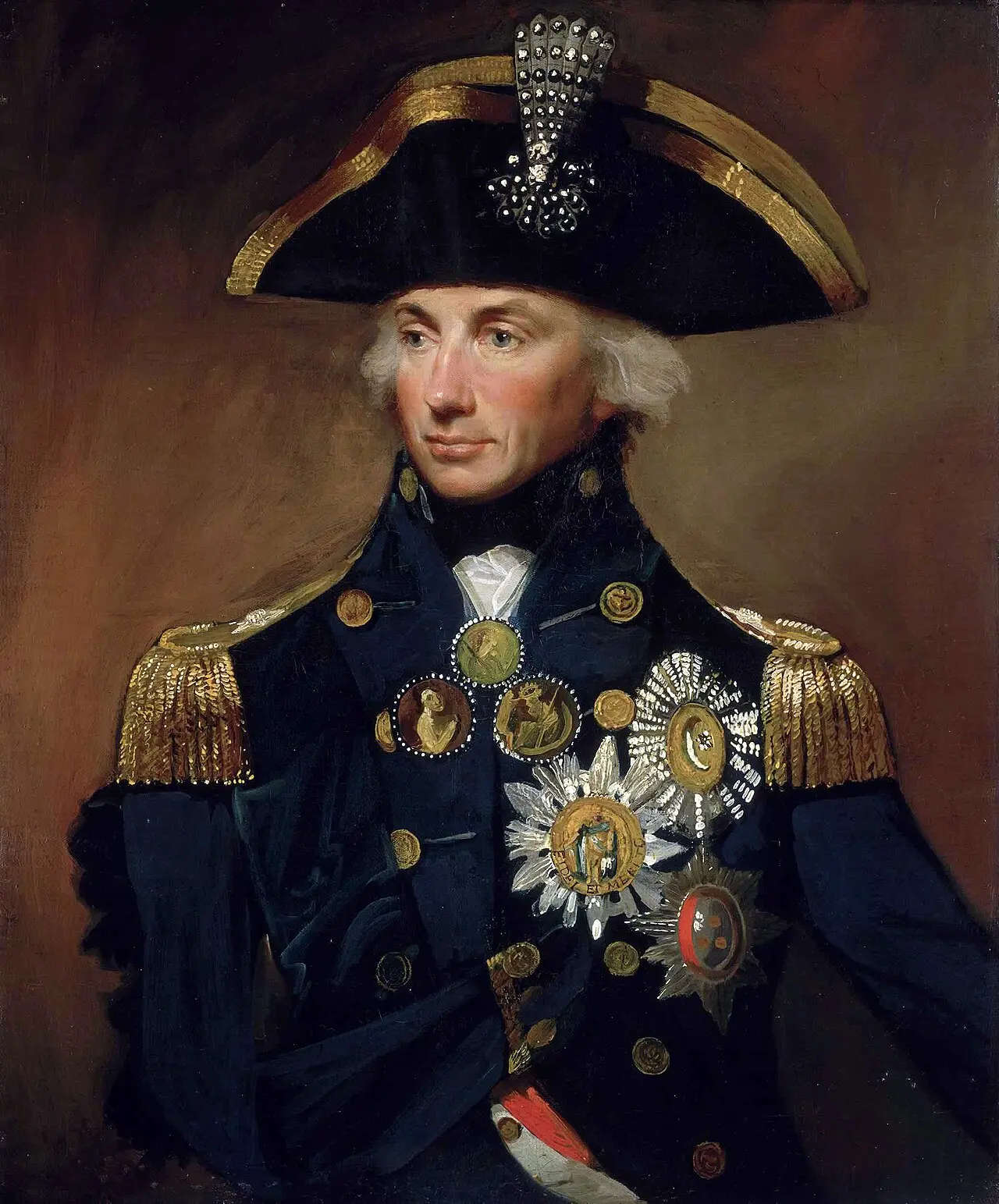
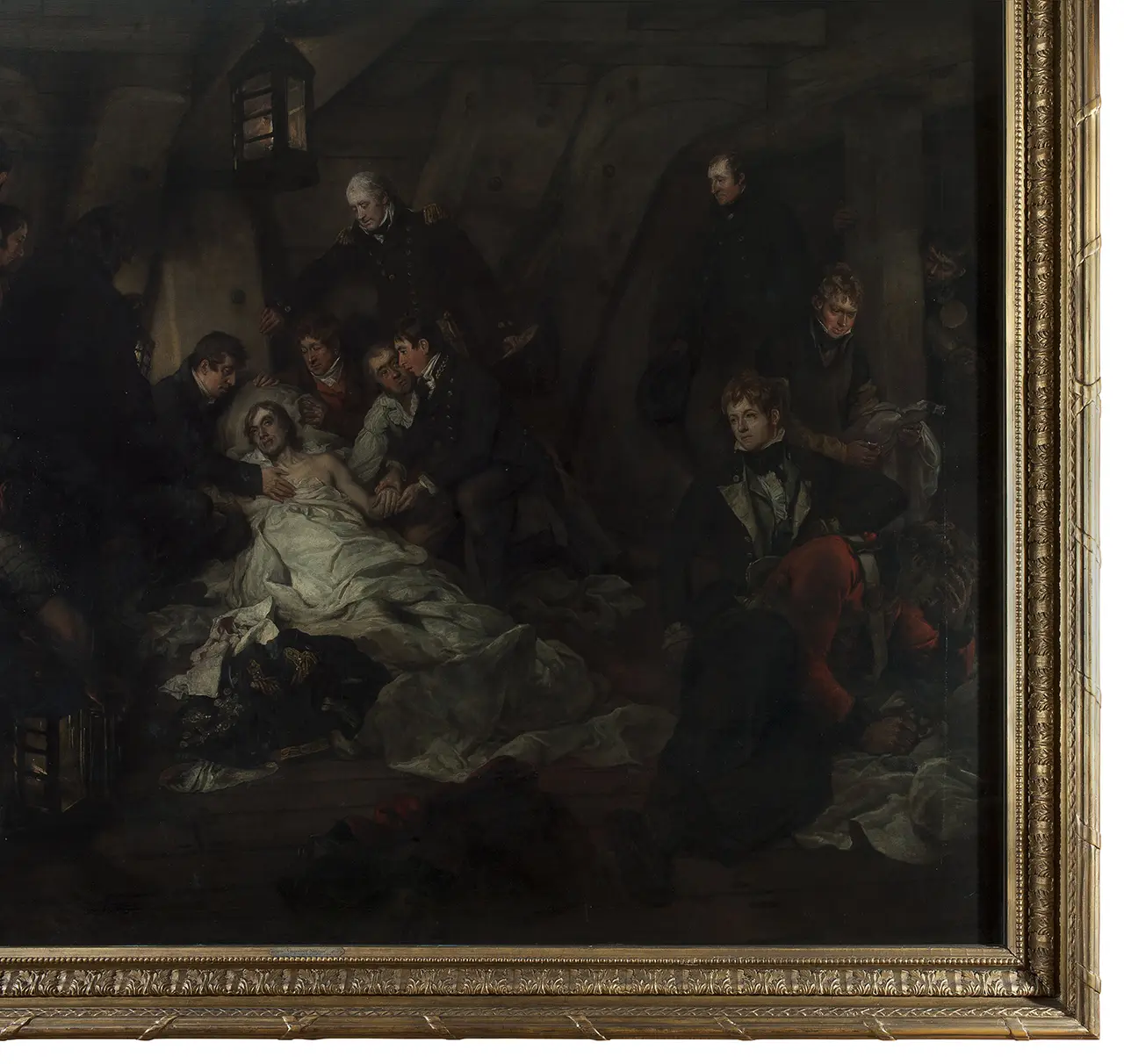
Carried below, the admiral lived just long enough to learn that the battle was won. His reported last words were: "Thank God I have done my duty." He died about half an hour before the fighting ended. The butcher's bill was staggering: Nelson and 448 British sailors were killed and another 1,200 wounded; on the other side, some 4,400 were killed, 2,500 wounded, and 7,000 taken prisoner.
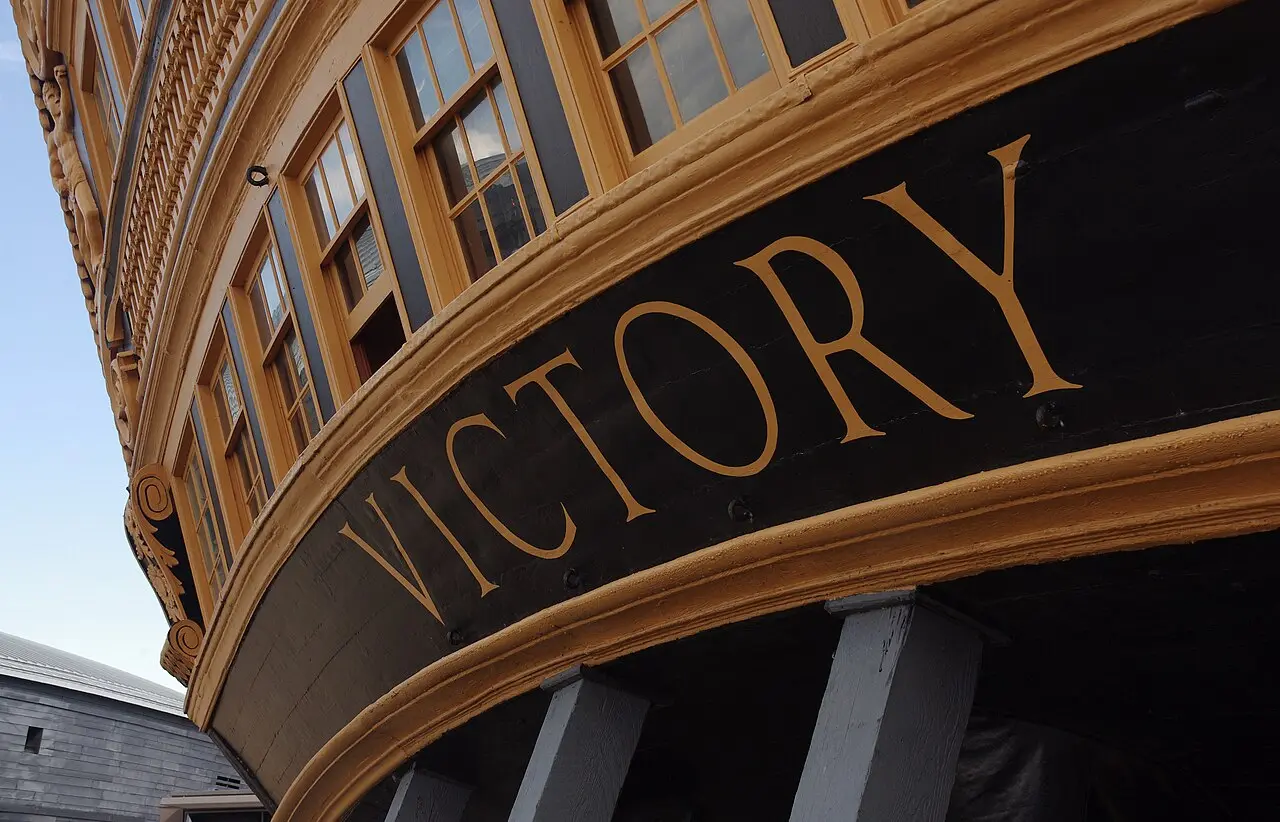
Trafalgar ended Napoleon's power at sea and with it any realistic plan to invade England. Britain's Royal Navy would rule the waves for the next century. Nelson was given a hero's funeral in St. Paul's Cathedral, a column was raised to him in the newly named Trafalgar Square, and his flagship Victory — preserved as a museum ship at Portsmouth, with a brass plaque marking the spot where he fell — can still be visited today. The battle even inspired one of the great naval paintings: J.M.W. Turner's monumental Battle of Trafalgar, painted by command of the king — the image above.
Painting: J. M. W. Turner, public domain (via Wikimedia Commons).
More images (via Wikimedia Commons): Arthur William Devis, "The Death of Nelson" (public domain); Lemuel Francis Abbott, portrait of Horatio Nelson (public domain); the stern of HMS Victory at Portsmouth (mattbuck, CC BY-SA 4.0).