Eight Jets, One Reactor: The 1981 Raid That Smashed Iraq's Nuclear Dream
On June 7, 1981, eight Israeli F-16s flew 1,100 kilometers through hostile skies to destroy Iraq's Osirak nuclear reactor before it could go online.
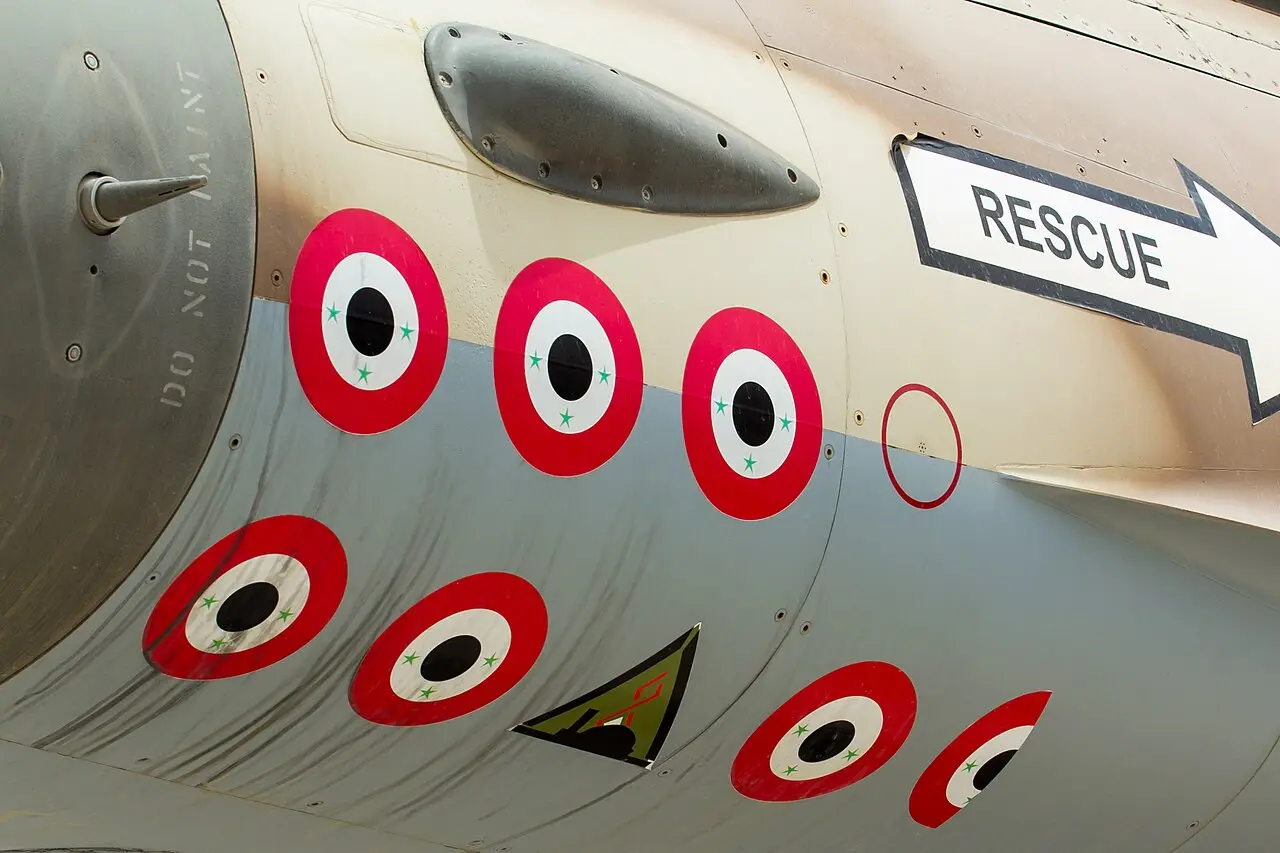
The jets went in low, flying in radio silence with their radars switched off, skimming the desert across three countries' airspace. It was the afternoon of June 7, 1981, and the eight Israeli F-16s streaking toward Baghdad carried sixteen 2,000-pound bombs and a mission their planners believed could not wait another month.
Their target was the Osirak reactor — Iraq called it Tammuz 1 — a French-built nuclear facility rising from the concrete at the Tuwaitha research center, about 17 kilometers southeast of Baghdad. In 1976, Iraq had purchased an Osiris-class reactor from France, and construction had begun in 1979. Both Iraq and France insisted the reactor was meant for peaceful scientific research. Israel's government was convinced of something else entirely: that Saddam Hussein's Iraq was building it as a stepping stone to a nuclear weapon.
The Israelis were not the only ones who had tried. A year earlier, during the Iran-Iraq War, the Iranian Air Force had attempted a strike on the same site in an operation known as Scorch Sword. It caused only minor damage, and French technicians quickly repaired it. Israel's planners faced a hard deadline of their own making: once a reactor is loaded with fuel and goes "hot," bombing it risks scattering radioactivity across a city. The strike had to happen before the reactor went critical — Israeli officials later said it had "less than a month to go."
Prime Minister Menachem Begin authorized the mission, and the plan that emerged was extraordinary in its boldness. Fourteen fighter jets departed Etzion Airport in Israel at around 4:00 that afternoon — eight F-16A bombers from squadrons 110 and 117, with six F-15A fighters flying escort. They flew a path of roughly 1,100 kilometers each way, right at the edge of the F-16's range, using fuel-saving tricks to stretch every drop. The pilots had worked out their arithmetic and quietly accepted that some of them might not make it home. The youngest of the bomber pilots, a 27-year-old named Ilan Ramon, flew the last and most exposed aircraft in the formation. Twenty-two years later he would become Israel's first astronaut — and die aboard the space shuttle Columbia.
At about 5:30 in the afternoon, the jets popped up over the target and rolled in on the great concrete dome. Each aircraft released its bombs seconds apart. In under two minutes, the reactor was rubble. The strike reportedly killed ten Iraqi soldiers and one French civilian on the ground — and then, against the odds, every one of the fourteen Israeli aircraft turned for home and made it back.
The world reacted with fury. The United Nations Security Council passed Resolution 487 condemning the attack, and the United States temporarily suspended further deliveries of F-16s to Israel. Begin was unrepentant: the raid, he said, set a precedent, and the Israeli doctrine that grew out of it — the Begin Doctrine — declared that Israel would act to stop its enemies from acquiring nuclear weapons, whatever the cost.
And here is the twist that historians still argue about. Evidence that surfaced after the 2003 invasion of Iraq suggests the raid backfired in one crucial way: rather than ending Iraq's nuclear ambitions, it convinced Saddam Hussein to launch a genuine, crash nuclear-weapons program, pouring in scientists and money. That program was eventually dismantled by the coalition bombing campaign of the 1991 Gulf War — meaning the reactor destroyed in 1981 was only the first chapter of a much longer story.
Why it matters: Operation Opera became the template for the preventive strike on a nuclear facility, invoked in debates over Iran's program to this day. It proved that a small air force could reach across the region and change the strategic map in an afternoon — and it showed that even a flawless tactical success can carry consequences no one planned for.
Photo: Oren Rozen (User:Poliocretes), CC BY-SA 4.0 (via Wikimedia Commons).