
The Night a Train Ejection Changed the World: Gandhi, 1893
On June 7, 1893, a 24-year-old lawyer named Mohandas Gandhi was thrown off a train for refusing to leave a whites-only compartment — a humiliation that set him on the path to changing history.
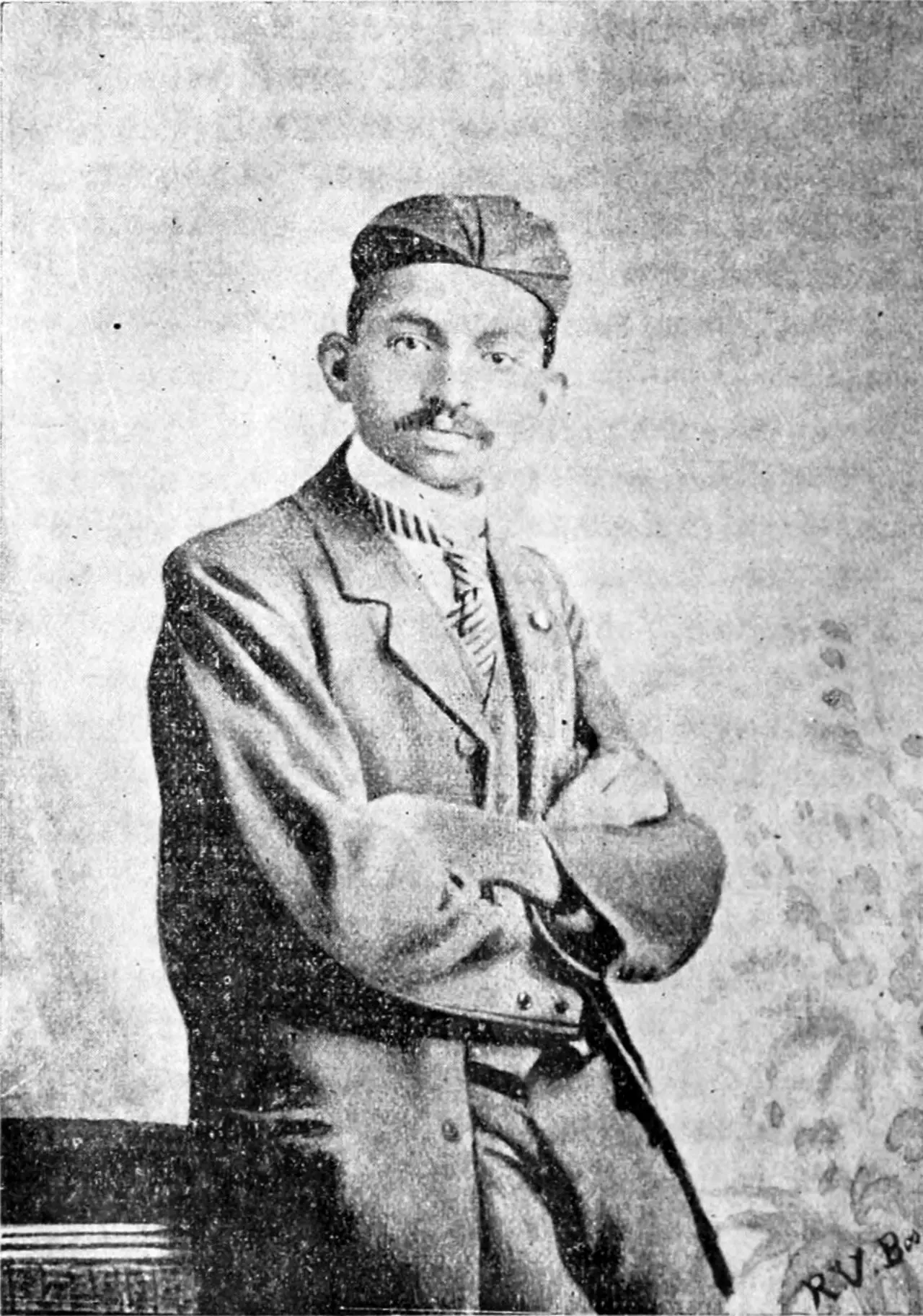
On the night of June 7, 1893, a 24-year-old Indian lawyer sat shivering in a railway waiting room in Pietermaritzburg, South Africa — thrown off a train for the crime of sitting in the wrong seat.
Mohandas Gandhi had arrived in South Africa that year on a one-year contract to practice law. He was traveling from Durban to Pretoria on legal business, holding a valid first-class ticket, when a white passenger objected to an Indian sharing the whites-only compartment. Railway officials ordered Gandhi to move to third class. He refused — and was forcibly ejected from the train in the middle of the night, in the depths of the southern-hemisphere winter.
"The cold was extremely bitter. My overcoat was in my luggage, but I did not dare to ask for it lest I should be insulted again, so I sat and shivered," he later wrote in his autobiography.
The humiliations continued the next day. On the onward journey, he was made to sit outside beside the coachman, and when he refused to sit on a dirty rag spread on the footboard, the conductor beat him.
But that night in the cold waiting room, Gandhi made a decision. He asked himself whether to return to India or to stay and face whatever lay ahead — and chose to stay and suffer. "My active non-violence began from that date," he would later say.
He remained in South Africa for more than two decades, organizing the Indian community, founding the Natal Indian Congress in 1894, and developing his philosophy of satyagraha — "soul force," holding firmly to truth — and ahimsa, non-violence. His first mass satyagraha campaign came in 1906.
Returning to India in 1915, he became the Mahatma — the "great soul" — leading the nonviolent struggle for Indian independence. He spent more than two decades in South Africa organizing, protesting, and enduring imprisonment before he ever set foot back in India. His methods would echo across the century, inspiring Martin Luther King Jr.'s civil rights movement and Nelson Mandela's fight against apartheid.
One night of injustice, met not with violence but with resolve, planted the seed of the most influential nonviolent movement in modern history. It began with a young man who simply refused to move.
Photo credit: Portrait of Mohandas Gandhi as a young barrister, illustration from the 1917 book "Mahatma Gandhi, His Life, Writings and Speeches"; public domain via Wikimedia Commons. (Illustrative: the original photograph's exact date is unknown — it is not from the 1893 train incident itself.)