
Crazy Drake's Gamble: The Well That Started the Oil Age
On August 27, 1859, Edwin Drake's drill struck oil at 69.5 feet near Titusville, Pennsylvania — the first well deliberately drilled for petroleum, and the spark of the modern oil industry.
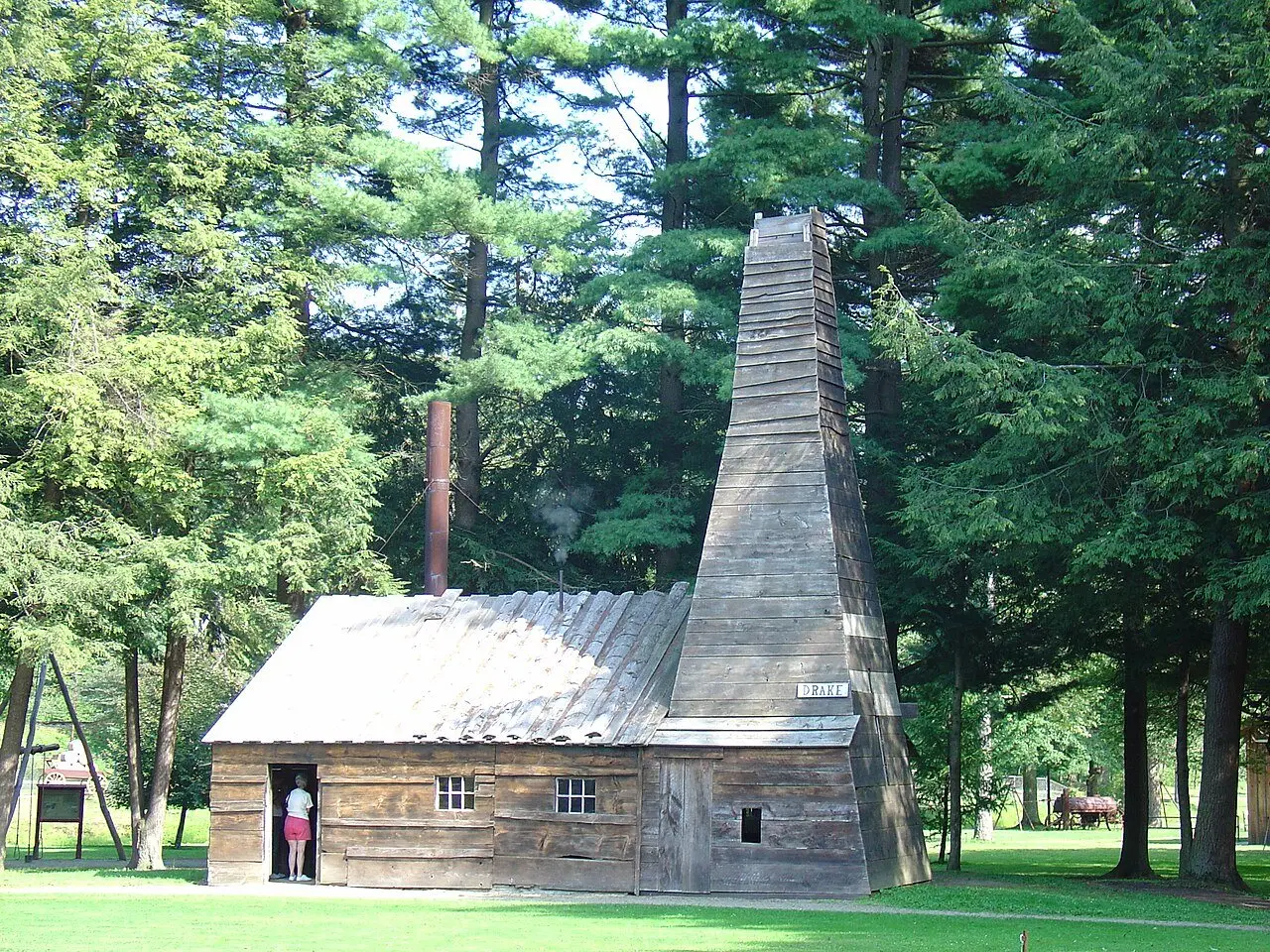
They called him 'Crazy Drake.' The locals in Titusville, Pennsylvania, had watched Edwin Drake spend more than a year sinking money and machinery into a hole in the ground along Oil Creek, chasing a substance most people still skimmed off puddles and sold as medicine. His own backers had nearly cut him off. The whole project was dismissed as 'Drake's Folly.'
Even the name 'Colonel' was stagecraft. Drake held no military rank: James Townsend, president of the Seneca Oil Company, had given his retired railroad conductor the honorary title to impress Titusville's locals. Townsend addressed his letters to 'Col. Edwin Drake,' and the invented title stuck for life — Pennsylvania made it official a century later, naming him a National Guard colonel for the 1959 oil centennial.
Drake was not a geologist or an engineer — he was a former railroad conductor hired by the Seneca Oil Company to figure out how to get oil in serious quantities. Oil was in demand: it was the coming replacement for whale oil in lamps, and the world was running out of whales. Drake's insight was to borrow from salt-well drillers — and then to improve on them. When groundwater kept collapsing his borehole, he drove a cast-iron pipe down through the unstable earth and drilled inside it. The 'drive pipe' method he invented is still the basis of oil drilling today.
On Saturday afternoon, August 27, 1859, his drill hit its limit at just 69.5 feet. The crew went home. The next morning, the driller peered into the pipe and saw crude oil floating near the top. Word sped to Drake, who reportedly waited until Monday to walk down and see it himself. Oil was rising through a drilled well — something no one had ever done on purpose before.
The driller who peered into the pipe that Sunday morning was William 'Uncle Billy' Smith, a Tarentum, Pennsylvania, blacksmith and salt-well driller hired with his two sons after months of searching. Salt-well men were the only people in America who knew how to bore deep holes in the earth. When Seneca Oil's Connecticut backers gave up that April, Drake borrowed $500 to keep Smith drilling — the loan that carried them to August 27.
The well soon produced roughly 25 barrels a day, stored in every whiskey barrel in Titusville. News of the strike set off the Pennsylvania oil rush: speculators, drillers, and fortune-seekers poured in, boomtowns like Oil City and Pithole sprang up, and refineries and pipelines followed. Petroleum went from curiosity to cornerstone of the world economy in a single generation.
Success arrived with disaster. On October 7, 1859, barely six weeks after the strike, the original derrick caught fire and burned to the ground — the first oil-well fire on record. Drake rebuilt within a month. The well never made him rich anyway: the boom crashed the price of oil, it stopped producing by 1861, and Seneca Oil sold the property in 1864.
Drake himself never got rich from it. He never patented his drilling method, lost his money in poor investments, and died in 1880 in reduced circumstances. The man who launched the petroleum age — the fuel of cars, planes, plastics, and the modern world — spent his last years nearly broke. History is full of pioneers who struck it rich; Drake is the pioneer who struck oil and got something rarer: he changed everything, and paid for it.
Titusville's people raised $5,000 to feed the destitute family, and the Pennsylvania legislature eventually voted Drake an annual pension of $1,500 — barely enough to live on. After his death in Bethlehem in 1880, his remains were moved to Titusville's Woodlawn Cemetery in 1902, where a memorial statue called 'The Driller' marks his grave. Its anonymous donor, revealed only after his death, was Henry Rogers, vice president of Standard Oil — the empire built on Drake's hole in the ground.
Photo: Zamoose, CC BY-SA 2.5 (via Wikimedia Commons).