Ceylon's Independence Day: February 4, 1948
On February 4, 1948, Ceylon became the independent Dominion of Ceylon, ending a century and a half of British colonial rule.
At sunrise on February 4, 1948, a new flag climbed the flagpole over Colombo: the Lion Banner of a free Ceylon. After a century and a half under the British crown, the island the world had long known as Ceylon was an independent nation at last.
The day's centerpiece was a formal ceremony at Independence Square in the capital, where Prince Henry, the Duke of Gloucester, representing King George VI, officially opened the proceedings. Don Stephen Senanayake — the veteran statesman Sri Lankans revere as the father of the nation — became the country's first prime minister, leading the new Dominion of Ceylon.
The road to that morning had been long but, by the standards of dying empires, remarkably peaceful. The Ceylon National Congress had pressed the island's case through the 1920s and 1930s. The Donoughmore Constitution of 1931 gave Ceylon universal suffrage — men and women alike — years before many European nations managed it. A State Council gained experience in self-government, and after the Second World War the Soulbury Commission recommended full internal self-rule. In December 1947, Britain's Parliament passed the Ceylon Independence Act, and the countdown to February began.
As a dominion, Ceylon governed itself — its own parliament, cabinet, and prime minister — while sharing the Crown within the British Commonwealth. Full republican status would wait another generation: in 1972 the island adopted a new constitution and took the name Sri Lanka.
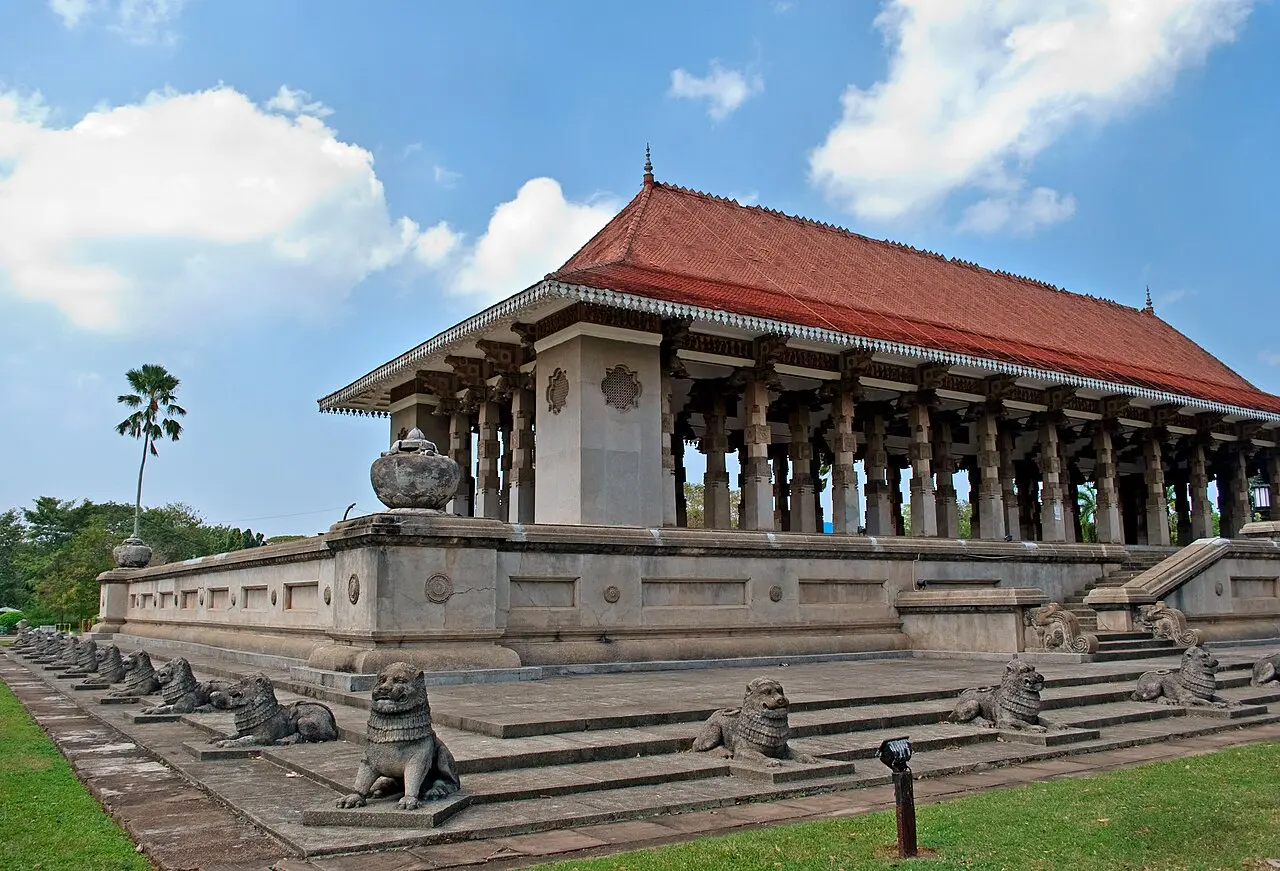
For the ceremony, the government raised a permanent monument on the very ground where independence was proclaimed: the Independence Memorial Hall, a stone pavilion in the Kandyan style, its sweeping red-tiled roof held aloft by rows of carved pillars and guarded by stone lions. It still anchors Independence Square today, and every February 4 — Sri Lanka's National Day — the country marks the occasion with parades and ceremonies at the square, beneath the same roof raised for that first morning of freedom.
For ordinary Ceylonese, the change was both symbolic and concrete: British governors gave way to Ceylonese ministers, the island's own parliament made its own laws, and Ceylon took its seat among the self-governing nations of the Commonwealth — no longer a possession to be administered, but a partner to be consulted.
Why does it matter? February 4 is still Sri Lanka's National Day, and the stone memorial hall raised for the occasion — its red-tiled Kandyan roof ringed by stone lions — still stands in Colombo as the country's monument to freedom. Ceylon's negotiated path to independence became a model of constitutional decolonization: proof that empires could end at a conference table, not only on a battlefield.
Photo: Charaka Ranasinghe, CC BY-SA 4.0 (via Wikimedia Commons)