The Only Unanimous Election in American History
On February 4, 1789, all 69 members of America's first Electoral College voted for George Washington — the only unanimous presidential election in the nation's history.
No American presidential election has ever been a sure thing — except the very first one.
On February 4, 1789, the presidential electors chosen under the brand-new Constitution gathered in their state capitals and cast their ballots. When the votes were finally tallied, the result was something no American election has repeated since: all 69 electors voted for the same man, George Washington.
Only ten states took part. New York's legislature had deadlocked and appointed no electors at all, while North Carolina and Rhode Island had not yet ratified the Constitution. Each elector cast two votes, and while every single ballot named Washington, the second votes scattered among the other founders. John Adams, with 34 votes, finished second — which, under the system's original rules, made him vice president.
The Constitution itself was barely a year old, and nobody had ever done this before. The electors were inventing the process as they went: no campaigns, no rival tickets, no concession speeches — just a shared conviction that the general who had held the Continental Army together through eight years of war was the one man every American could trust with the new republic.
Washington himself was at Mount Vernon when the votes were cast, and the new nation was in no hurry to tell him the news. Congress did not count the electoral votes until April 6, meeting in New York. Then Charles Thomson, the secretary of Congress, rode south to Virginia to deliver the official word in person. Washington set out for New York on April 16, and on April 30 he took the oath of office on the balcony of Federal Hall, before a cheering crowd.
The system was brand new and untested. Each state's electors signed and sealed their ballots and sent them to New York, where the First Congress would count them — a process that took weeks in an age of horses and sailing ships. Washington's reluctance, meanwhile, was genuine. He had given eight years to the war and wanted nothing more than his farm, his books, and his family at Mount Vernon. He accepted, friends later recalled, only because the call of his country left him no honorable alternative — and because he feared the republic might fail in its cradle without a figure all factions trusted.
Why does a foregone conclusion from 1789 still matter? Because that unanimous vote gave the fragile new republic something no constitution can manufacture: unquestioned legitimacy. Washington understood the weight of it. He used his prestige to set the precedents every president since has inherited — the cabinet, the farewell address, the voluntary surrender of power after two terms. Americans have argued about nearly every election since, but they have never argued about the first one. No candidate before or since has ever been the unanimous choice of the Electoral College.
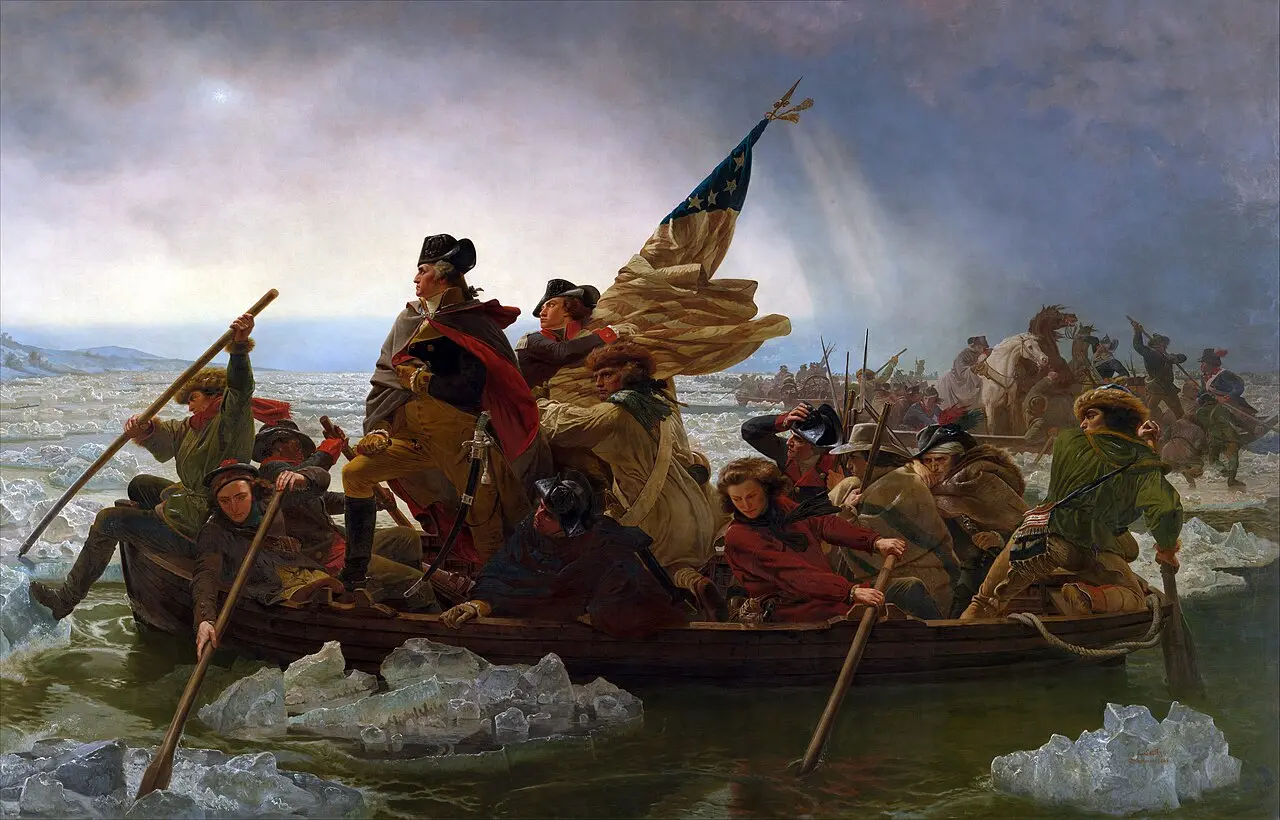
Photo: Emanuel Leutze, public domain (via Wikimedia Commons)