Bunker Hill: The Defeat That Proved America Could Fight
On June 17, 1775, untrained American farmers stood their ground against the mighty British Army — and proved a revolution could fight.
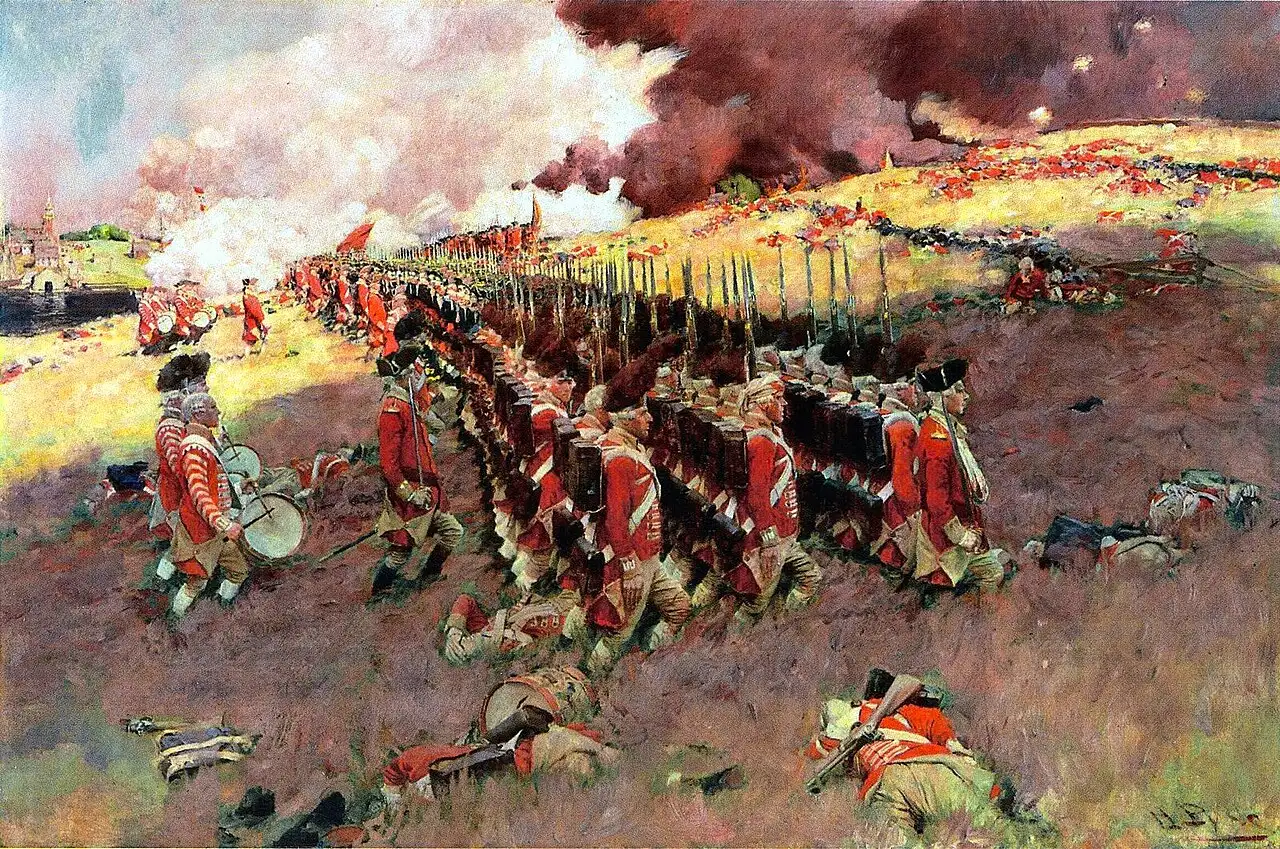
The most famous thing about the Battle of Bunker Hill is that most of it didn't happen on Bunker Hill. On the night of June 16, 1775, about 1,200 colonial troops slipped onto the Charlestown Peninsula outside Boston and built a fort on the wrong hill — Breed's Hill, a little closer to the enemy. By dawn, the British could see them. What followed became one of the most celebrated defeats in military history.
The colonists, commanded by William Prescott, had learned that the British planned to fortify the unoccupied hills around Boston and seize control of the harbor. Working through the night, they raised a strong earthen redoubt on Breed's Hill and dug defensive lines across the peninsula. At daybreak on June 17, the British responded the way professional armies do: Major General William Howe ferried about 2,200 redcoats across the water and marched them in perfect formation up the hill, expecting a quick rout.
They got a shock instead. The Americans were short on gunpowder, so Prescott — legend says — ordered his men to hold their fire: "Don't fire until you see the whites of their eyes!" When the redcoats closed to within a few dozen yards, the colonists unleashed a devastating volley that sent the British reeling downhill. A second assault broke the same way. Only on the third attack, with the Americans' ammunition exhausted, did the British finally take the redoubt in hand-to-hand fighting and force a retreat.
The British won the field — but the price was staggering. Nearly 1,000 British troops were cut down, with more than 200 killed and a shocking number of officers among them. The Americans suffered about 450 casualties, including General Joseph Warren, who was killed. A British officer wrote home afterward with a grim new understanding: the Americans, he admitted, were "full as good soldiers as ours" if equally well commanded.
Bunker Hill taught both sides the same lesson. The British learned this would be no quick police action — they never again launched a frontal assault against entrenched Americans, and the war grew longer, costlier, and bloodier. The Americans learned something greater: that farmers and shopkeepers, standing together, could face the finest army in the world and make it bleed. The defeat became a rallying cry, and colonial support for independence hardened across the thirteen colonies.
Photo: "The Battle of Bunker Hill" by Howard Pyle, painted in 1897, public domain (via Wikimedia Commons).