An Island for Christmas: Captain Cook Names Kiritimati
On Christmas Eve 1777, Captain James Cook sighted a low coral atoll in the Pacific and named it Christmas Island, now known as Kiritimati.
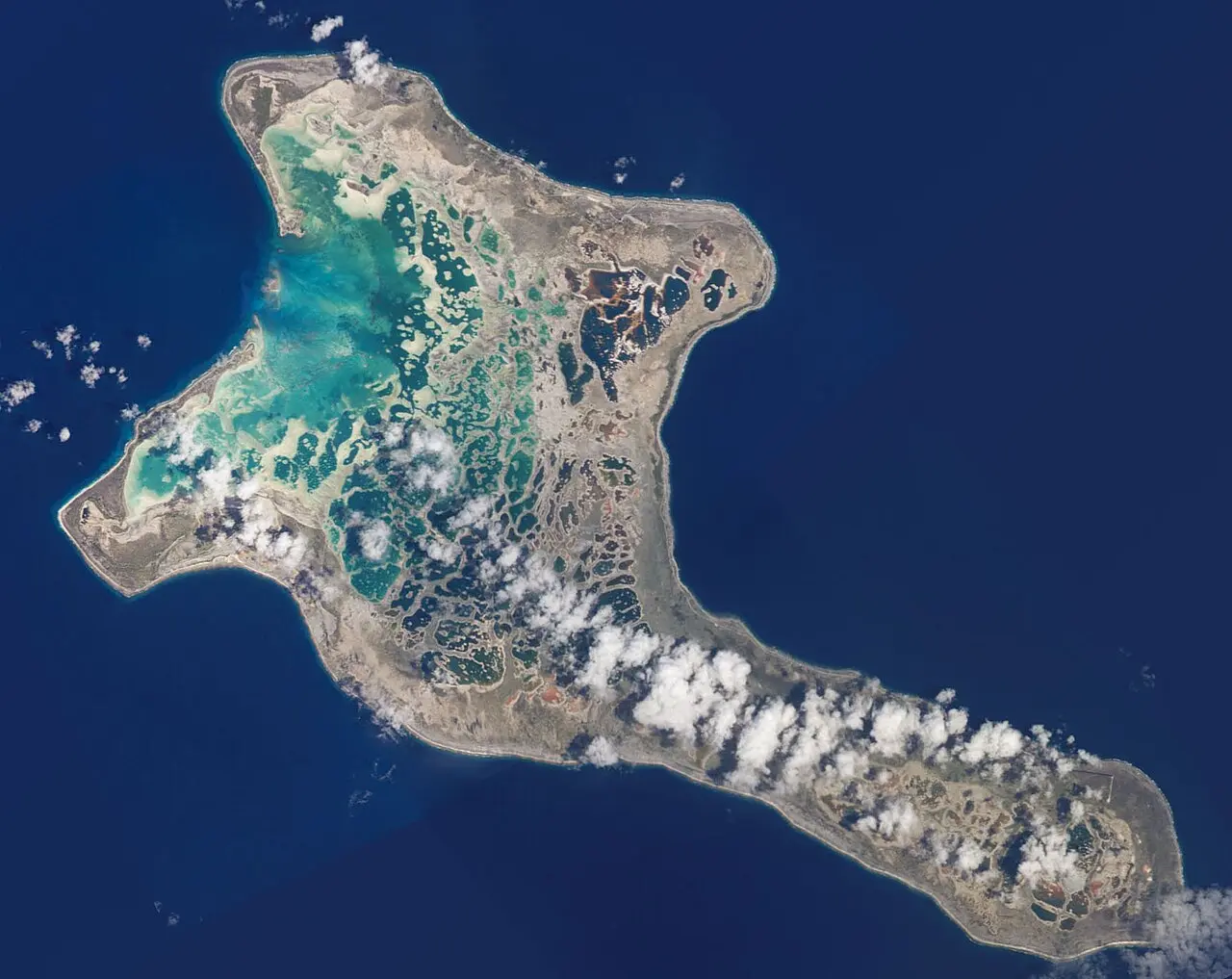
Half an hour after daybreak on Christmas Eve 1777, the lookout on Captain James Cook's ship spotted land on the horizon: a low, narrow ring of coral enclosing a lagoon, with a few coconut trees and otherwise, in Cook's words, "a very barren appearance." Cook had found an island - and he gave it the most fitting name he could think of.
Cook was on his third voyage across the Pacific, officially hunting for the Northwest Passage. His journal entry for the day reads: "As we kept our Christmas here I called it Christmas Island..." The local name, in the Gilbertese language, became Kiritimati - essentially "Christmas" in island pronunciation.
Going ashore produced one of the voyage's funnier episodes. Some of the crew landed and promptly got lost - on an island barely three miles across, so flat that, as a baffled Cook wrote, the masts of their own ships were visible from many parts of it. The men simply hadn't thought to look up.
Kiritimati turned out to be a giant: the largest coral atoll in the world, some 150 square miles of land wrapped around a vast lagoon. Today it belongs to the Republic of Kiribati and sits in the UTC+14 time zone - which made it one of the first inhabited places on Earth to greet the year 2000. In the 1950s and 1960s, Britain and the United States tested nuclear weapons there; today it is better known for its millions of nesting seabirds and world-class bonefishing.
The atoll is a study in superlatives. Its central lagoon is nearly as large as the land itself, and its reefs shelter an extraordinary density of marine life. Cook noted a few coconut trees in two or three places, but judged the land otherwise "very barren" - a verdict the island's millions of seabirds would dispute. Some accounts suggest Spanish sailors had glimpsed the atoll in the 1500s, but Cook was the first European to chart it and give it its name - and the name stuck.
Why it matters: Cook's voyages redrew the map of the Pacific, and Kiritimati is one of the many places that still carries the mark - a Christmas Eve sighting, frozen in a name. It is also a small parable of exploration: the great navigator who could find his way across an empty ocean, and the sailors who got lost on a flat island three miles wide.
Photo: NASA, public domain (via Wikimedia Commons).