America Votes Itself Dry: The 18th Amendment Is Ratified
On January 16, 1919, Nebraska became the 36th state to ratify the 18th Amendment, locking Prohibition into the U.S. Constitution.
On January 16, 1919, the United States did something no nation had ever done: it voted itself dry. That day, Nebraska's legislature became the 36th state to ratify the 18th Amendment — the three-quarters majority needed to write Prohibition into the Constitution.
The victory was decades in the making. The temperance movement had been gathering force since the 1800s, and by the early 1900s the Anti-Saloon League had turned it into one of the most disciplined political machines in American history. Activists like Carrie Nation stormed into saloons with a hatchet, smashing kegs and mirrors in the name of sobriety. Congress sent the amendment to the states in December 1917 — the House approved it on December 18, 1917, by 282 votes to 128 — and Mississippi became the first state to ratify, on January 8, 1918. A year later, only Connecticut and Rhode Island refused to go along.
The amendment was blunt: one year after ratification, "the manufacture, sale, or transportation of intoxicating liquors" would be prohibited across the United States. Acting Secretary of State Frank L. Polk formally certified the amendment on January 29, 1919, and the countdown began. Congress gave the ban teeth with the Volstead Act, passed over President Woodrow Wilson's veto on October 28, 1919. It defined "intoxicating liquor" as anything over 0.5 percent alcohol — sweeping in beer and wine alongside whiskey and gin — and created a force of 1,520 federal Prohibition agents to enforce it. On January 17, 1920, the dry era officially began.
The drys had promised that Prohibition would empty the prisons and fill the churches. Instead it filled the speakeasies. Bootleggers thrived, organized crime syndicates built empires on illegal liquor, and ordinary Americans kept drinking anyway — the law banned making and selling alcohol, but not actually drinking it. Fourteen years later the nation reversed course: the 21st Amendment, ratified in 1933, repealed Prohibition outright, making the 18th the only constitutional amendment ever fully undone.
January 16, 1919, remains the high-water mark of the idea that a nation's morals can be legislated into existence. It was one of the boldest social experiments in American history — and one of the clearest lessons that laws work best when they have the public behind them.
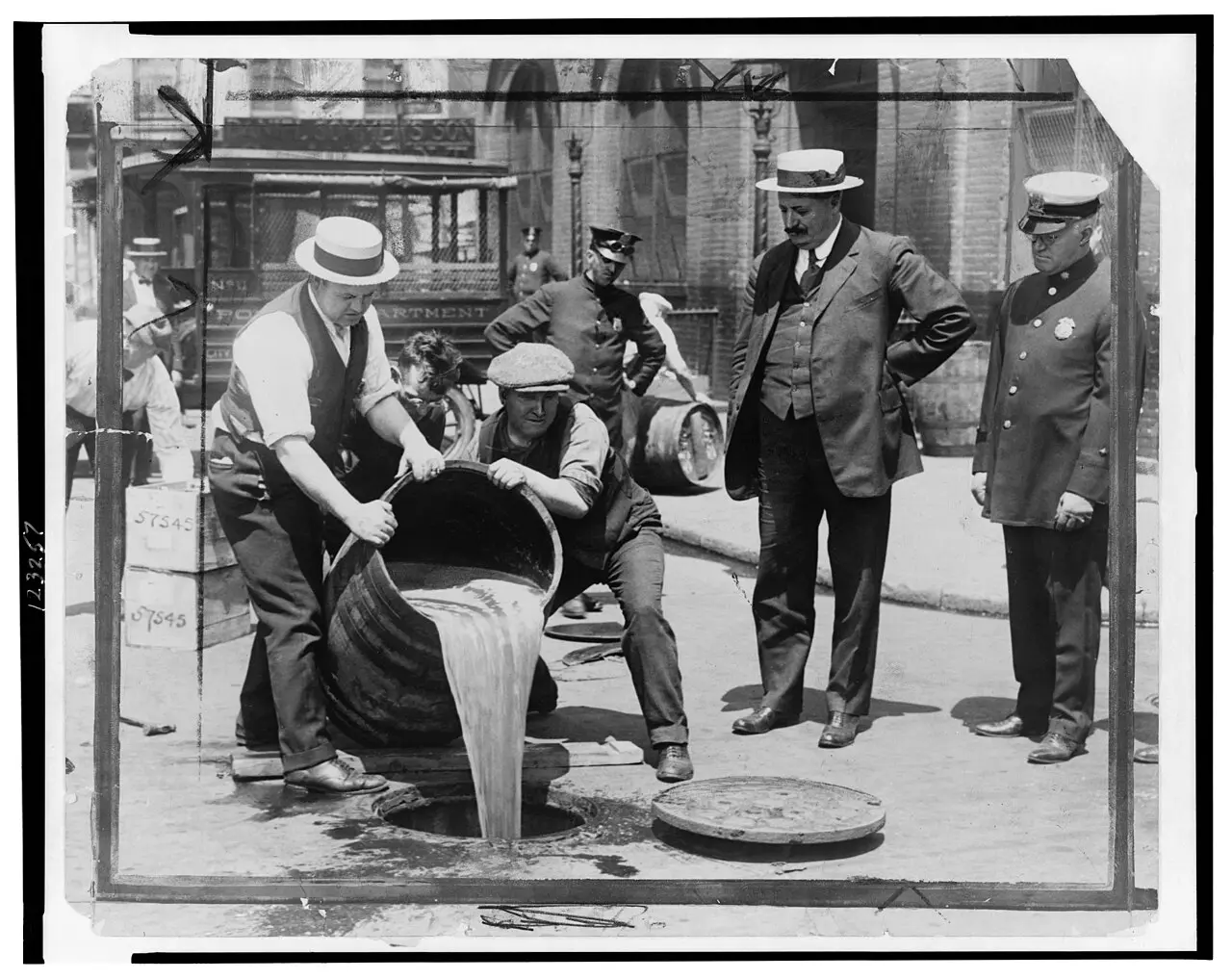
Photo: Prohibition agents pour seized liquor into a New York City sewer while Deputy Police Commissioner John A. Leach watches, during the height of Prohibition — Library of Congress, public domain, via Wikimedia Commons.