A House Divided: Lincoln's Warning That Launched a Legend
On June 16, 1858, Abraham Lincoln accepted the Illinois Senate nomination with a speech so bold it launched the famous debates that made him a national figure.
His friends begged him not to say it. As Abraham Lincoln prepared his acceptance speech in the spring of 1858, allies warned that one line in it was political dynamite — the kind of sentence that loses elections. Lincoln listened, considered, and kept the line anyway. On the evening of June 16, 1858, he delivered it before more than a thousand delegates in Springfield, Illinois, and changed American history.
The occasion was Lincoln's nomination as the Illinois Republican Party's candidate for the United States Senate. The convention finished its business that afternoon, broke for dinner, and reconvened at 8 p.m. with Lincoln as the only speaker. Rising in Representatives' Hall of the state capitol, he opened with a warning borrowed from the New Testament: "A house divided against itself cannot stand."
His argument was stark. Five years earlier, the Kansas-Nebraska Act had promised to settle the slavery question by letting new territories decide for themselves — yet, Lincoln said, agitation over slavery had "constantly augmented" instead of ceasing. Then had come the Dred Scott decision. The nation, he warned, was drifting toward a crisis: this government could not "endure permanently half slave and half free." He did not expect the Union to dissolve, he said — but "it will cease to be divided. It will become all one thing, or all the other."
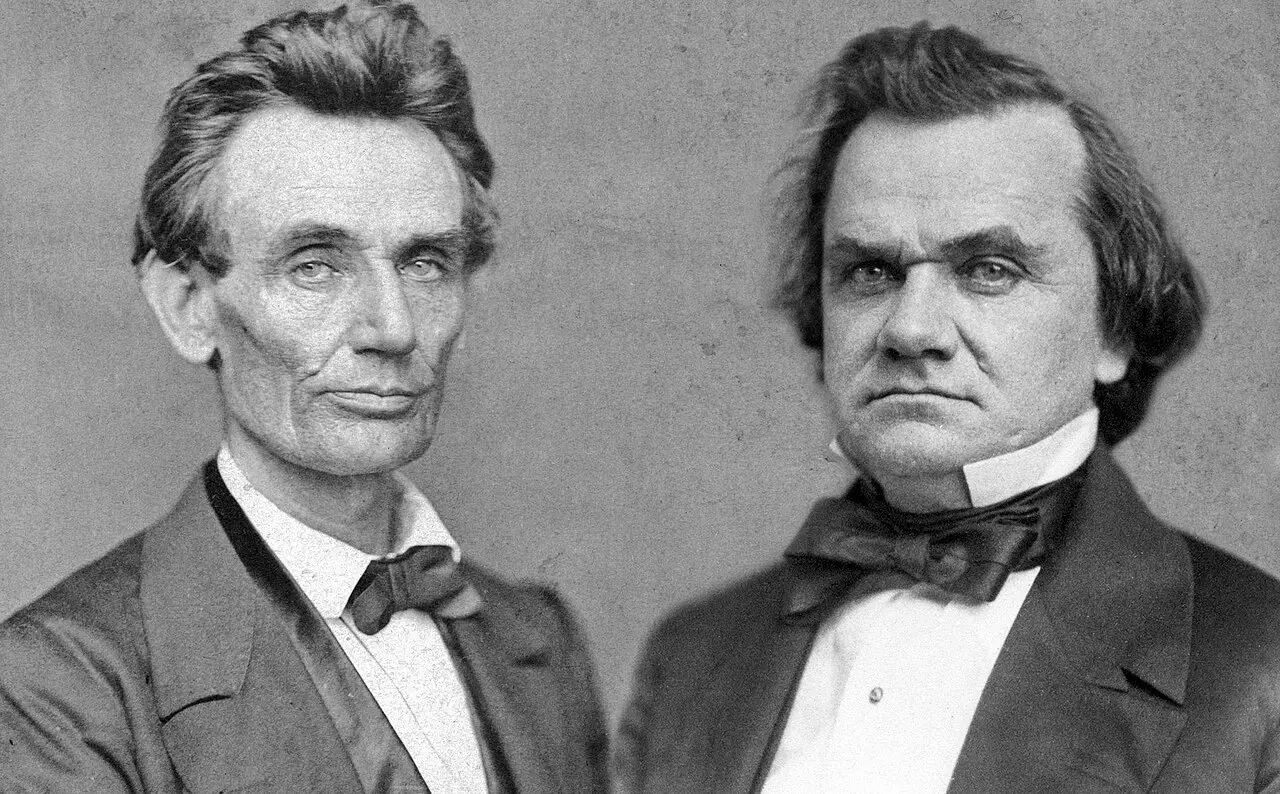
Newspapers printed the address in full the next morning, and it soon circulated as a pamphlet. The speech became the launching point of his campaign against the incumbent senator, Stephen A. Douglas — a contest that climaxed in the seven famous Lincoln–Douglas debates of 1858. Lincoln lost the Senate race. But the debates made him a national figure, and two years later he won the presidency. Its most famous phrases — the divided house, the government that could not endure half slave and half free — were quoted and argued over in newspapers across the North for months.
The "House Divided" speech endures because Lincoln refused to soften a hard truth for political comfort. He named the crisis plainly when most politicians were still pretending it could be managed away — and history proved him right. Three years later the house did divide, in a civil war that settled the question he had raised. Today the phrase is shorthand for any nation torn against itself, and the speech ranks alongside the Gettysburg Address among the defining orations of American life.
Photo: Composite of period portrait photographs of Abraham Lincoln and Stephen A. Douglas, public domain (via Wikimedia Commons).