444 Days: The Iran Hostages Come Home
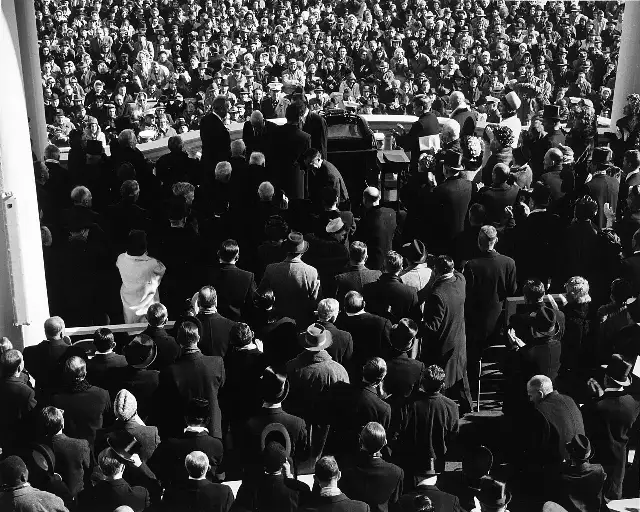
On January 20, 1981, minutes after Ronald Reagan's inauguration, Iran freed 52 American hostages after 444 days in captivity.
For 444 days, America counted. Every evening, the television news ticked off another day of captivity, and yellow ribbons appeared on trees and lapels across the country. Then, on January 20, 1981, minutes after Ronald Reagan was sworn in as president, the ordeal finally ended: Iran released the 52 American hostages it had held for well over a year.
The crisis had begun on November 4, 1979, when militant Iranian students stormed the United States embassy in Tehran. Furious that America had admitted Iran's exiled shah for medical treatment, the students seized the compound and took more than 60 Americans prisoner. Ayatollah Ruhollah Khomeini, the leader of Iran's revolution, embraced the standoff, and most of the captives remained in his government's hands.
The hostages became the defining story of a presidency. Nightly broadcasts marked each passing day. President Jimmy Carter tried diplomacy, sanctions, and finally force: in April 1980 he ordered a daring rescue mission, Operation Eagle Claw, which collapsed in the Iranian desert when a helicopter collided with a transport plane, killing eight American servicemen. The hostages stayed where they were.
Carter lost the 1980 election to Reagan, but he never stopped working for their freedom. Through Algerian intermediaries, American and Iranian negotiators hammered out the Algiers Accords, signed on January 19, 1981, under which the United States agreed to unfreeze nearly $8 billion in Iranian assets. The deal was struck in Carter's final hours in office, but Iran waited until his successor had taken the oath before letting the planes go. Less than half an hour after Reagan's inauguration, the aircraft carrying the freed Americans lifted out of Iranian airspace.
The next day, Carter flew to Wiesbaden, West Germany, to greet the former hostages on their way home, a mission of mercy that fell to the president who had done the work but missed the triumph. When they finally landed in the United States, they were met with ticker tape, church bells, and a wave of yellow ribbons.
Why does it matter? The hostage crisis reshaped the American presidency, helped decide an election, and opened a chapter of hostility between the United States and Iran that has never fully closed. It also proved something quieter: that patient, grinding diplomacy, pursued to the last minute, can bring people home alive.
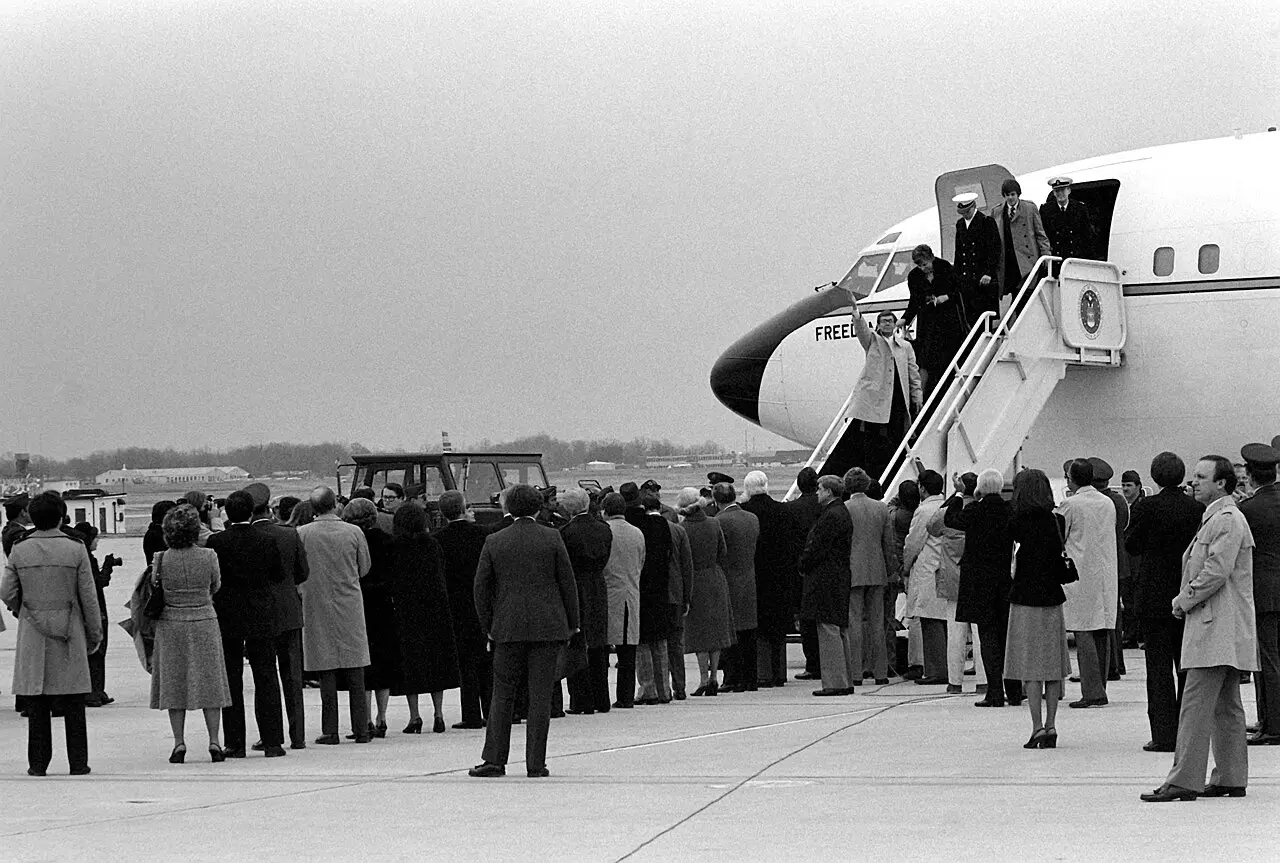
Photo: Don Koralewski (U.S. Department of Defense), public domain (via Wikimedia Commons) — freed American hostages disembarking "Freedom One" at Andrews Air Force Base, Maryland, January 27, 1981.