The Playboy Prince Who Was King for 326 Days
On January 20, 1936, the dashing Prince of Wales became Edward VIII — and abdicated less than a year later for the woman he loved.
On January 20, 1936, Britain got a new king, and he was everything a modern monarchy could have wished for: young, handsome, charming, a war veteran and a fashion icon adored by the public. His name was Edward VIII, and his reign would last just 326 days, ending in the most romantic scandal of the century.
His father, George V, had died that morning at Sandringham at the age of 70, after a quarter century on the throne. The old king had privately doubted whether his eldest son, then 41, was suited to the crown. The Prince of Wales seemed determined to prove the doubters right in the most dashing way possible.
Edward broke with royal custom almost immediately. The day after his father's death, he watched the proclamation of his own accession from a window of St James's Palace, with the American divorcée Wallis Simpson at his side, a breach of protocol that scandalized the court. He became the first British monarch to travel by airplane, flying from Sandringham to London for his Accession Council. In the days after his father's death, he joined his three brothers in the Vigil of the Princes, standing guard in turn over the king's coffin as it lay in state in Westminster Hall. He toured the depressed coal-mining villages of South Wales and publicly demanded that something be done for the jobless, alarming ministers who felt a king should stay out of politics.
But it was Wallis Simpson who would define his reign. Edward was determined to marry her, and Prime Minister Stanley Baldwin, the Church, and the governments of the Dominions made it plain that the king could not marry a twice-divorced woman and keep the throne. On December 11, 1936, after less than eleven months as king, Edward abdicated in a radio broadcast, choosing love over the crown. He was never crowned, and he left Britain as the Duke of Windsor. His younger brother, the shy and stammering Duke of York, became George VI, the king who would lead Britain through the Second World War.
Why does it matter? The abdication was Britain's great constitutional crisis of the modern age, and its consequences rippled for decades. Had Edward stayed, the monarchy might have faced the war under a king sympathetic to appeasement; instead, the crown passed to George VI, whose quiet steadfastness became a symbol of national resistance. One man's choice of a wife changed the fate of a throne.
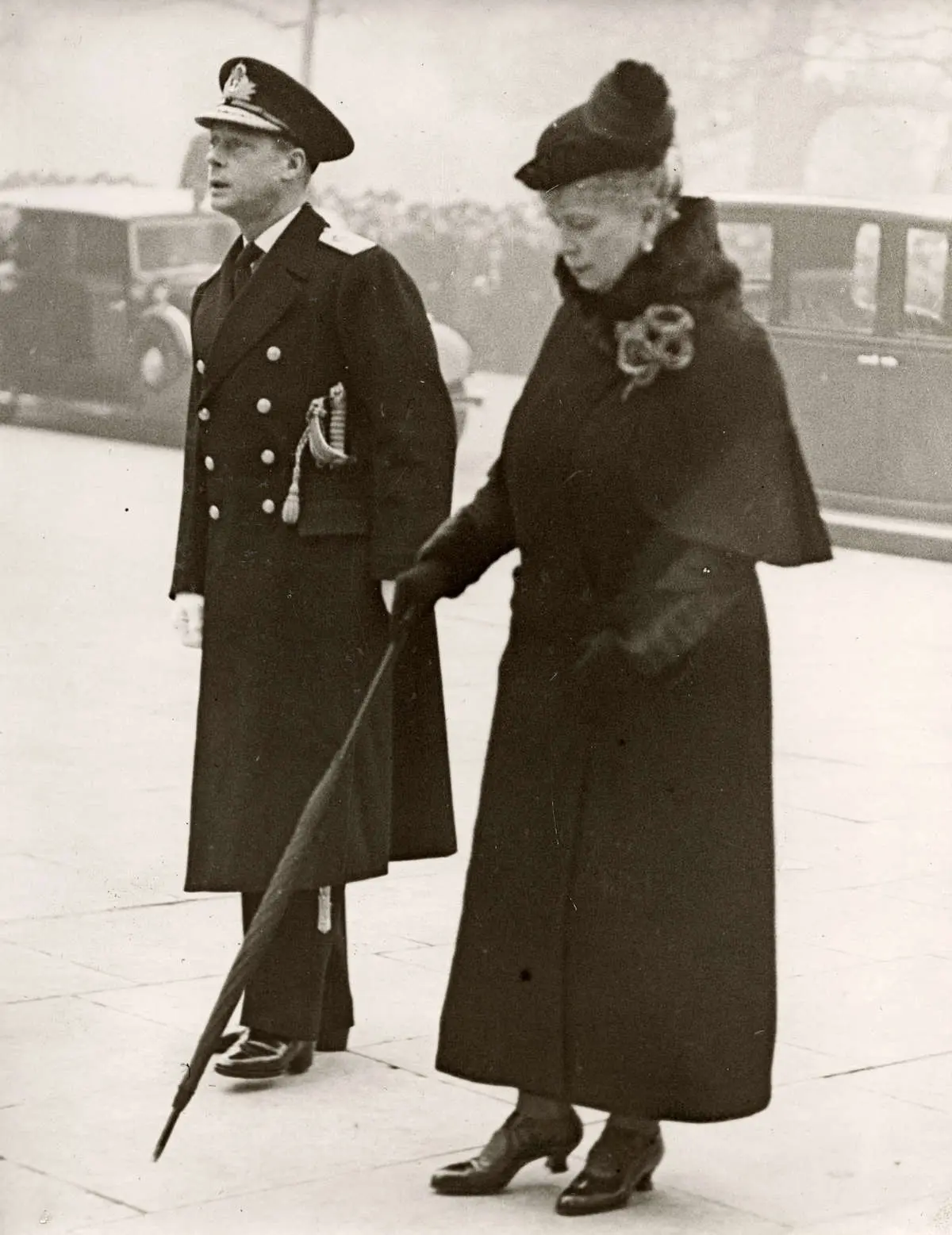
Photo: Spaarnestad Photo, public domain (via Wikimedia Commons) — King Edward VIII with his mother Queen Mary at Whitehall, London, November 11, 1936, during his brief reign.