We Have Met the Enemy and They Are Ours
On September 10, 1813, Oliver Hazard Perry's small American squadron defeated the British on Lake Erie, and his victory dispatch became an American legend.
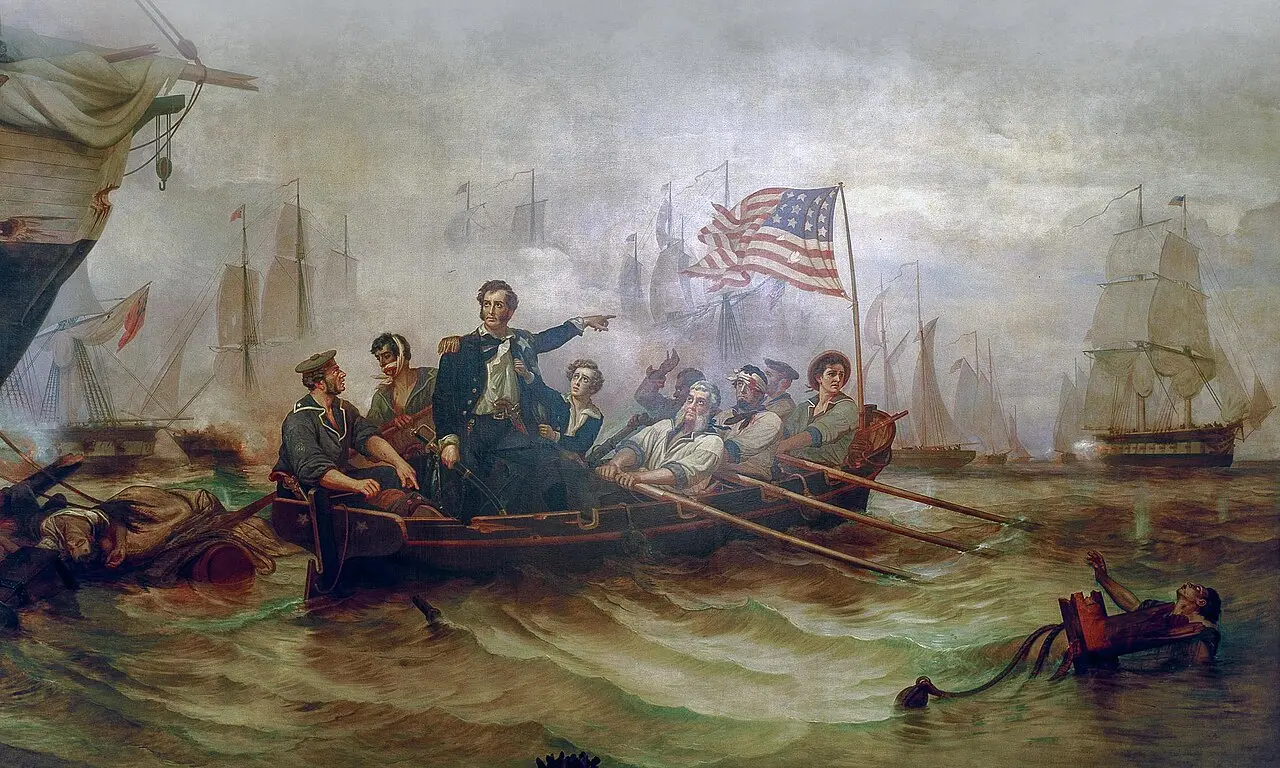
He was 28 years old, standing up in an open rowboat in the middle of a sea battle, with cannon fire tearing the water around him. Oliver Hazard Perry had just watched his flagship get shot to pieces beneath him. So he gathered up his battle flag, climbed down into a boat with four sailors, and rowed half a mile through the smoke and gunfire to another warship — because he was not finished fighting.
It was September 10, 1813, the second year of the War of 1812, and Lake Erie belonged to Great Britain. Whoever ruled the lake ruled the Northwest: the supply lines, the frontier forts, the whole western theater of the war. A British squadron of six vessels had the run of the water. Perry, a young captain in the U.S. Navy, had spent the summer building a squadron of nine vessels to take it back.
The two fleets met near Put-in-Bay, at the western end of the lake. Perry's flagship, the Lawrence, sailed straight at the British line and took a merciless pounding. Gun crews fell; the Lawrence was reduced to a floating wreck. Perry refused to surrender. He had a blue battle flag flying from the masthead, stitched with the words "DONT GIVE UP THE SHIP," and he was not about to give up anything. Gathering the flag and a handful of men, he rowed through the battle to the Niagara, a brig that had so far been held out of the worst of the fighting.
What happened next decided the battle. Perry took the Niagara straight through the British line, raking enemy ships with broadsides from both sides. One by one, the British vessels struck their colors. By late afternoon the entire British squadron — all six vessels — had surrendered. Perry scribbled his report to the American army commander waiting on the shore: "We have met the enemy and they are ours."
The victory gave the United States control of Lake Erie for the rest of the war. It opened the way for the recapture of Detroit and the American victory at the Battle of the Thames, which secured the Northwest frontier. Perry, the 28-year-old who had rowed through cannon fire, came home a national hero, and his dispatch became one of the most famous sentences in American naval history.
More than two centuries later, "We have met the enemy and they are ours" is still quoted whenever an underdog refuses to quit. Perry's real message wasn't about the enemy at all — it was about what happens when you refuse to strike your colors, even while your flagship is sinking under you.
Photo: William Henry Powell's 1873 painting of the battle — Perry transferring his flag from the shattered Lawrence to the Niagara — public domain (U.S. Senate Art Collection, via Wikimedia Commons).