"Useless and Dangerous": The Day Parliament Abolished the House of Lords
On March 19, 1649, England's House of Commons voted to abolish the House of Lords, declaring it 'useless and dangerous' — seven weeks after executing King Charles I.
It is the rudest sentence ever passed on a parliament by a parliament. On March 19, 1649, the House of Commons of England ordained that the House of Lords — the upper chamber of lords spiritual and temporal, centuries old — 'is useless and dangerous to the people of England to be continued,' and therefore 'shall be and is hereby wholly abolished and taken away.'
The context was revolution. Seven weeks earlier, on January 30, 1649, King Charles I had been beheaded outside the Banqueting House in Whitehall after losing the English Civil War. The victorious 'Rump' Parliament — the Commons purged of its royalist and moderate members — then set about dismantling the old constitution piece by piece. On March 17 it formally abolished the monarchy itself, declaring in the act that the office of king was 'unnecessary, burdensome, and dangerous.' Two days later, it turned on the Lords.
The abolishing act, whose text survives in full, did not mince words. (It is dated '19 March 1648/9' — England still began its legal year in March, so the old-style date straddles what we now call 1649.) The Commons, 'finding by too long experience that the House of Lords is useless and dangerous to the People of England,' decreed that the Lords 'shall not from henceforth meet or sit' anywhere 'as a House of Lords in Parliament' — though, in a striking concession, it allowed individual peers who had behaved 'with Honor, Courage and Fidelity to the Commonwealth' to sit in the Commons if elected like anyone else. No peer would enjoy parliamentary privilege by birth alone ever again.
For eleven years England was governed without king or lords, first by the Rump and then by Oliver Cromwell as Lord Protector — who, ironically, later created his own nominated upper chamber, the 'Other House,' under the 1657 Humble Petition and Advice. The Lords did not meet again until the Convention Parliament of 1660, which restored the monarchy — and with it, the old upper chamber. The 1649 act was declared void, never having had the king's consent.
Yet the abolition was not forgotten. It was the boldest assertion in English history that all legitimate power flows from the elected Commons alone — an idea that echoes through every later debate about reforming, shrinking, or abolishing the House of Lords, right up to the present day. For one remarkable decade, the 'useless and dangerous' chamber simply did not exist.
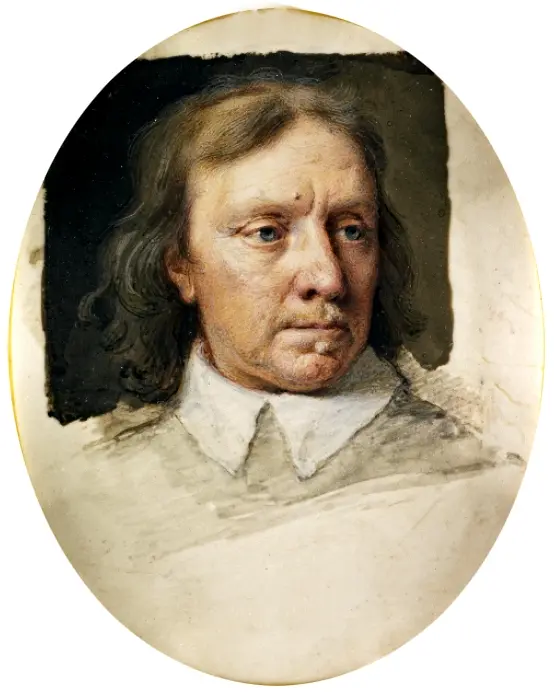
Photo: portrait of Oliver Cromwell by Samuel Cooper, c. 1653, public domain.