Ambush in Texas: The Murder of Explorer La Salle
On March 19, 1687, French explorer René-Robert Cavelier, Sieur de La Salle, was shot dead by his own mutinous men in the Texas wilderness.
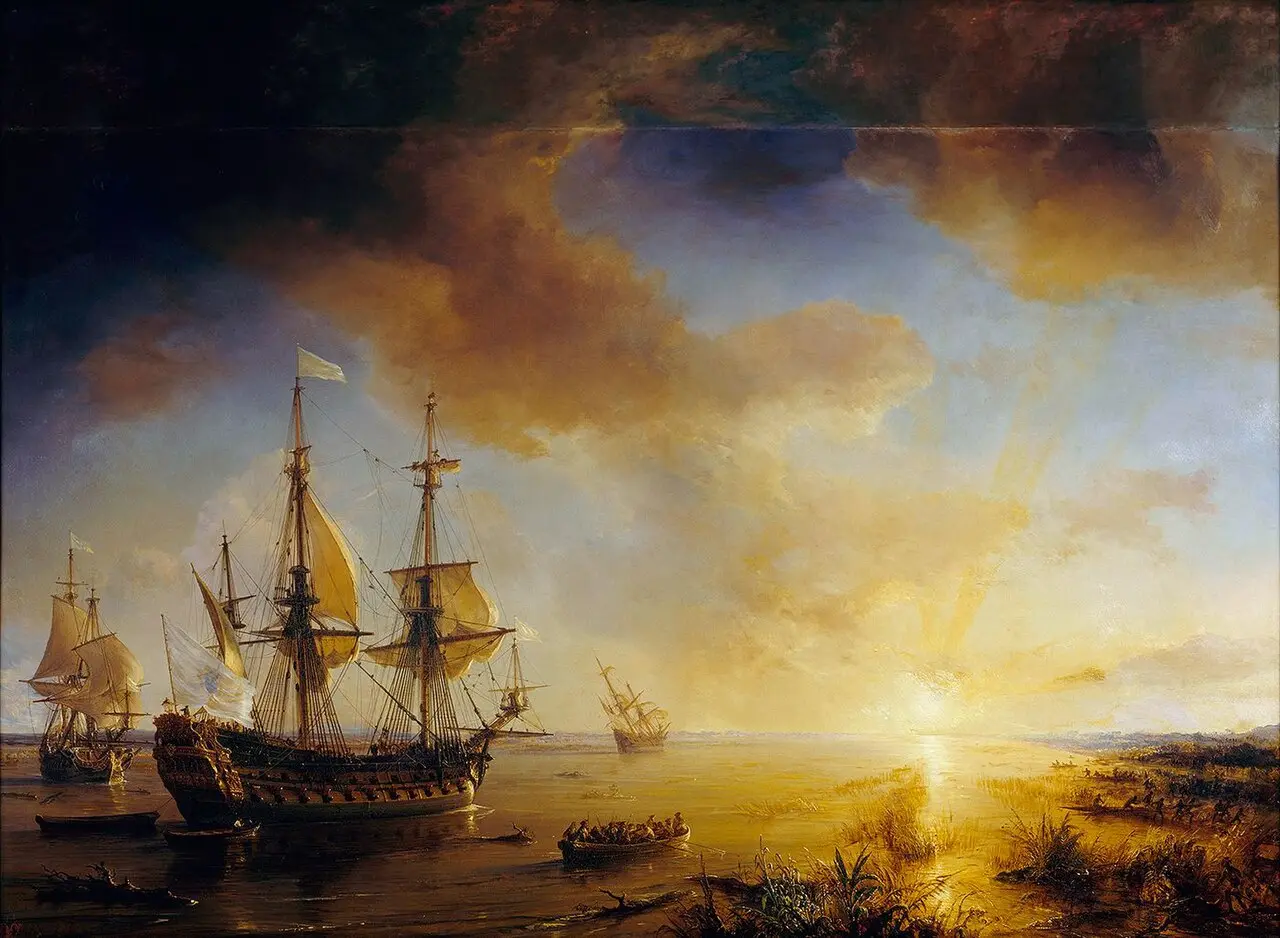
He had claimed half a continent for France. He died at the hands of his own men, in a muddy ambush, hundreds of miles from the river he was looking for.
René-Robert Cavelier, Sieur de La Salle, was the most ambitious explorer of New France. In 1682 he canoed the length of the Mississippi and, at its mouth, buried an engraved plate claiming the entire Mississippi basin for Louis XIV — naming it Louisiana in the king's honor. On his return he built Fort Saint-Louis of Illinois at Starved Rock with his loyal lieutenant Henri de Tonti, anchoring France's claim to the interior. Then he sailed home to France to beg the king for ships and colonists, and on July 24, 1684, departed with four ships and 300 settlers to plant a French colony at the river's mouth.
Almost everything went wrong. One ship was captured by Spanish pirates in the West Indies. By terrible navigation, the expedition missed the Mississippi by hundreds of miles and made landfall in February 1685 at Matagorda Bay, in present-day Texas. They built a rough settlement, Fort Saint Louis, on Garcitas Creek near what is now Victoria. Then their last remaining ship, La Belle, ran aground and sank in the bay, stranding them. La Salle led his men east on foot, again and again, searching for the great river — and never found it.
By early 1687 the survivors were starving, sick, and furious at their commander. Near the site of present-day Navasota, Texas, some of the men mutinied. On March 19, 1687, La Salle was lured into an ambush and shot dead by Pierre Duhaut, one of his own followers, while talking to Duhaut's decoy. Duhaut was himself killed days later by another colonist, James Hiems, in revenge. The little colony staggered on for another year until, in 1688, Karankawa warriors killed the remaining adults and took the children captive.
France's Texas dream died with him — but his legacy endured. His 1682 claim gave France title to the vast Mississippi basin, the very claim the United States would buy in the Louisiana Purchase of 1803. Tonti, hearing of the disaster, sent a search party north from Illinois in 1689, but it ran out of supplies and never reached the fort. And in 1995, archaeologists found La Belle on the floor of Matagorda Bay, recovering the hull and more than 1.6 million artifacts — tools, weapons, and trade goods now displayed at the Bullock Texas State History Museum in Austin. Three centuries later, the doomed expedition finally came home.
Photo: painting by Théodore Gudin, public domain.