Up the Hill Without Horses: San Francisco's First Cable Car
In the pre-dawn hours of August 2, 1873, Andrew Hallidie's cable car made its first successful test run up San Francisco's Clay Street — and changed city transit forever.
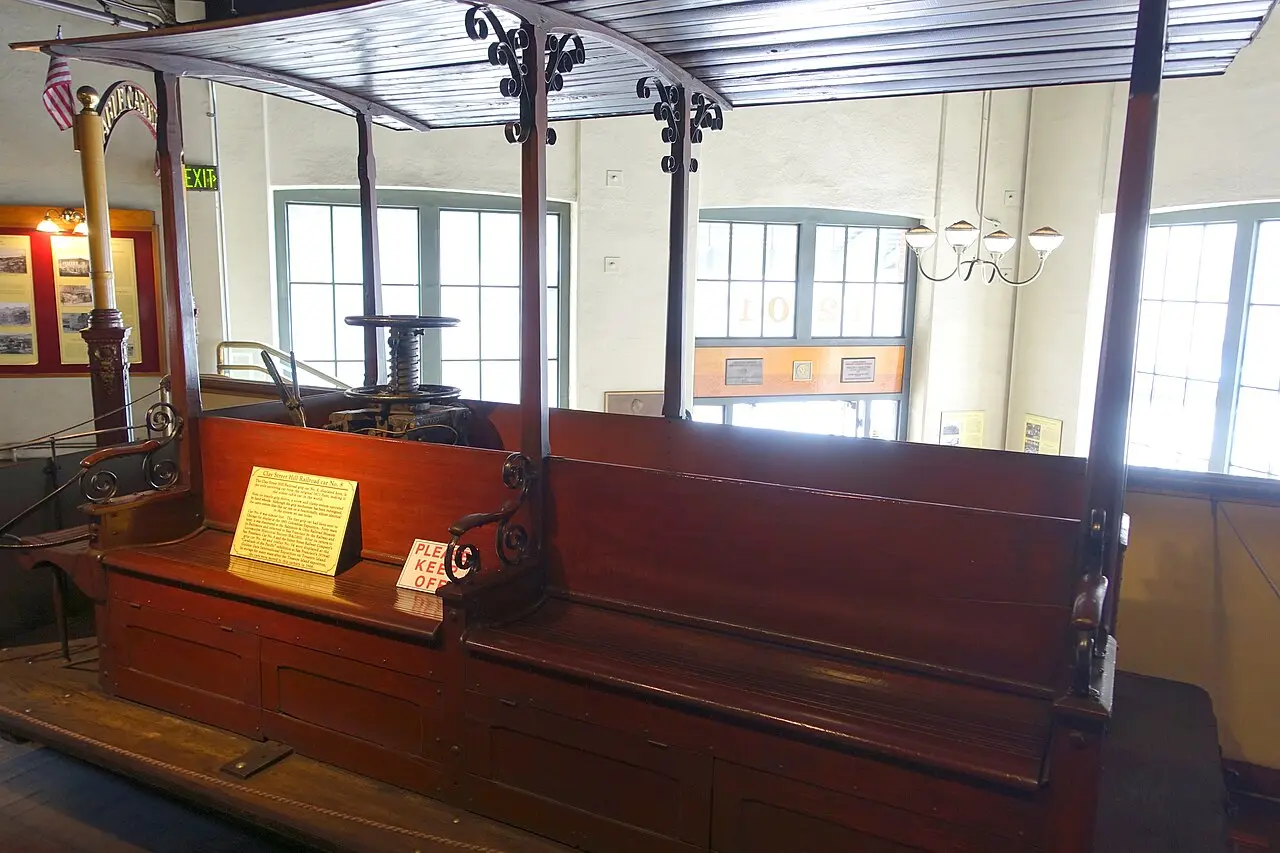
In the small hours of August 2, 1873, a single small car crept up one of the steepest streets in San Francisco — pulled by nothing visible at all. There were no horses straining at the traces, no engine chuffing aboard. Beneath the street, a moving steel cable did the work. The test run up Clay Street was, in the words of the city's transit agency, "a tremendous success." The cable car was born.
The man behind it was Andrew Smith Hallidie, a Scottish-born maker of wire rope. The story goes that in 1869 he had watched in horror as a horse-drawn streetcar slipped backward on wet cobblestones, dragging its horses to their deaths — and decided there had to be a better way to climb San Francisco's hills. He raised money from local backers, hired engineer William Eppelsheimer, and built a double-track line with a powerhouse on Clay Street between Kearny and Jones, climbing more than 300 feet at grades no horse could manage.
His idea was elegantly simple: a continuously moving wire rope ran in a conduit beneath the street, driven by a stationary steam engine. Each car carried a "grip" — a pincer-like device that reached through a slot in the street and clamped onto the cable. To move, the gripman closed the grip; to stop, he released it. Hallidie and Eppelsheimer patented the system.
The timing was nearly a disaster. Hallidie's city franchise required the line to be running by August 1 — and a later account claimed a lone car was rushed over the tracks at 4 a.m. that morning, with almost no witnesses, just to beat the deadline. But the real triumph came at dawn on August 2: the first proper test run, which proved the system worked.
Regular passenger service began a month later, on September 1, 1873, at a fare of five cents. San Franciscans took to it immediately, and the Clay Street line became the template for cable railways around the world, from Chicago to London to Melbourne. Within two decades, eight companies were running cable cars over 54 miles of San Francisco track.
Today the cable cars are a National Historic Landmark — one of only two street railways in America so honored — and the last manually operated cable car system in the world still running in daily service. Every clang of the gripman's bell echoes back to a quiet morning in 1873, when a car with no horses climbed a hill that horses couldn't.
Photo: Daderot, CC0 (via Wikimedia Commons).