
The Two-Page Letter That Started the Atomic Age
On August 2, 1939, Albert Einstein signed a letter to President Roosevelt warning that Germany might build an atomic bomb — a letter that set the Manhattan Project in motion.
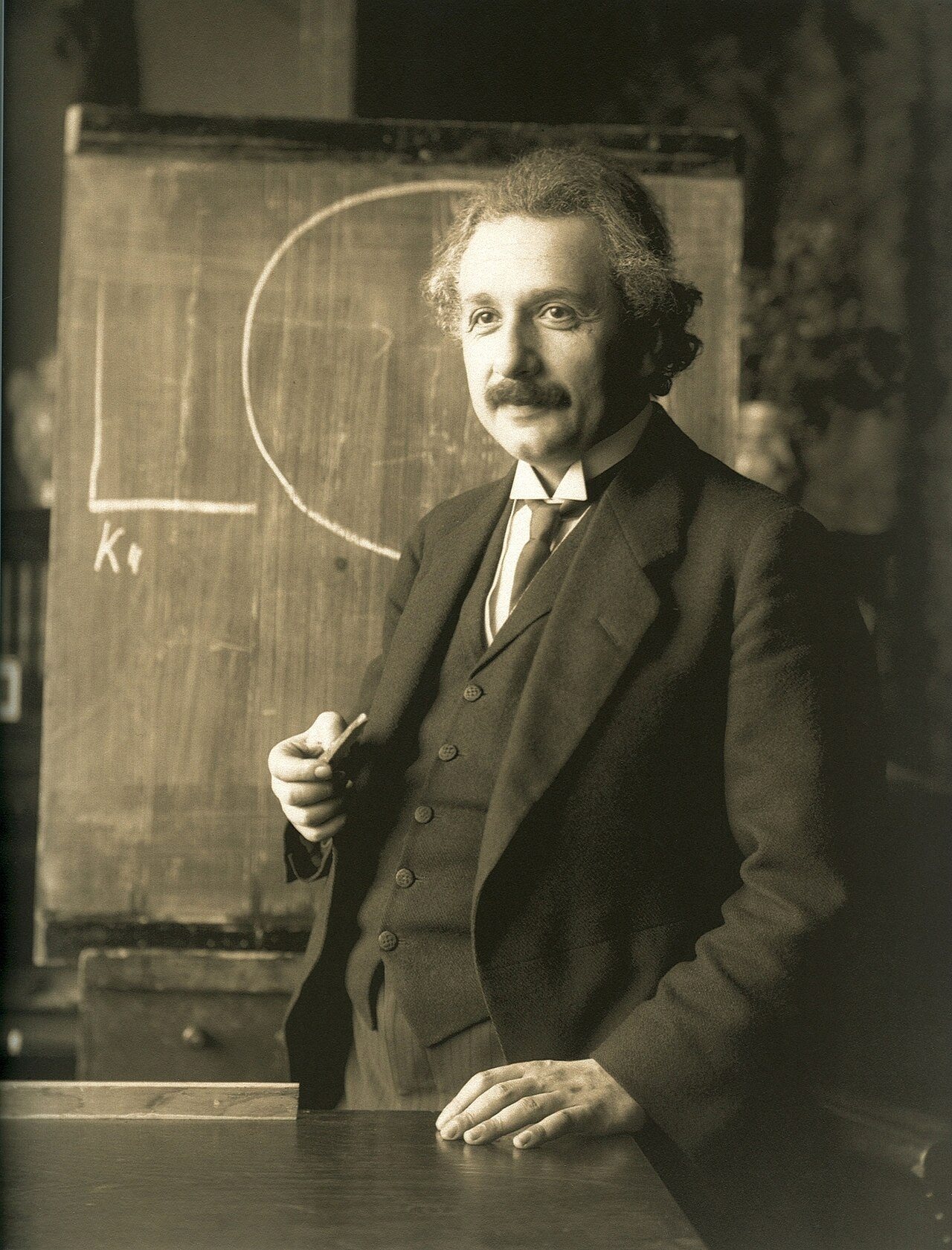
In the summer of 1939, with war gathering over Europe, the Hungarian-born physicist Leo Szilard was losing sleep over a terrifying idea. German scientists Otto Hahn and Fritz Strassmann had split the uranium atom the previous December, and Szilard understood what that meant: the strange new physics of nuclear fission might be turned into a weapon of unimaginable power — and Nazi Germany, which controlled rich uranium deposits, might get there first. Szilard needed someone the world, and the White House, would listen to. So he went to see the most famous scientist alive.
Szilard sought out Albert Einstein, his old acquaintance, with the help of fellow Hungarian physicists Eugene Wigner and Edward Teller. The pacifist Einstein was not easily persuaded — he once summarized his view of war as nothing but murder under another name. But when Szilard laid out the facts about Germany's fission research, Einstein was convinced. On a second visit, on August 2, 1939 — Teller drove Szilard there — the letter to the president was finalized and signed.
Dated from "Old Grove Rd., Nassau Point, Peconic, Long Island," the letter warned President Franklin D. Roosevelt that uranium might soon become "a new and important source of energy" and that the phenomenon of the nuclear chain reaction "would also lead to the construction of bombs, and it is conceivable — though much less certain — that extremely powerful bombs of a new type may thus be constructed." Then came the sentence that must have chilled its reader: "A single bomb of this type, carried by boat and exploded in a port, might very well destroy the whole port together with some of the surrounding territory." Szilard's draft recommended that the administration keep in close contact with the physicists working on chain reactions in America.
Delayed by the outbreak of World War II, the letter did not reach Roosevelt until October 11. But the president grasped its urgency and created the Advisory Committee on Uranium — the small seed from which, years later, the Manhattan Project would grow. The atomic bombs developed under that project were used on the Japanese cities of Hiroshima and Nagasaki in August 1945.
The letter is a reminder of how a few pages, written by worried scientists, can redirect the course of history. Einstein himself came to feel its weight. "Had I known that the Germans would not succeed in producing an atomic bomb," he said years later, "I would have never lifted a finger." The atomic age — with all its promise of limitless energy and all its peril — traces a straight line back to a signature on Long Island on August 2, 1939.
Photo: Ferdinand Schmutzer, public domain (via Wikimedia Commons).