Aces and Eights: The Afternoon Wild Bill's Luck Ran Out
On August 2, 1876, Wild Bill Hickok was shot in the back of the head during a poker game in Deadwood — holding the black aces and eights now known as the dead man's hand.
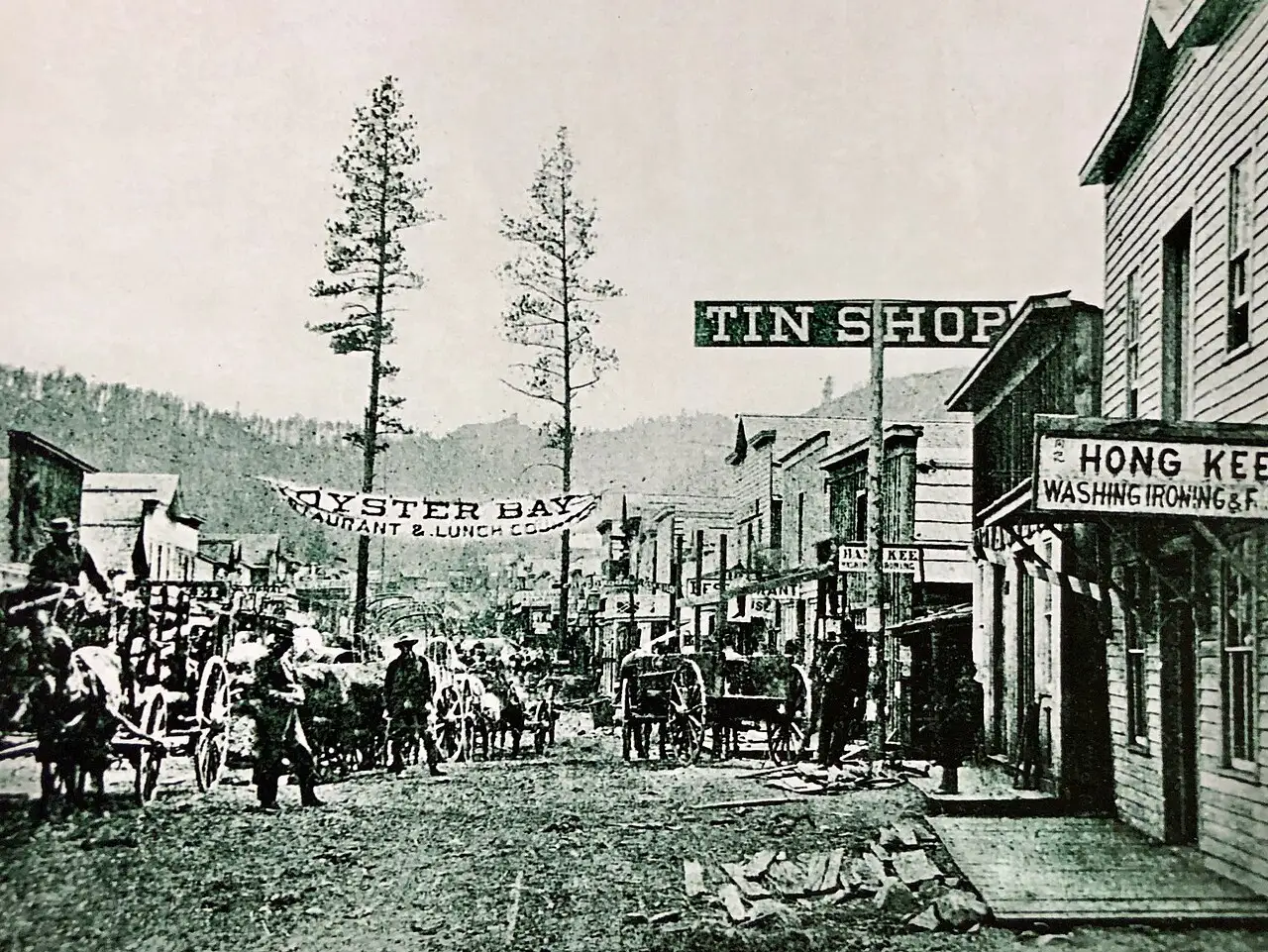
James Butler Hickok had spent his whole life making sure no one ever got behind him. On the afternoon of August 2, 1876, in a crowded saloon in the gold-rush boomtown of Deadwood, Dakota Territory, there was nowhere else to sit — so for the first time in years, "Wild Bill" Hickok took a chair with his back to the door.
He was 39 years old and already a legend. Born in Illinois in 1837, Hickok had been a stagecoach driver, a Union scout and spy in the Civil War, and a fearsome lawman in the Kansas cattle towns of Hays City and Abilene. An 1867 magazine profile and a flood of dime novels had turned him into the archetypal gunfighter of the American West — cool, quick, and deadly — though the novels' claim that he had killed a hundred men was pure fiction; the true number was far smaller.
By 1876 the legend was fading. His eyesight was failing, his gunfighting days were behind him, and that March he had married Agnes Thatcher Lake, a circus owner. He had come to Deadwood that summer chasing gold and card games, not trouble.
At Nuttal & Mann's Saloon No. 10, Hickok settled into a poker game. A young drifter named Jack McCall — who had lost money to Hickok at the tables the day before — walked in, slipped up behind Hickok's chair, and shot him point-blank in the back of the head. Hickok died instantly, still holding his cards: two pairs, black aces and black eights. Poker players have called it the "dead man's hand" ever since. What the fifth card was, history never recorded for certain.
McCall claimed he was avenging a brother Hickok had killed — a brother who probably never existed. A miners' court acquitted him, but Deadwood was not yet a legal town, so the verdict didn't stick: he was rearrested, tried in a proper territorial court, convicted, and hanged in March 1877.
Hickok was buried on a hill above Deadwood, at Mount Moriah Cemetery. In 1979 he was inducted as a charter member of the World Series of Poker's Hall of Fame — the gunfighter become the patron saint of gamblers. The irony of his death is what keeps the story alive: the most famous gunfighter in the West, a man who had faced down armed men for twenty years, was killed by a shot he never saw coming — because on one crowded afternoon, he broke his own rule.
Photo: public domain (via Wikimedia Commons).