Two Paragraphs That Drew a Line Around a Hemisphere
On December 2, 1823, President James Monroe's annual message to Congress declared the Americas closed to future European colonization — the Monroe Doctrine.
Few people read annual presidential messages. This one redrew the map of the world.
On December 2, 1823, President James Monroe delivered his seventh annual message to Congress — the 19th-century version of the State of the Union. Buried inside the routine report were a few paragraphs, principally drafted by his Secretary of State, John Quincy Adams, that would outlive everything else in the speech.
Monroe declared that the American continents, "by the free and independent condition which they have assumed and maintain, are henceforth not to be considered as subjects for future colonization" by any European power. The New World and the Old would be separate spheres: Europe must not interfere in the Americas, and in return the United States would not meddle in Europe's internal affairs or its existing colonies.
The timing was deliberate. Nearly all of Spain's American colonies had won or were winning independence, Russia was pushing claims down the Pacific Northwest, and there were fears that Europe's conservative powers might try to restore monarchies in the Americas. Monroe drew his line in the sand.
The doctrine rested on three simple ideas: the Western Hemisphere was politically separate from Europe, Europe must not attempt new colonization or intervention there, and the United States would in turn stay out of Europe's wars and existing colonies. The catch? The young republic had almost no navy and a tiny army. The great powers largely ignored the doctrine for decades — it was Britain's navy, pursuing its own interests, that did most of the early enforcing. The doctrine wasn't even called the "Monroe Doctrine" until 1850. But it endured. It was cited in an 1895 boundary dispute between Venezuela and Britain, invoked to justify the 1898 war with Spain, used to pressure France out of Mexico in the 1860s, extended by Theodore Roosevelt's 1904 corollary claiming an American "police power" in the hemisphere, and cited by John F. Kennedy during the Cuban Missile Crisis of 1962.
Why it still matters: a few sentences in a forgotten speech became the bedrock of American foreign policy for two centuries — and one of its most debated. It shows how a principle, declared before a nation can enforce it, can grow into the very definition of how that nation sees its place in the world.
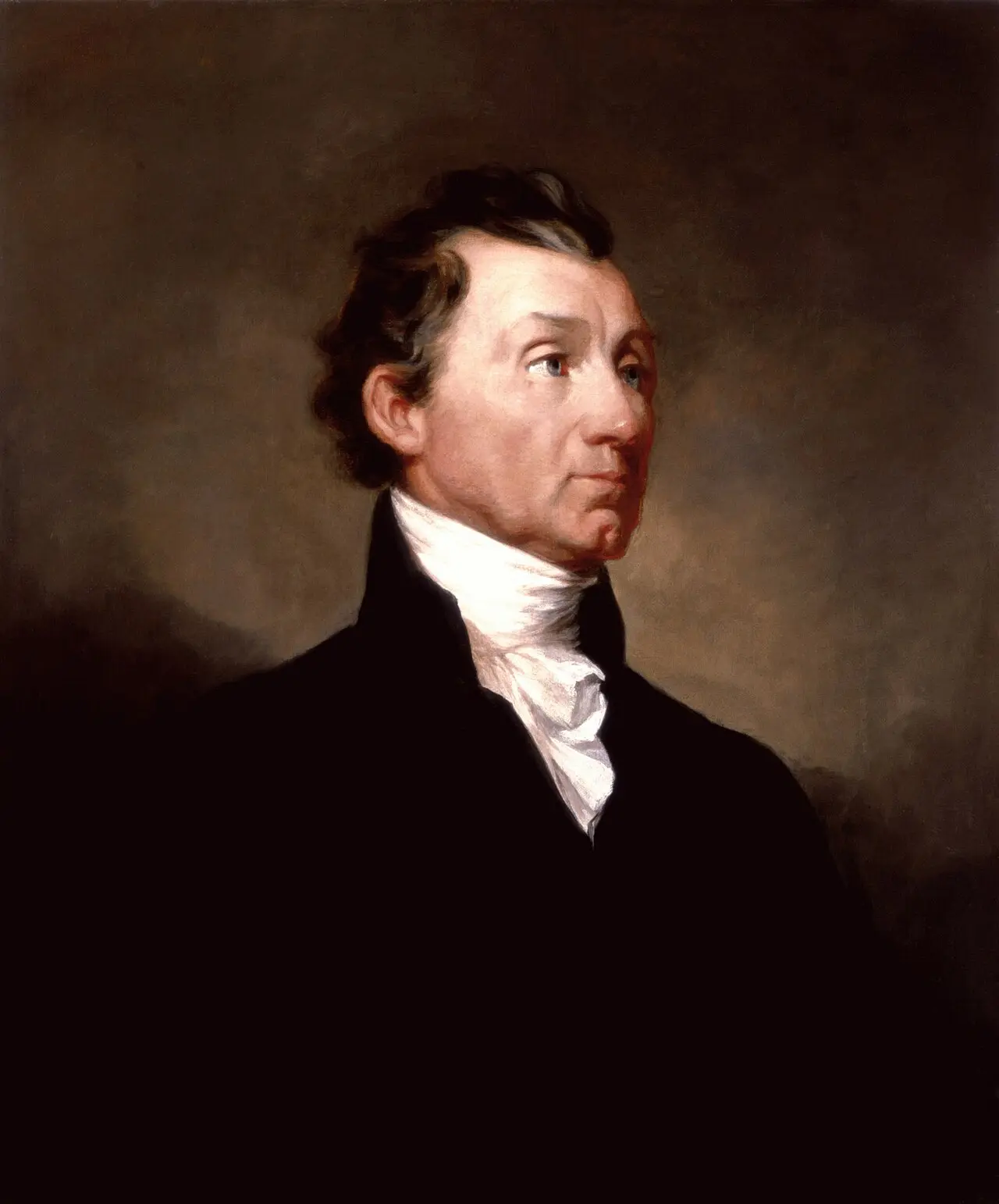
Photo: Samuel F. B. Morse, official White House portrait of James Monroe (1819), public domain (via Wikimedia Commons).