
Twenty-Two Players and a Pony Roller: The First Wimbledon
In July 1877, a cash-strapped London club staged a tournament to fix its lawn roller — and accidentally founded the world’s greatest tennis championship.
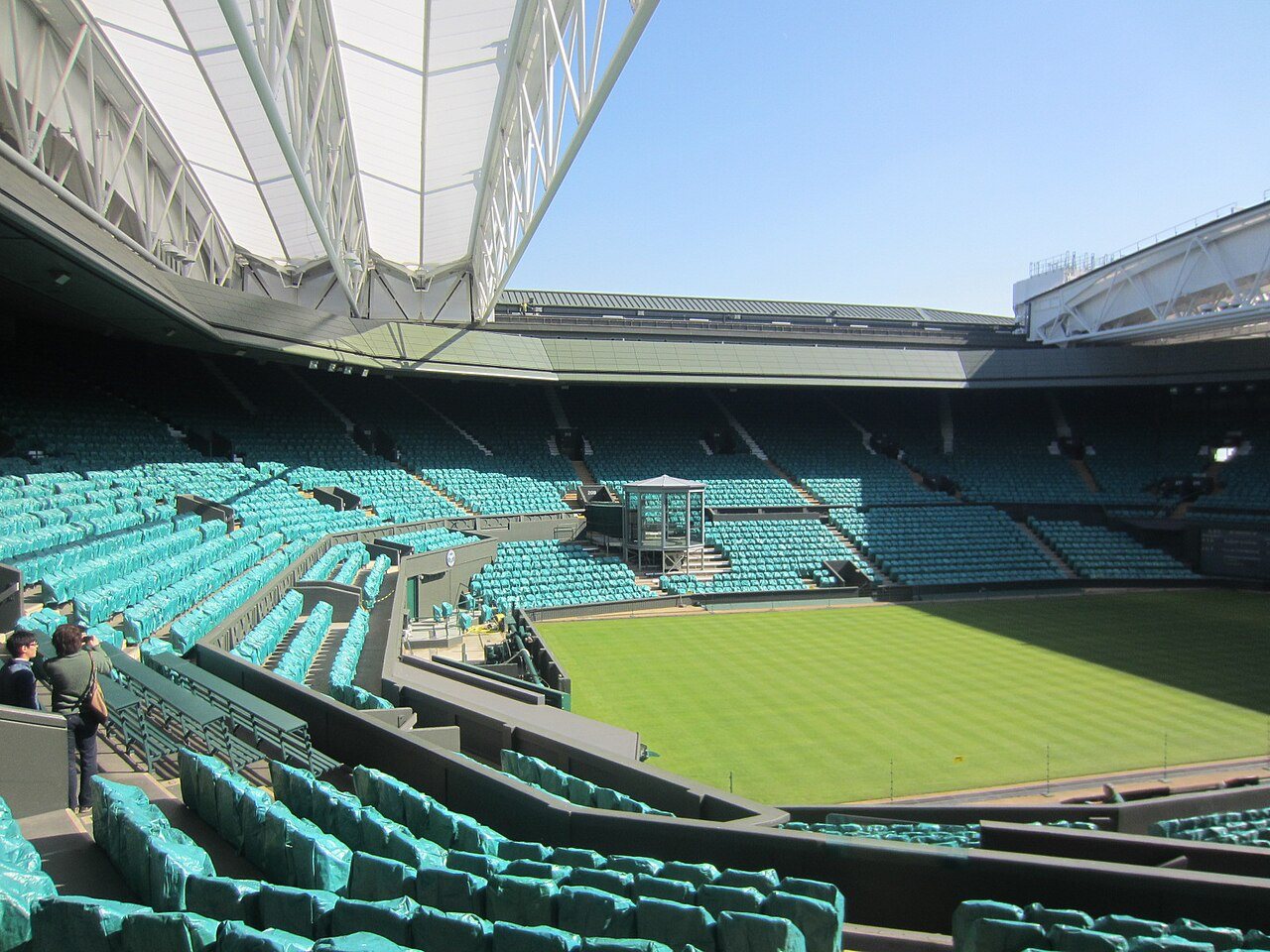
The world’s most famous tennis tournament began with a broken lawn roller. In June 1877, the All England Croquet and Lawn Tennis Club — a club in Wimbledon, London, that had only recently added the newfangled game of lawn tennis to its croquet grounds — decided to stage a tennis championship. The point was purely practical: raise money to repair the club’s pony roller, the machine that kept its lawns smooth.
The tournament that began on July 9, 1877, was a modest affair. Only one event was contested — the Gentlemen’s Singles — and just 22 amateur players paid a guinea each to enter. They played on grass under a new code of rules derived from the first standardized laws of tennis, issued by the Marylebone Cricket Club in 1875.
The weather did not cooperate. Rain stopped play for three full days, and the final was delayed until July 19. About 200 spectators paid a shilling apiece to watch Spencer Gore, a 27-year-old rackets player from Wandsworth, face William Marshall, a 28-year-old real-tennis player, in a final that lasted just 48 minutes. Gore won in straight sets, 6-1, 6-2, 6-4, taking home 12 guineas and a silver challenge cup valued at 25 guineas, donated by the sporting magazine The Field. The tournament turned a profit of £10 — and the pony roller was repaired.
The champion himself was unimpressed with his sport’s future. Gore returned the next year to defend his title, lost, and never played Wimbledon again. In 1890 he declared that tennis would “never rank among our great games” because it was “monotonous.”
History proved him spectacularly wrong. That single competition is now recognized as the world’s first official lawn tennis tournament — the first Grand Slam championship. Wimbledon moved to its present Church Road home in 1922, grew into the only major still played on grass, and became tennis’s most prestigious stage, drawing hundreds of thousands of fans each summer. Not bad for a fundraiser for a lawn roller.
The tournament kept its quaint customs for decades. Under Wimbledon’s old Challenge Round system, the defending champion could sit out the entire tournament the next year and return only for the final — a privilege Gore, in his one defense in 1878, failed to exploit. The ladies finally got their championship in 1884, won by Maud Watson, the first of countless heroines to lift the trophy on the grass.
The club outgrew its Worple Road home, and in 1922 Wimbledon moved to its present site on Church Road — carrying the name “Centre Court” with it, even though the new principal court was no longer in the middle of the grounds. The modern stadium’s retractable roof, added in 2009, would have solved the rain delays of 1877; but the club has never lost the character of that first tournament — white clothing, strawberries, and grass courts, all traceable to a June meeting held to pay for a pony roller.
Photo: Daniel, CC BY 2.0 (via Wikimedia Commons).