The Day Washington's Troops First Heard the Declaration
On July 9, 1776, George Washington had the Declaration of Independence read aloud to his army in New York — and that night, a king's statue came down.
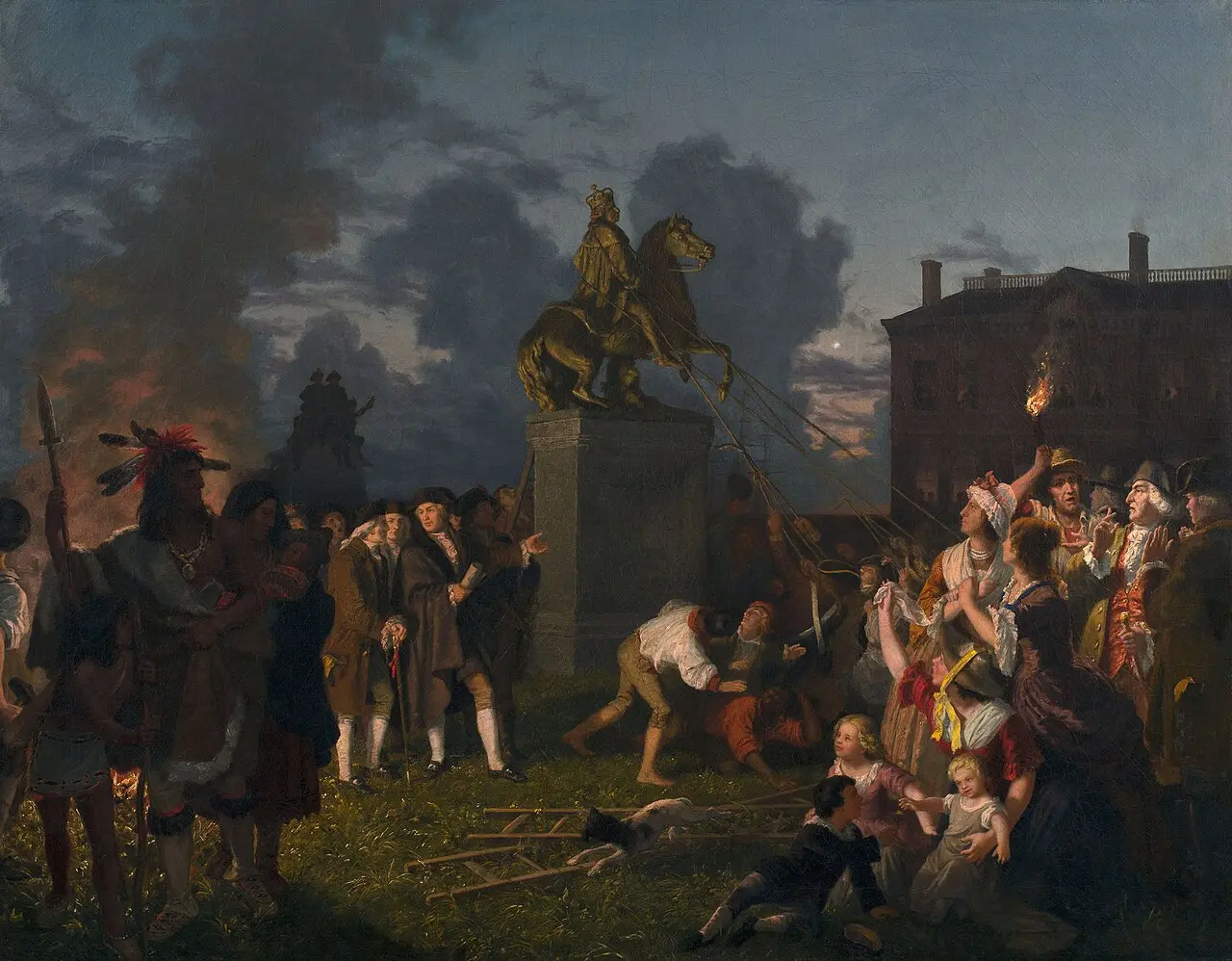
On the evening of July 9, 1776, thousands of Continental soldiers filed onto the Commons in New York City — today's City Hall Park — on orders from their commander-in-chief. At six o'clock, George Washington had a document read aloud to the assembled brigades. It began with words about all men being created equal. It ended with a declaration of war.
Congress had adopted the Declaration of Independence in Philadelphia on July 4 and had it printed overnight by John Dunlap. Congress ordered copies sent to the several Commanding Officers of the Continental troops so it could be proclaimed at the head of the army. John Hancock dispatched Washington's copy on July 6. It reached New York on the 9th, and Washington wasted no time.
The reading, at the head of each brigade, was received, one officer wrote, with three huzzahs from the troops. Washington's orders for the day framed the moment as both inspiration and obligation: The General hopes this important Event will serve as a fresh incentive to every officer, and soldier, to act with Fidelity and Courage, as knowing that now the peace and safety of his Country depends (under God) solely on the success of our arms. The men were no longer rebels against a king. They were soldiers of a new nation.
That night, the words turned into action. A crowd of soldiers and townspeople marched down Broadway to Bowling Green, where a two-ton gilded lead statue of King George III on horseback had stood since 1770. With ropes and bars, they pulled it down. The statue was smashed apart — its head paraded through town on a spike — and the four thousand pounds of lead were melted down and cast into musket balls, some 42,000 of them, to be fired back at the British.
The celebration was short-lived: within weeks the British would crush Washington's army at Brooklyn and occupy New York for seven years. But something had changed that could not be undone. Independence was no longer a resolution passed in Philadelphia. It had been read aloud in the camps, cheered by the soldiers, and made visible in a toppled king.
Why it matters: the Declaration is often remembered as a document, but on July 9, 1776, it became a lived event — the moment ordinary soldiers first understood they were fighting for a country, not just a cause. The statue's lead, turned into ammunition, is the whole story in miniature: the old order, melted down to defend the new one.
Painting: Johannes Adam Simon Oertel, c. 1859, via Wikimedia Commons, public domain.