The Venus de Milo: Unearthed on a Greek Island in 1820
On April 8, 1820, Greek farmer Yorgos Kentrotas unearthed a broken marble statue on the island of Milos — the Venus de Milo, now the Louvre's most famous treasure.
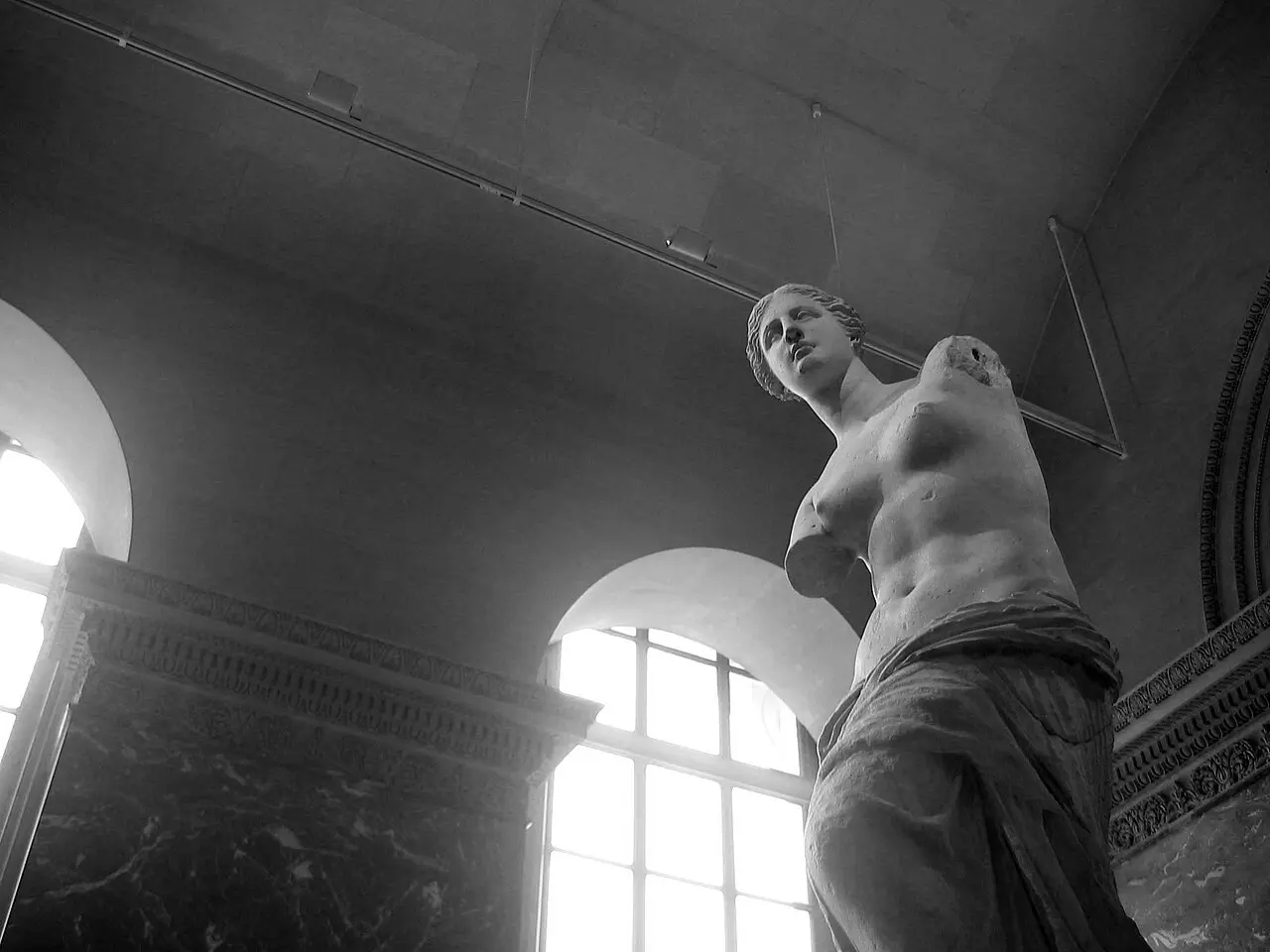
The farmer was only looking for building stones. What Yorgos Kentrotas found instead, on April 8, 1820, was one of the most famous statues in the world.
Kentrotas was digging among the ruins of an ancient city on the Aegean island of Milos — then still part of the Ottoman Empire — when his spade struck marble. Looking on was Olivier Voutier, a young French naval officer and amateur archaeologist, who encouraged the farmer to keep digging. Together they unearthed two large pieces of a female figure and a third smaller one, plus a fragment of an arm, a hand holding an apple, and two herms (stone pillars topped with carved heads). The statue had no arms — and it never got them back.
Word spread fast. Jules Dumont d'Urville, another French naval officer, arrived on Milos shortly after and immediately grasped what had been found. The French ambassador's secretary, the Comte de Marcellus, organized the purchase: 250 francs went to the local Ottoman officials, 750 to Kentrotas. After tense negotiations, the statue sailed for France, was presented to King Louis XVIII in early 1821, and was donated to the Louvre, where it has stood ever since.
Scholars determined the figure was carved around 130 to 100 BC — not Greece's Classical golden age but the later Hellenistic period — and a lost inscription suggested its sculptor was one Alexandros of Antioch. The Louvre, disappointed not to own a Classical masterpiece, promoted a grander pedigree for the statue for more than a century. Today it is understood as a Hellenistic original, carved from marble from the island of Paros, standing over two meters tall, and believed to represent Aphrodite, the Greek goddess of love — the Venus of the Romans.
The missing arms have inspired two centuries of argument. Did she hold the apple found beside her? A shield? A mirror? The most widely accepted reconstruction has her holding the apple of the Judgment of Paris. Whatever she held, the broken statue became the complete ideal: beauty that needs no limbs to be whole. Millions of visitors stream past her each year in the Louvre's Greek antiquities wing, and she remains the single most reproduced image of ancient sculpture in the world.
Why it matters: the Venus de Milo turned a farmer's chance find into the defining image of ancient Greek art for the modern world — proof that the greatest discoveries are often accidents, and that a broken thing can be more famous than anything intact.
Photo: Chosovi, CC BY-SA 2.5 (via Wikimedia Commons).