The Uprising in the Warsaw Ghetto
On April 19, 1943, the eve of Passover, about 700 young Jewish fighters rose up against the German forces liquidating the Warsaw Ghetto — and on the first day, the Germans were forced to retreat.
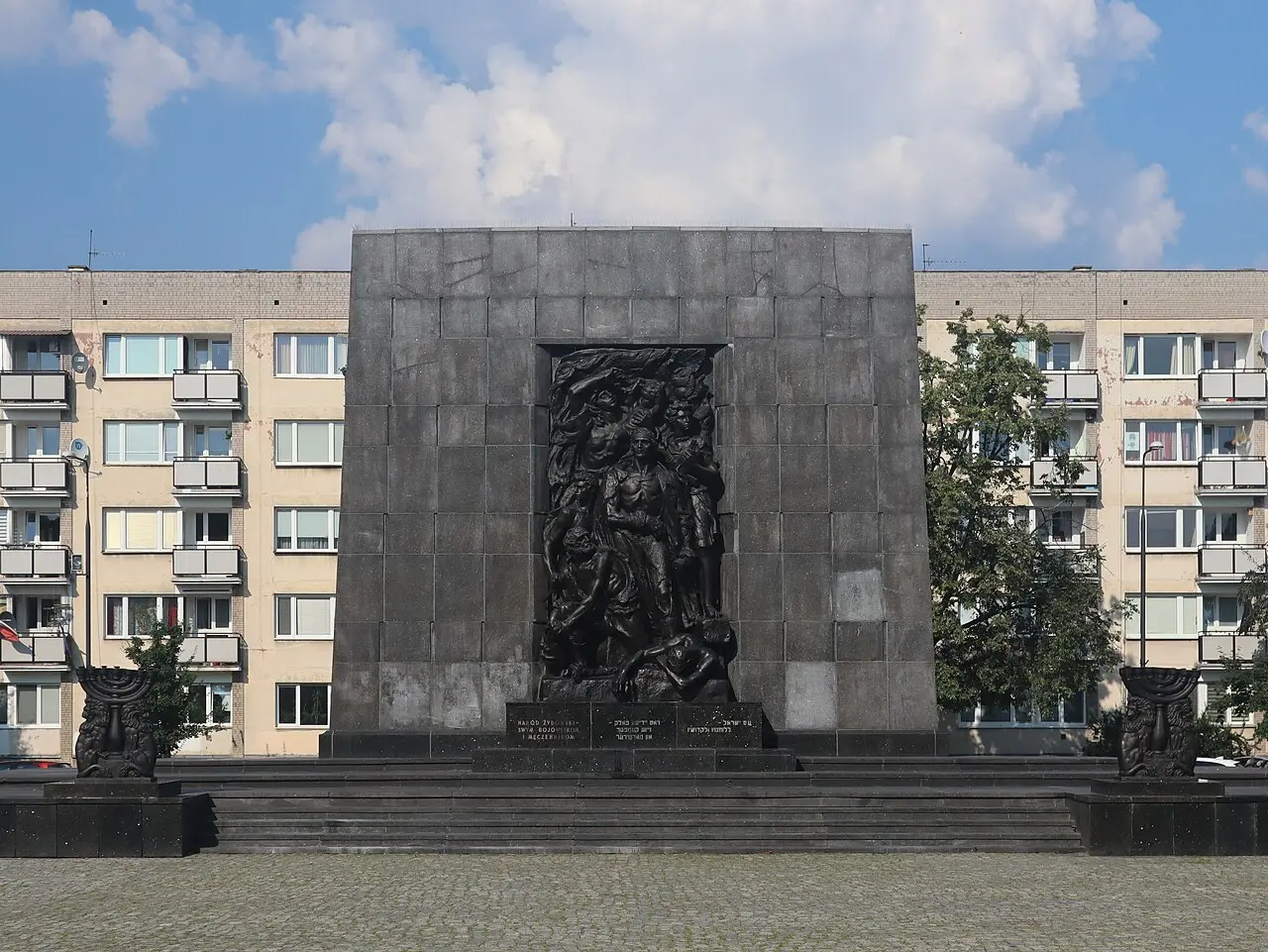
On the eve of Passover, 1943, about seven hundred young Jews with pistols and homemade firebombs did what no one had dared to believe possible: they made the most powerful army in Europe turn and run.
On the morning of April 19, German forces entered the Warsaw Ghetto to carry out its final liquidation. They expected the operation to take a single day. They had reason to be confident. The ghetto, sealed off in November 1940, had once held some 400,000 people crammed into a few square blocks. By the summer of 1942, hundreds of thousands of its residents had been deported to the Treblinka killing center. The tens of thousands who remained knew exactly what the German trucks meant.
But this time the ghetto was waiting. After a first, smaller clash of armed resistance in January 1943 had stunned the Germans, the Jewish Combat Organization — the ŻOB, commanded by 23-year-old Mordechai Anielewicz — had spent three months preparing. They organized some 22 fighting units, dug bunkers and hideouts, and built an arsenal that was desperately small: mostly pistols and a few rifles, plus Molotov cocktails and improvised grenades. Many of the fighters were teenagers and young women. They knew they could not defeat the German army. As Anielewicz's deputy Marek Edelman later put it, they fought "simply not to allow the Germans alone to pick the time and place of our deaths."
When the German columns marched in on April 19, they walked into an ambush. Fighters opened fire from windows and rooftops and hurled grenades and petrol bombs at the troops; improvised mines detonated under German vehicles. Caught completely off guard by the ferocity of the defense, the Germans fell back in disarray. For the first time in occupied Poland, Jewish fighters had forced Nazi forces to retreat.
Stung, the Germans replaced their local commander with SS officer Jürgen Stroop, who brought in some 2,000 battle-hardened troops. The fighting raged for nearly a month. Unable to break the resistance street by street, Stroop resolved to burn the ghetto down and smoke the fighters out of their bunkers — destroying the ghetto building by building with artillery and flamethrowers. Anielewicz and his command staff were trapped in their headquarters bunker at Miła 18 on May 8; he died there with dozens of his fighters rather than be taken alive. It took until May 16 for the Germans to crush the last pockets of resistance.
According to Stroop's own report, some 56,000 Jews were killed or captured during the uprising. Thousands of survivors were deported to Treblinka, Majdanek, and labor camps. Yet the uprising achieved something no victory in battle could measure. In the first hours of the fighting, Anielewicz wrote to a comrade: "My lifelong dream has come true. Self-defense in the Ghetto is now a reality. The armed Jewish resistance is happening." The Warsaw Ghetto Uprising was the first large-scale urban revolt against the Nazi regime — and it inspired the uprisings that followed at Treblinka, Sobibór, and Auschwitz. The fighters of Warsaw proved that even against impossible odds, people could choose how they would be remembered.
Photo: Cybularny, CC0 (via Wikimedia Commons).