The Titanic Was Found by Following Its Debris
On September 1, 1985, Robert Ballard's team stopped hunting for the Titanic's hull and followed the trail of debris it had shed — and found the wreck 12,500 feet down.
At 12:48 on a Sunday morning, in a control room aboard a ship in the North Atlantic, a monitor flickered — and a boiler rose out of the darkness.
The ship was the research vessel Knorr. The man in charge was Robert Ballard, an oceanographer from the Woods Hole Oceanographic Institution who had been obsessed with the Titanic for years. He had tried to find her once before, in 1977, and failed.
This time he had two advantages. The first was technology: a towed camera sled called Argo, which could fly just above the seafloor and send live video up to the ship. The second was a secret. Ballard's expedition had begun as a classified mission for the U.S. Navy, using Argo to survey two sunken nuclear submarines, the Thresher and the Scorpion. Only when that work was done did the Navy give him a short window to hunt for the Titanic.
Ballard also had a smarter plan. A French team led by Jean-Louis Michel, aboard the research vessel Le Suroît, had spent weeks scanning the seafloor with sonar and come up empty. Instead of looking for the ship's hull, Ballard decided to look for the wreck's debris. A sinking ship sheds a long trail of wreckage as it falls — boilers, coal, crockery, luggage. Follow the trail, and it leads home.
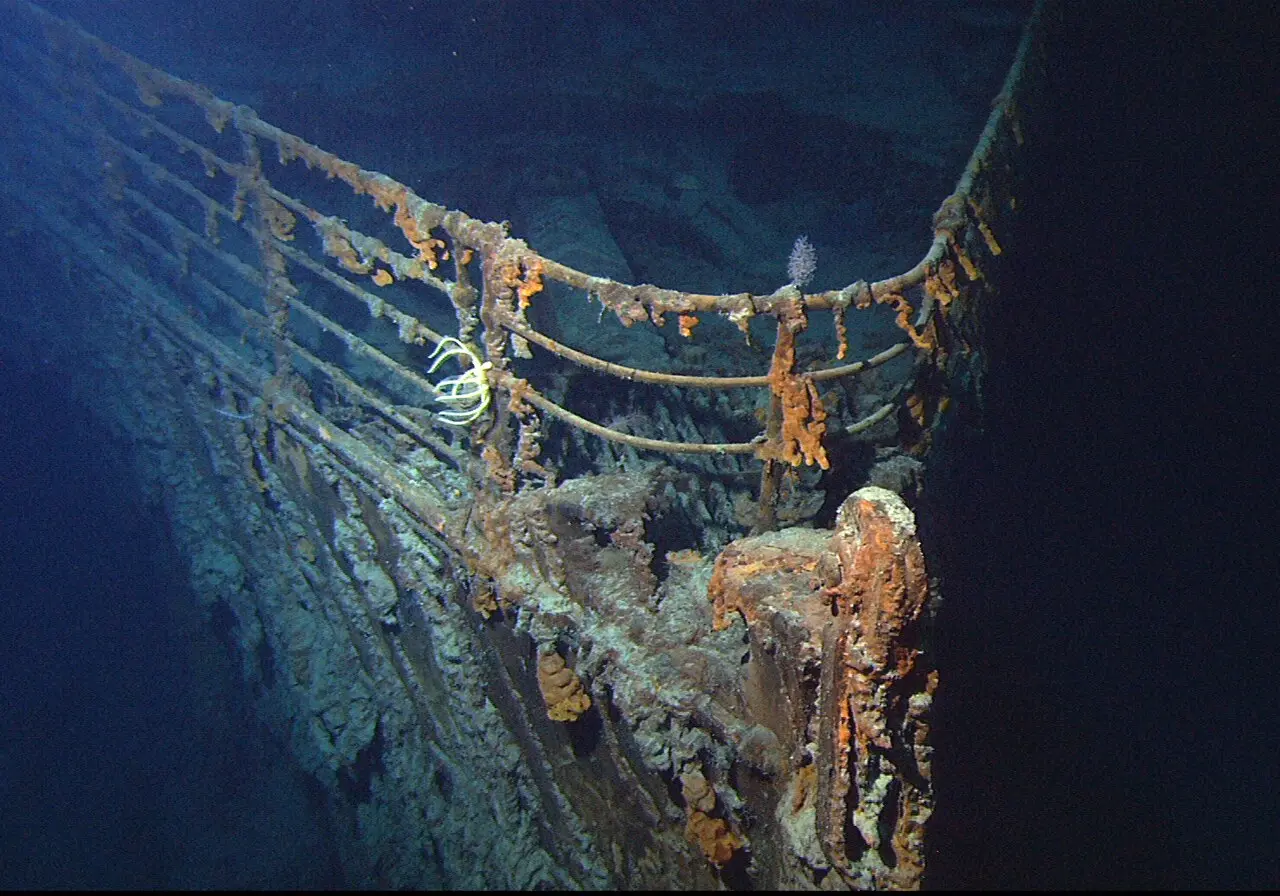
In the small hours of September 1, 1985, the trail appeared. One of the Titanic's giant boilers, unmistakable against the mud, slid across Argo's cameras — it matched photographs of the ship's boilers taken in 1911. Hours later, the cameras found the bow itself, standing upright and largely intact, nearly 12,500 feet below the surface. The great ship had broken in two as she sank, and the wreck lay in pieces across a vast debris field.
Seventy-three years of mystery were over. Ballard had tried to keep the coordinates secret, but the news exploded around the world. In the decades since, manned and unmanned submersibles have visited the site, and thousands of artifacts have been recovered. In 2012, a century after the sinking, the wreck came under the protection of an international treaty.
Why it matters: finding the Titanic proved that the deep ocean could be explored like an archaeological site. The technology born for that one search — towed cameras, remotely operated vehicles, the idea of following a debris trail — became the toolkit of modern oceanography. And the wreck itself became something more than a curiosity: a memorial on the seafloor, and the most famous shipwreck ever found.
Photo: NOAA / Institute for Exploration / University of Rhode Island, public domain (via Wikimedia Commons).