The Sultan Who Wouldn't Bow: Morocco Wins Independence
Exiled to Madagascar for defying France, Sultan Mohammed V returned a hero — and on March 2, 1956, France signed the declaration ending its rule over Morocco.
On March 2, 1956, in Rabat, France signed the Franco-Moroccan declaration of independence, ending more than four decades of colonial rule. In the streets, Moroccans celebrated a freedom that had seemed impossible just three years earlier — when their sultan had been dragged from his throne and shipped into exile for the crime of standing with his people.
Morocco had been a French protectorate since the Treaty of Fes in 1912, with the sultan reduced to a figurehead. But the nationalist movement would not stay quiet. In January 1944, the Istiqlal (Independence) Party issued a bold proclamation demanding Morocco's freedom, and the young Sultan Mohammed V — on the throne since 1927 — began to side openly with the nationalists. In April 1947 he delivered his famous Tangier speech, praising Morocco's march toward unity and affirming the country's Arab and Islamic destiny. The French were furious.
On August 20, 1953 — the eve of a major Muslim holiday — the French deposed Mohammed V and replaced him with his elderly uncle, Ben Arafa. The sultan, his family in tow, was exiled first to Corsica and then to far-off Madagascar. Paris expected the resistance to collapse. Instead, the exile made Mohammed V a living symbol. "We want Mohammed V" became the rallying cry of the independence movement, and a campaign of protests, strikes, and armed resistance — the Revolution of the King and the People — swept the country. The French soon realized the sultan was more dangerous to them in exile than on the throne.
Under pressure at home and abroad, France relented. On November 16, 1955, Mohammed V returned to Morocco to a hero's welcome, and negotiations for independence began in earnest. They concluded on March 2, 1956, when France formally recognized Morocco's independence — though some 100,000 French troops still stood on Moroccan soil, and Spain would take another month to agree to leave its northern zone.
The following year, Mohammed V traded the old title of sultan for a new one: king. He set about building the institutions of a modern state while holding together a country emerging from colonial rule. He died in 1961 and lies in the grand mausoleum in Rabat that still draws visitors from around the world.
Morocco's independence was part of the great wave of decolonization that remade Africa in the 1950s and 60s. But its story is its own: a monarch who chose his people's cause over his throne, an exile that forged a national symbol, and a March day in Rabat when the signatures finally caught up with the spirit of a nation that had already decided to be free.
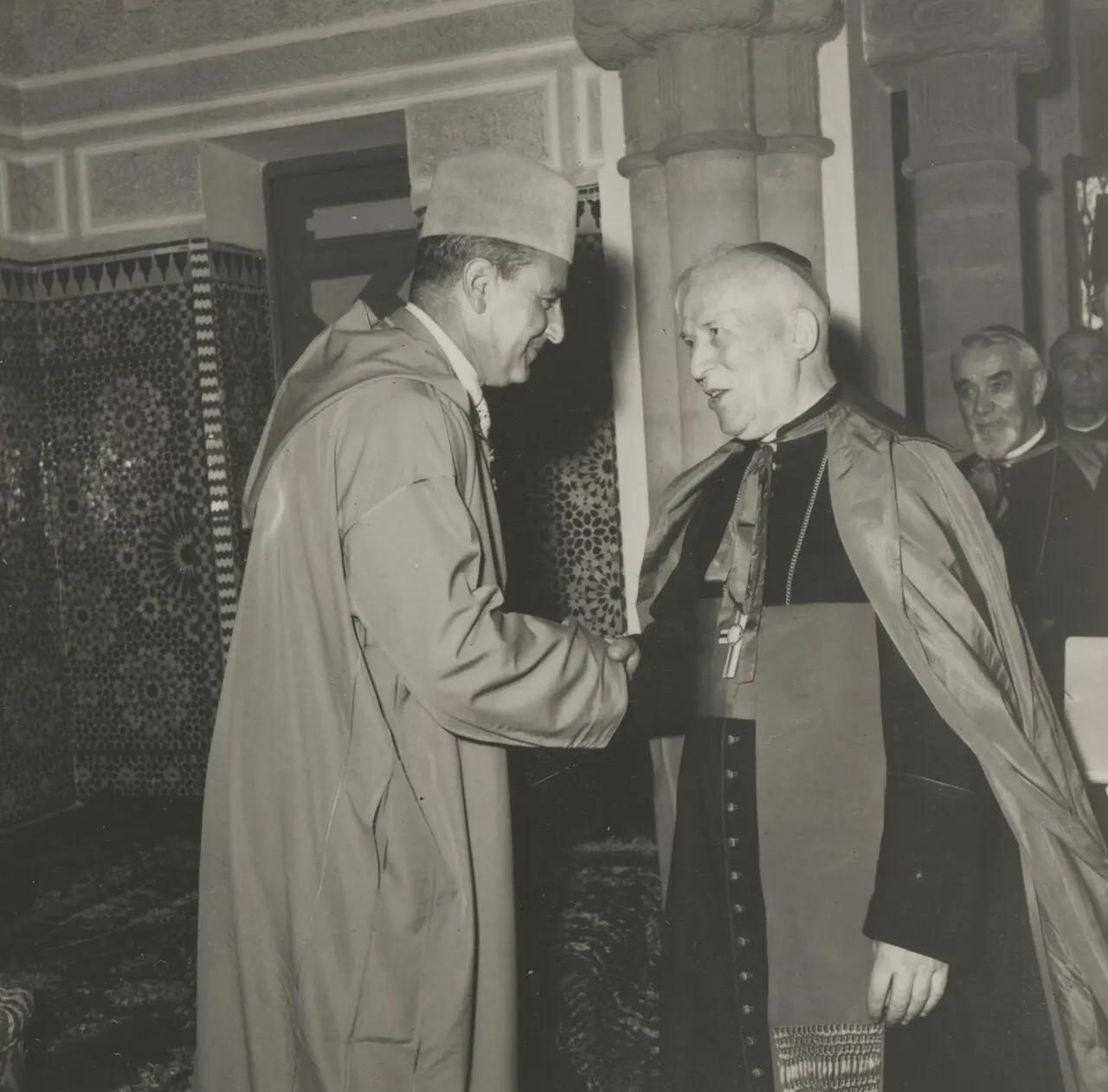
Photo: King Mohammed V of Morocco, by the Fondation mémoires pour l'Avenir, CC BY-SA 4.0, via Wikimedia Commons.