
Concorde Lifts Off for the First Time
On March 2, 1969, the supersonic airliner Concorde took to the sky for the first time, flying a 27-minute test flight from Toulouse, France.
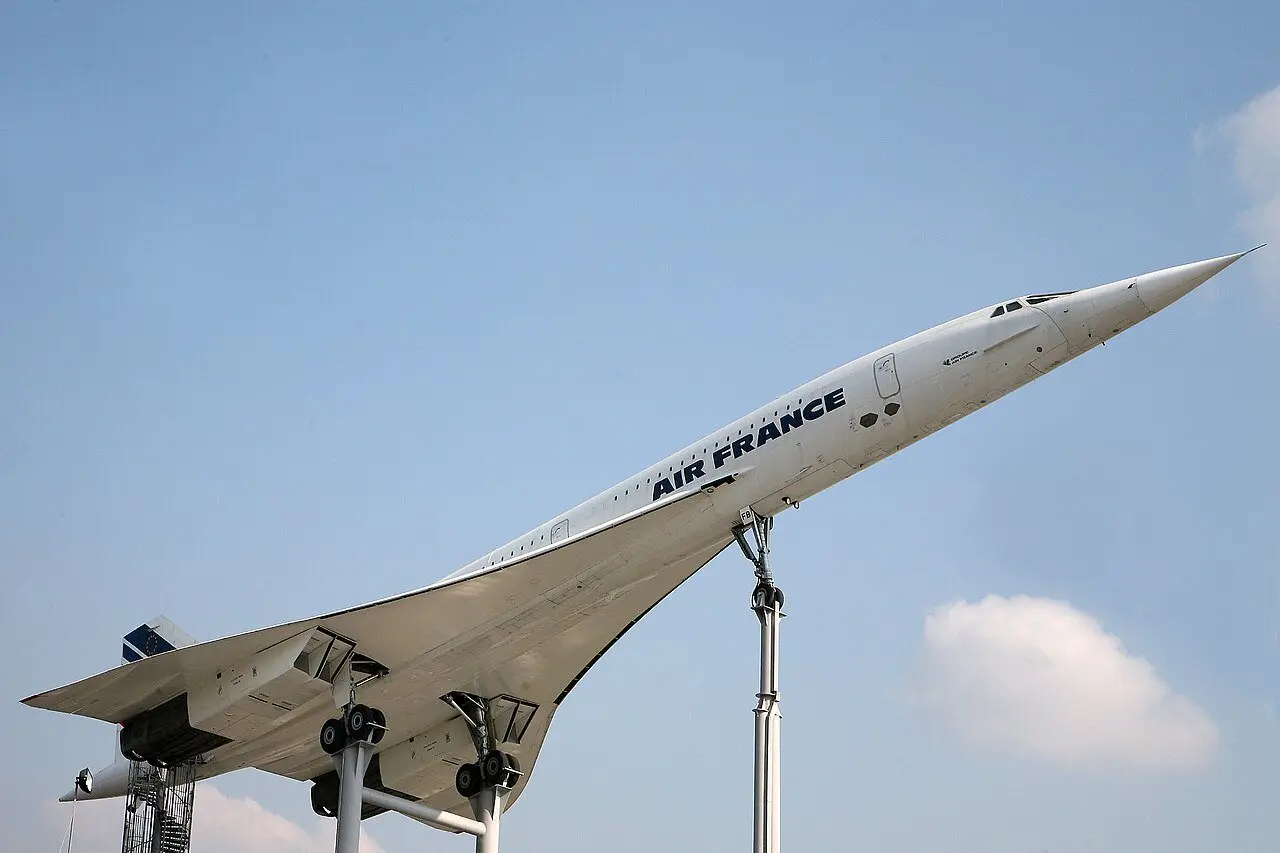
The misty skies over Toulouse finally cleared on the afternoon of Sunday, March 2, 1969. Several hundred journalists and spectators crowded the runway at Blagnac airport, where a sleek white delta-winged jet with a needle nose waited for the green light. At about half past three, test pilot André Turcat pushed the throttles forward. The prototype — Concorde 001 — gathered speed, eased off the runway, and powered straight into the sky. "She flies! Concorde flies at last!" exclaimed the BBC's Raymond Baxter, narrating live. An AFP wire flashed around the world: "Concorde has taken off."
It was the culmination of more than a decade of work. In the late 1950s, Britain and France began pursuing the dream of a passenger jet that could outrun the sun — and they agreed to build it together, the British Aircraft Corporation and France's Sud Aviation sharing the colossal cost and engineering challenge. The result was a machine unlike anything the world had seen: a long, slender fuselage, triangular wings, and a drooping nose that lowered so pilots could see the runway. When the prototype was unveiled to the public in December 1967, it looked less like an airliner than a spaceship.
The first flight was deliberately modest. Turcat, co-pilot Jacques Guignard, and flight engineer Michel Rétif — along with observers — flew for just 27 minutes, never going supersonic, never even raising the landing gear or the droop nose. The goal was simply to prove the beautiful, improbable shape could fly. It could. Seven months later, on October 1, Turcat took Concorde 001 past the speed of sound for the first time.
What followed was one of the most glamorous chapters in aviation history. Concorde was the only commercial airliner ever to cruise at supersonic speed — Mach 2, more than 2,000 kilometers per hour — and it shrank the Atlantic to about three and a half hours. A Paris-to-New York morning flight could land in New York before its local departure time. But the program was bedeviled by cost, noise complaints about the sonic boom, and environmental battles that kept it out of many airports. In the end only Air France and British Airways ever flew it, and the last Concordes retired in 2003.
No supersonic passenger jet has flown since. But Concorde's first hop over a French runway proved that the dream was real — and more than fifty years later, the slender white silhouette is still the icon of what aviation dared to imagine.
Photo: W. Bulach, CC BY-SA 4.0 (via Wikimedia Commons).