
The Stuck Valve That Frightened a Nation
On March 28, 1979, a stuck valve at Three Mile Island triggered America's worst commercial nuclear accident.
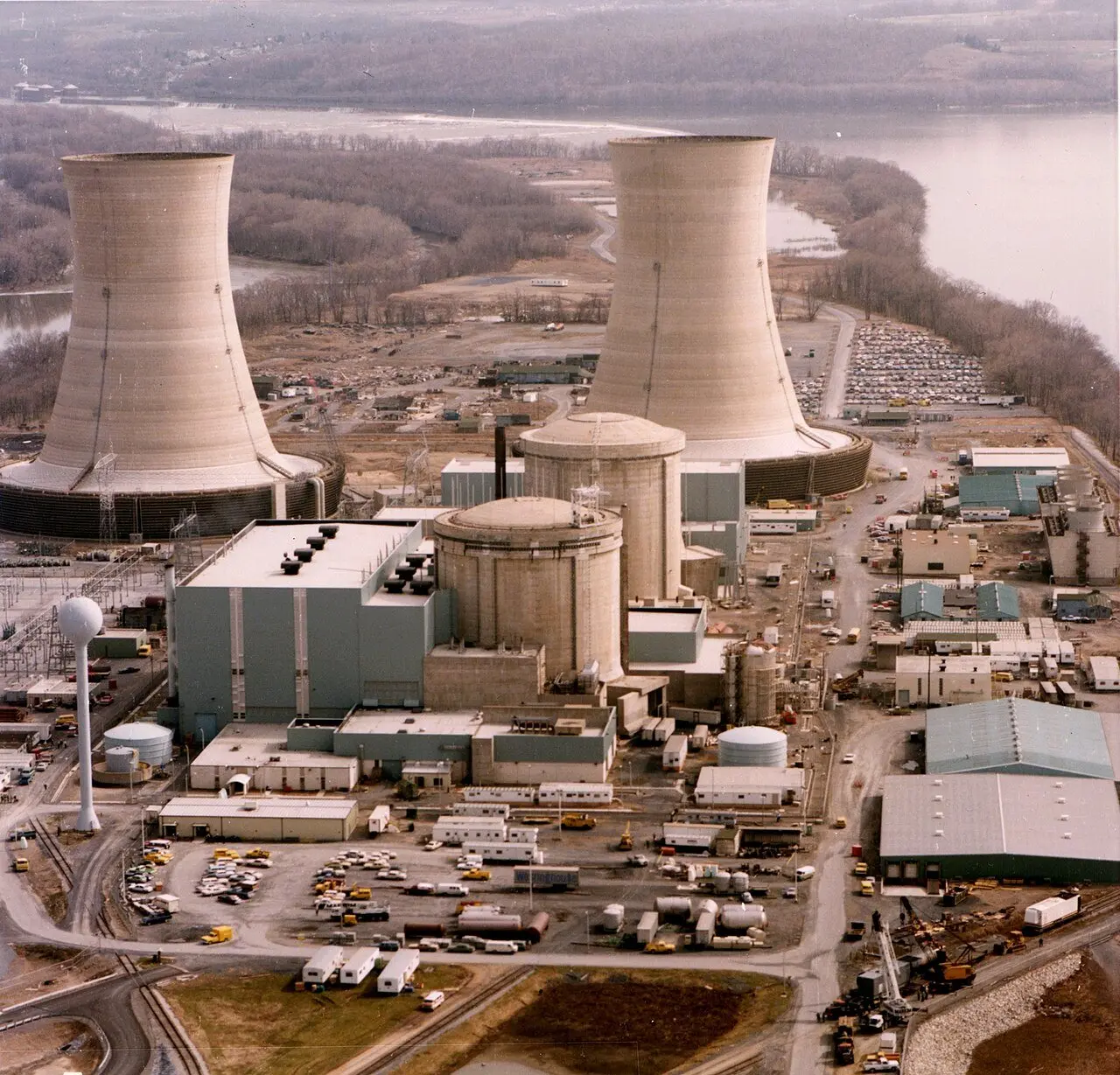
At 4:00 a.m. on March 28, 1979, a valve failed to close at a nuclear power plant on the Susquehanna River near Harrisburg, Pennsylvania — and America learned how quickly a small mechanical fault could become a national emergency.
The plant was Three Mile Island, Unit 2, in full commercial operation for less than a year. The trouble began with a failure in the non-nuclear secondary system: the pumps that cooled the reactor core's radioactive fuel malfunctioned. A pilot-operated relief valve in the primary system then popped open to vent pressure — and, because of a mechanical fault, stayed open. Large amounts of coolant escaped. Worse, the plant's instruments told the control-room operators the valve had closed. Believing the reactor was too full of water rather than too empty, the operators shut off the emergency cooling pumps. The core, starved of water, began to overheat.
By early morning the fuel had heated to more than 4,000 degrees — and about half the reactor core melted. A geyser of steam carried trace amounts of radioactive gases, roughly 43,000 curies of krypton-85 and less than 20 curies of the more hazardous iodine-131, into the surrounding community. It is the worst accident in the history of the U.S. commercial nuclear power industry, rated Level 5 on the international scale: an "Accident with Wider Consequences."
For days, Pennsylvania held its breath. A bubble of highly flammable hydrogen gas formed inside the unit — the product of super-heated core materials reacting with steam — and officials feared it might explode. Governor Dick Thornburgh advised pregnant women and preschool-age children within five miles of the plant to leave the area. The crisis finally ended when experts determined the bubble could neither burn nor explode, and the reactor cooled down.
Here is the part history must report carefully: after detailed studies by multiple organizations, the U.S. Nuclear Regulatory Commission concluded that the roughly 2 million people around the plant during the accident received an average dose of about 1 millirem above normal background radiation — less than a chest X-ray. No deaths, injuries, or adverse health effects were ever detected. Pennsylvania kept a registry of more than 30,000 nearby residents for nearly 20 years; it found nothing unusual.
But the accident's real fallout was psychological and political. The China Syndrome, a thriller about a nuclear meltdown, had opened in theaters just 12 days earlier — fiction and reality arriving together made the fear feel prophetic. Public support for nuclear power collapsed. The NRC imposed sweeping reforms: better operator training, upgraded control-room design, and mandatory emergency-response planning. Unit 2 never operated again.
Three Mile Island matters because it was the rare disaster where the worst-case scenario nearly happened — and the system, barely, held. It remains the benchmark every discussion of nuclear safety is measured against: proof that complex machines fail at their weakest link, which is often a tired human being at 4 a.m. reading a confusing gauge.
Photo: United States Department of Energy, public domain (via Wikimedia Commons).