The Day the Post Office Renamed Constantinople
On March 28, 1930, Turkey's new postal law refused to deliver mail addressed to 'Constantinople' — and the world finally had to call the city Istanbul.
Imagine writing a letter to a friend in one of the world's great cities — and having it returned, undeliverable, because you used the wrong name for the place.
That is exactly what began happening on March 28, 1930. On that day, Turkey's Postal Service Law took effect, and with it came a blunt instruction to the rest of the world: the city you call Constantinople is called Istanbul now, and Turkish post offices would no longer deliver mail addressed to the old name. Foreigners writing "Constantinople" — or "Angora," the old name for the capital, which became Ankara — would find their letters going nowhere.
It sounds like a small bureaucratic change. It was anything but.
The city's name had been shifting for centuries. Founded as the Greek colony of Byzantion in 657 BC, it was rebuilt by the Roman emperor Constantine around 330 AD and renamed for himself: Constantinople, the city of Constantine. When the Ottoman Turks conquered it in 1453, they kept the imperial name for official use — but in everyday speech, Turkish speakers had long called it something else: Istanbul, a name most scholars trace to the Greek phrase "eis tēn polin," meaning simply "to the city." For centuries, the grand official name and the colloquial one lived side by side.
What changed in 1930 was the new Turkish Republic's determination to decide the matter once and for all. After the Ottoman Empire collapsed in the First World War, Mustafa Kemal Atatürk had founded a modern, secular republic in 1923, moved the capital to Ankara in the Anatolian heartland, and set about remaking the country's identity — new laws, a new alphabet, and new names. The postal law was part of that remaking: a signal that Turkey, not foreign convention, would decide what Turkish places were called.
The world grumbled, then complied. Mapmakers, newspapers, diplomats, and guidebooks switched over. The old name didn't vanish — "Constantinople" still appears in history books and in the names of churches — but on envelopes, atlases, and official documents, Istanbul it was.
There is a quiet poetry in the etymology. The name the republic insisted on wasn't invented in 1930; it was the name ordinary people had used for generations, the name whispered in markets and shouted across the Golden Horn. "To the city" — as if there were only one city that mattered.
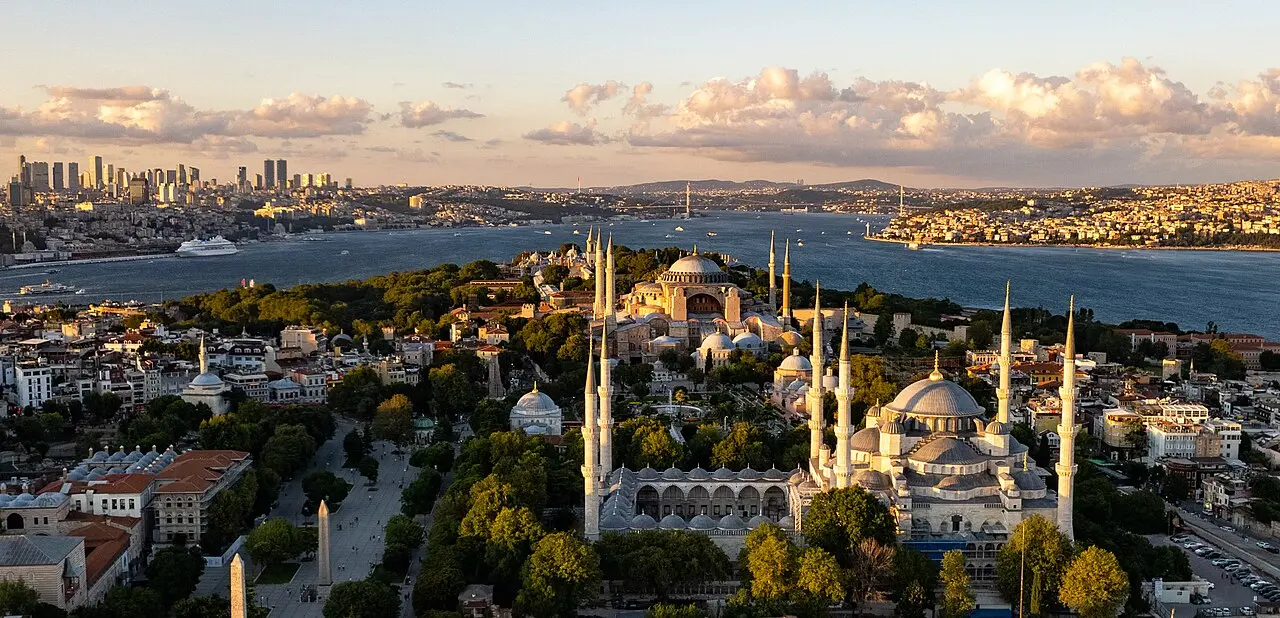
Today Istanbul is a metropolis of millions, straddling two continents, its skyline still crowned by the domes and minarets that have watched over Byzantion, Constantinople, and Istanbul alike. The postal law of March 28, 1930 didn't change a single stone of it. It just made the rest of the world finally call it by the name its own people had been using all along.
Photo: Aerial view of Istanbul's historic peninsula and modern skyline, released under CC0 by Hunanuk.