
The Scarlet Letter Hits Shelves — and Sells Out in Ten Days
On March 16, 1850, Ticknor, Reed & Fields published Nathaniel Hawthorne's The Scarlet Letter, and the first printing of 2,500 copies sold out in ten days.
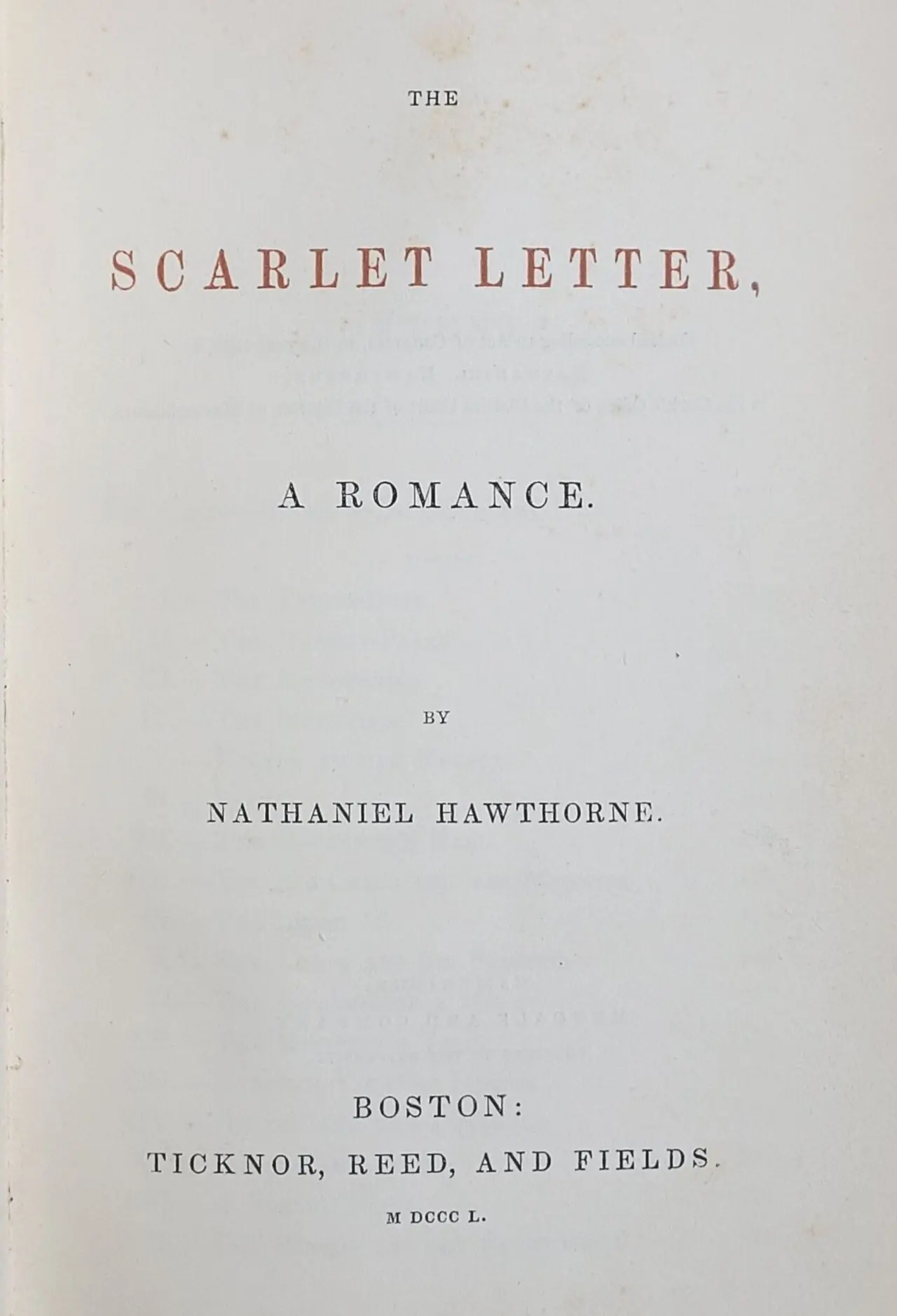
On March 16, 1850, a Boston publisher took a chance on a novel its own author barely believed in. That morning, Ticknor, Reed & Fields released The Scarlet Letter, Nathaniel Hawthorne's tale of sin and shame in Puritan New England — and the first printing of 2,500 copies sold out in just ten days.
Hawthorne had finished the manuscript only weeks earlier, delivering the final pages to his publisher, James T. Fields, in February. The author was uneasy. He thought the story too bleak to stand on its own and had planned to tuck it into a collection of shorter pieces, hedging his bet in case the long story failed. Fields disagreed. He was convinced the novel was strong enough to carry a book by itself, and he talked Hawthorne into publishing it alone.
The gamble paid off instantly. Set in the Massachusetts Bay Colony between 1642 and 1649, the novel opens with Hester Prynne stepping from a prison door, infant daughter in her arms, to face public shaming on the scaffold. Found guilty of adultery, she is condemned to wear a scarlet letter "A" on her dress for the rest of her life — and she refuses to name the child's father. Around her, the respected minister Arthur Dimmesdale hides his own corrosive guilt while her vengeful husband, in disguise, plots revenge.
Readers of 1850 had never quite seen anything like it. The Scarlet Letter was one of the first mass-produced books in the United States, rolling off mechanized presses just as American publishing was learning to print at scale. Its psychological depth — the slow rot of hidden guilt, the quiet dignity of a woman the law calls fallen — set it apart from the sentimental fiction of its day. Henry James would later call it "the finest piece of imaginative writing yet put forth in this country," and D. H. Lawrence praised it as "a perfect work of the American imagination."
It never left the shelves. The novel became a cornerstone of American literature, assigned in classrooms for generations and adapted for film, television, and the stage again and again. The scarlet "A" itself escaped the book entirely, entering the language as shorthand for public shame.
Hawthorne, who had doubted anyone would want his bleak little romance, had written one of the great American novels. He just needed his publisher to believe it first.
Photo: Title page of the 1850 first edition, public domain (via Wikimedia Commons).