The Radio Announcement That Split Italy
On September 8, 1943, Italy's surrender was announced on the radio, splitting the country between the Allies and Nazi Germany.
The war ended on the radio — but nobody had told the soldiers. On the evening of September 8, 1943, Italians gathered around their wireless sets heard two broadcasts that changed everything: at about half past six, General Dwight D. Eisenhower announced over Radio Algiers that Italy had surrendered; at twenty to eight, Marshal Pietro Badoglio's voice came over Italy's own EIAR network confirming it. The armistice of Cassibile was public at last.
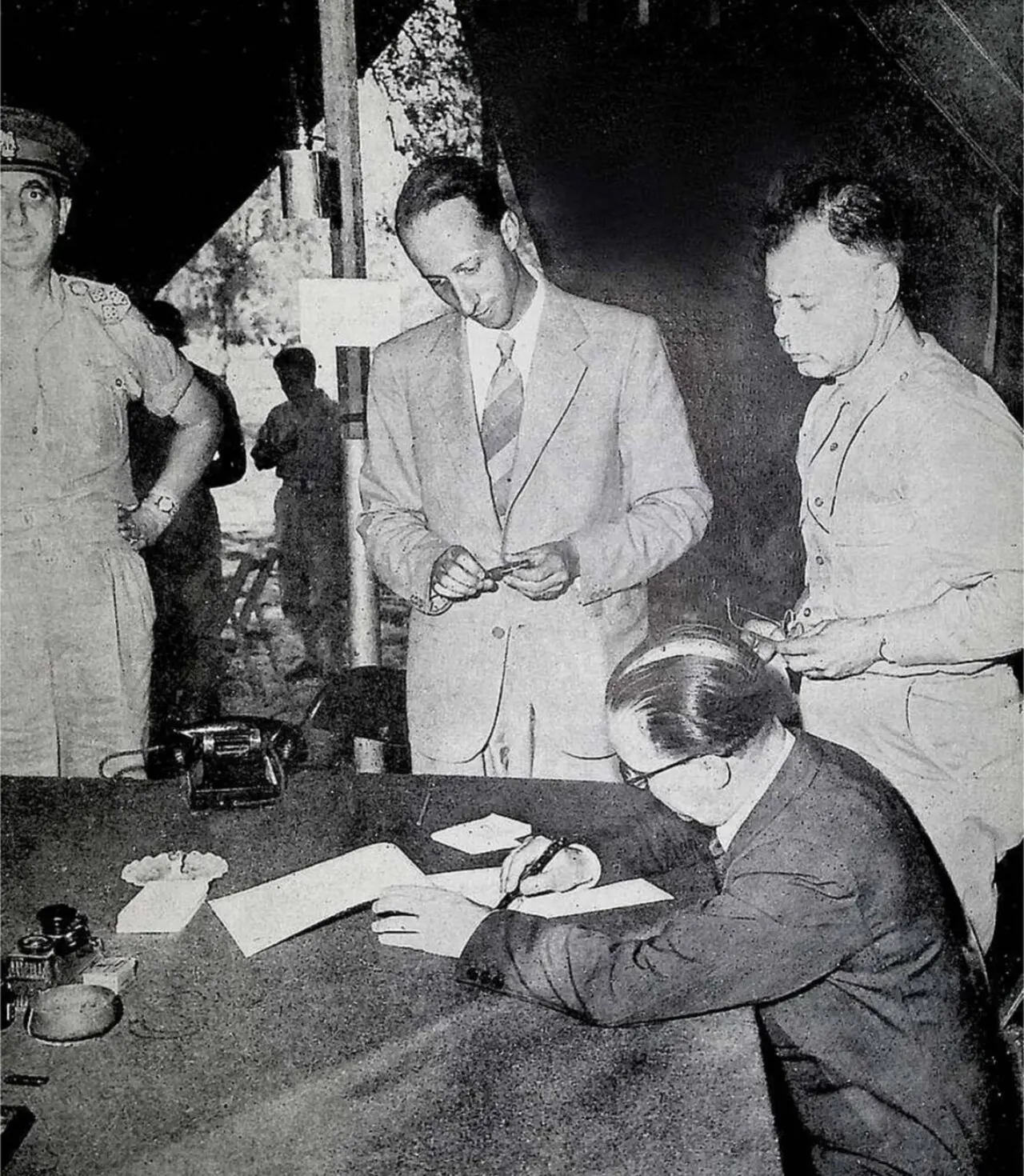
It had been signed five days earlier in strict secrecy. On September 3, at two in the afternoon, in a tent at a military camp near the Sicilian village of Cassibile, General Giuseppe Castellano signed for Italy and General Walter Bedell Smith — Eisenhower's chief of staff — signed for the Allies. The document ran to twelve articles: Italy would cease hostilities at once, hand over its fleet and aircraft, and free its Allied prisoners. The Allies had demanded secrecy so they could land at Salerno, near Naples, before the Germans could react. That landing came the very next morning, September 9.
Badoglio's proclamation was brief. He told the nation the government had sought an armistice and the request had been granted, and he ordered Italian forces to cease all hostilities against the Allies — while resisting attacks from any other quarter. Every Italian listening understood the meaning: the Germans, allies of three years, were now the enemy.
What followed was chaos. The armistice caught most Italian commanders without clear orders, and Germany moved with brutal speed. Within hours, German troops began disarming Italian garrisons, seizing ships and airfields across Italy and the occupied Balkans and Greece. On the morning of September 9, King Victor Emmanuel III and Badoglio himself fled Rome for Brindisi in the Allied-held south. Italy's fleet sailed to surrender as ordered — and on September 9, German bombers sank the battleship Roma off Sardinia with a new guided bomb.
From that night, Italy was two countries: a south aligned with the Allies, and a center and north under German occupation. Italians would fight Italians for more than a year and a half.
Why it matters: September 8, 1943 is the hinge of modern Italian history — the day the war turned inward and became a civil war. The confusion of those hours, the soldiers left without orders and the suddenness of the German occupation, left a wound that Italy has debated ever since.
Photo: unknown photographer, CC BY 4.0, via Wikimedia Commons.