The Giant That Waited 35 Years
On September 8, 1504, Michelangelo's 17-foot David was unveiled in Florence's Piazza della Signoria, becoming a symbol of the republic.
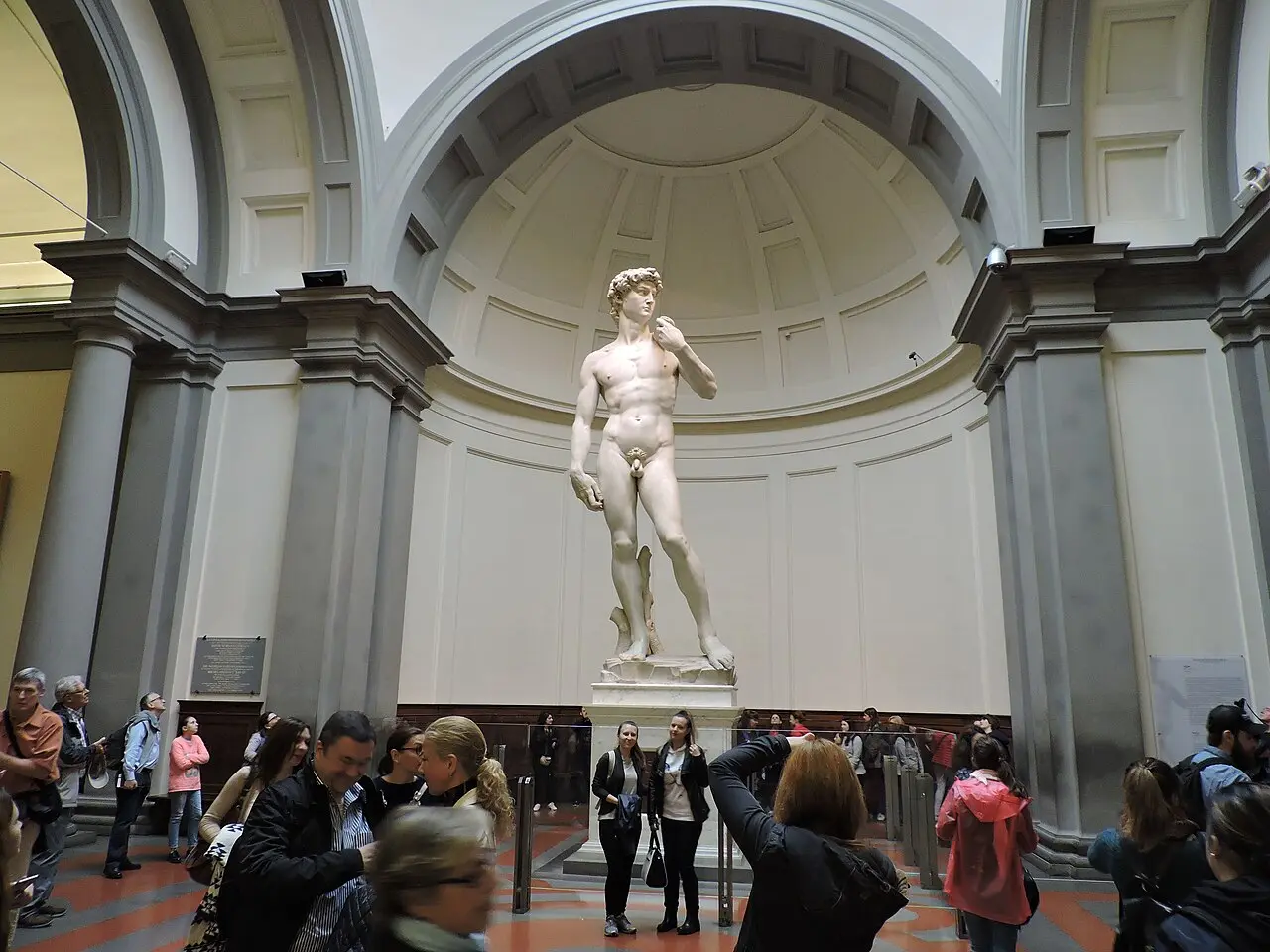
For 35 years it was just a rock. A huge block of Carrara marble lay on its back in the cathedral workshop of Florence — roughly hacked at, abandoned, and written off as ruined. Two sculptors had tried their hands on it and given up. Then, on September 8, 1504, the stone nobody wanted was unveiled as one of the greatest sculptures ever made: Michelangelo's David.
The block had a troubled past. In 1464 the cathedral authorities hired Agostino di Duccio to carve a David from it; he managed only a rough beginning before the work stalled. Antonio Rossellino took it on in 1476 and fared no better. For a quarter of a century the stone — nicknamed "the giant" — sat weathering in the yard, and the cathedral's works committee despaired of it.
In 1501 the committee decided to try once more. Leonardo da Vinci was consulted, and several artists were considered. The commission went to a 26-year-old with more confidence than credits: Michelangelo Buonarroti. His contract, signed on August 16, 1501, gave him two years. He began carving on the morning of September 13 — though a note in the records tells us that a few days earlier, on September 9, he had already struck the first blows, chiseling a knot of marble from the figure's chest.
What emerged over the next two and a half years was a 17-foot youth caught in the instant before battle: David, the biblical shepherd boy, tense and watchful, his sling over his shoulder and his eyes fixed — as tradition holds — toward Rome. Michelangelo had been hired to carve a prophet for the cathedral roofline, but the finished colossus could never be hoisted up there. So on January 25, 1504, thirty of Florence's leading citizens — including Leonardo da Vinci and Sandro Botticelli — were convened to choose its home.
Their decision: the Piazza della Signoria, before the Palazzo Vecchio, the seat of the Florentine government. In June 1504 it took more than forty men four days to drag the statue half a mile on greased logs inside a wooden frame. Jealous rivals pelted it with stones along the way — the marks are still visible on its back — and four young men were arrested for the attack.
When the unveiling came on September 8, Florence saw its new guardian: a small republic's answer to tyrants, the shepherd boy who felled Goliath standing watch over a city defying the Medici and every other power that coveted it. A gilt wreath crowned his head, and a garland of 28 copper leaves was added for modesty — one story says the idea was Leonardo's.
Why it matters: the David became the very emblem of the Renaissance — proof that a single artist, given a "ruined" stone, could reveal something eternal inside it. Moved indoors to the Accademia for protection in 1873 (a replica stands in the piazza today), it still draws millions: the giant that waited 35 years for the right hands.
Photo: Dimitris Kamaras, CC BY 2.0, via Wikimedia Commons.