The Petition That Gave Women the Vote
On September 19, 1893, New Zealand became the first country in the world where all women could vote in national elections — after Kate Sheppard's campaign gathered nearly 32,000 signatures.
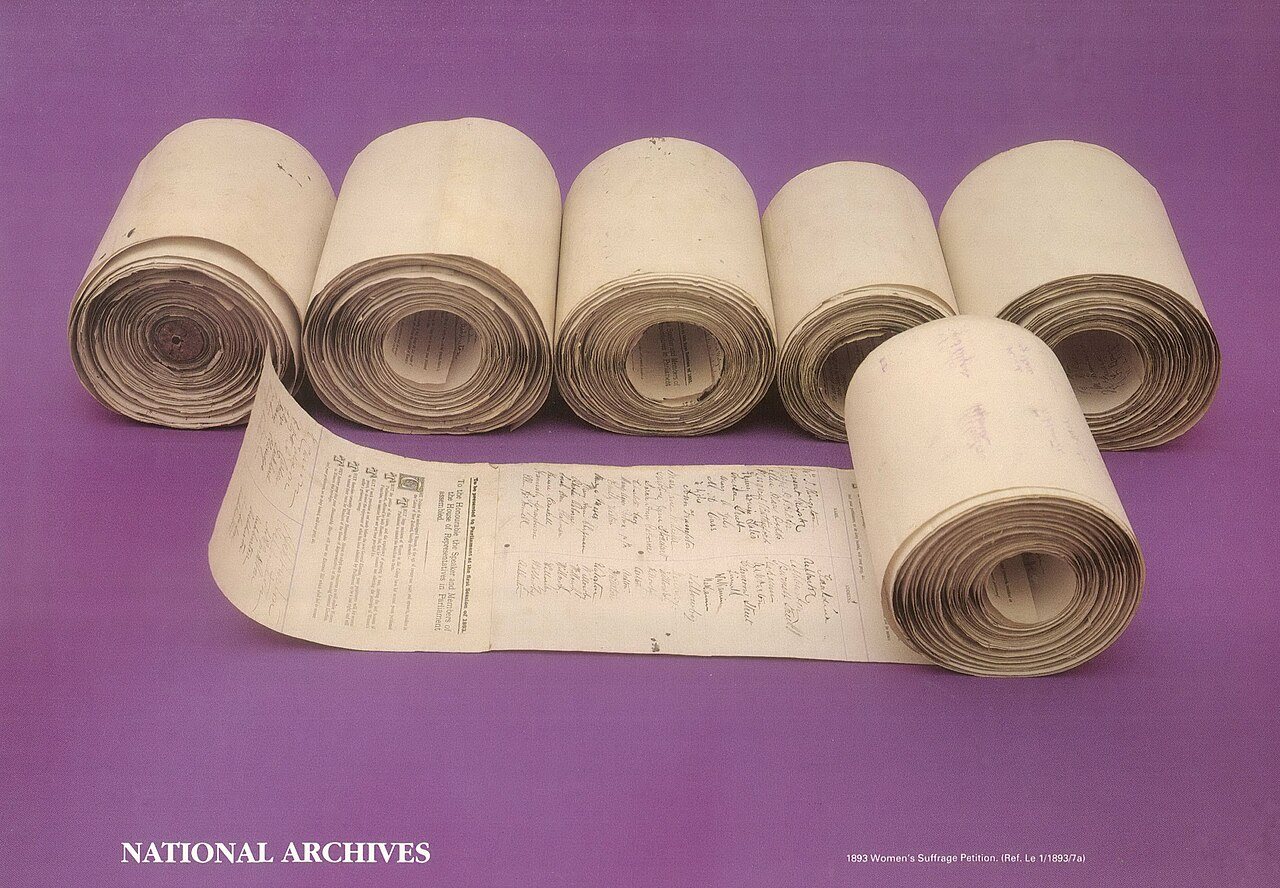
When the petitions arrived at New Zealand's parliament, they unrolled across the floor — sheet after sheet of signatures, nearly 32,000 names, all demanding the vote for women.
The campaign had been building for years, led by Kate Sheppard and the Women's Christian Temperance Union. Their argument was simple: women could bring decency into politics, and the vote would protect families. In 1891 they delivered a petition with 9,000 signatures. In 1892, almost 20,000. In 1893, nearly 32,000 — close to a quarter of all the adult European women in the colony. Glued end to end, the sheets stretched nearly 270 metres — almost three football fields of signatures.
Their opponents fought hard. The liquor industry, terrified that women would vote for prohibition, lobbied against the bill. Conservative politicians insisted that politics lay outside women's "natural sphere" of home and family.
The bill barely survived. In the Upper House, Premier Richard Seddon tried to kill it by pressuring a wavering councillor to switch his vote. The maneuver backfired spectacularly: two outraged councillors switched sides in protest, and the bill passed 20 votes to 18 on September 8. On the day of the vote, suffrage supporters wore white camellias in their buttonholes.
Eighteen defeated councillors then begged the new governor, Lord Glasgow, to refuse his assent. He signed anyway — on September 19, 1893. The Electoral Act 1893 gave every woman in New Zealand aged 21 or older the right to vote in parliamentary elections. No self-governing nation on Earth had ever done that before.
Women voted for the first time that November, in the election of 28 November 1893. And the change rippled outward: that same year, Elizabeth Yates became mayor of Onehunga, winning by just 13 votes — the first woman mayor anywhere in the British Empire.
The fight didn't end at the ballot box. Women could vote, but they could not yet stand for parliament — that would take until 1919. Kate Sheppard kept going, becoming the founding president of the National Council of Women of New Zealand in 1896, and the white camellia worn by supporters in 1893 became the lasting emblem of the movement.
New Zealand's victory came more than two decades before women could vote in Britain or the United States, and suffragists around the world took heart. The vote had been called impossible. Then one small country proved it wasn't — with petitions, camellias, and 32,000 signatures.
Photo: Archives New Zealand, CC BY-SA 2.0 (via Wikimedia Commons).